
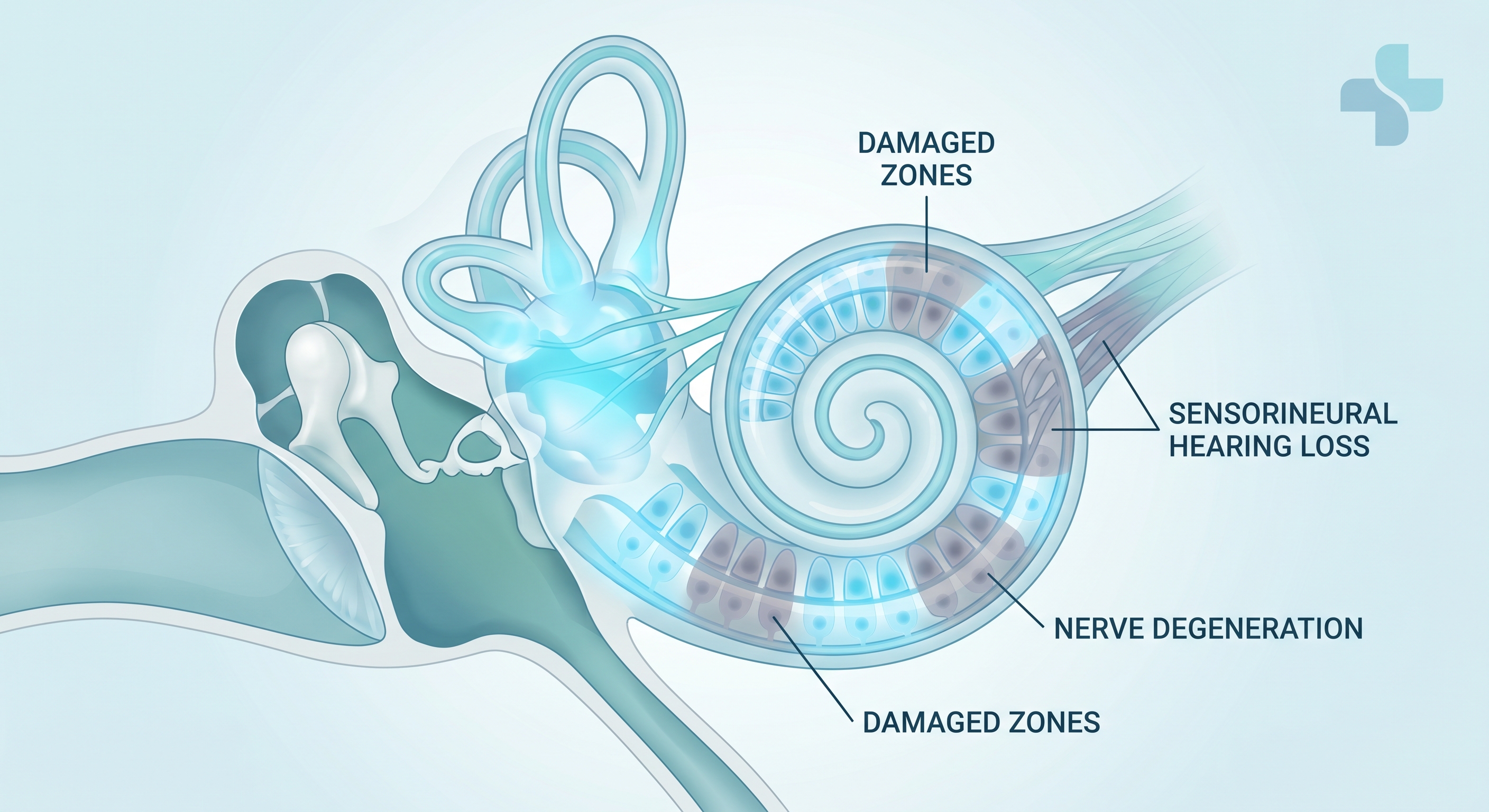
Understanding sensorineural hearing loss is the first step toward reclaiming the sounds that matter most. This type of hearing loss accounts for roughly 90% of all hearing impairment and affects the delicate inner ear structures or the auditory nerve itself. At Ear to Hear, our licensed hearing specialists have helped thousands of patients across Florida, Illinois, and Missouri find clear answers and personalized treatment options. Whether you have noticed muffled conversations or a persistent ringing, trusted care is available.
Key Takeaways
- Sensorineural hearing loss is the most common form of permanent hearing loss, caused by damage to the inner ear or auditory nerve
- Aging, noise exposure, head trauma, and certain medications are the leading causes
- While the damage itself is typically permanent, professional hearing aids offer dependable relief and significantly improved quality of life
- A free hearing test from a licensed specialist provides the clear diagnosis you need to take the next step
What Is Sensorineural Hearing Loss? A Clear Explanation
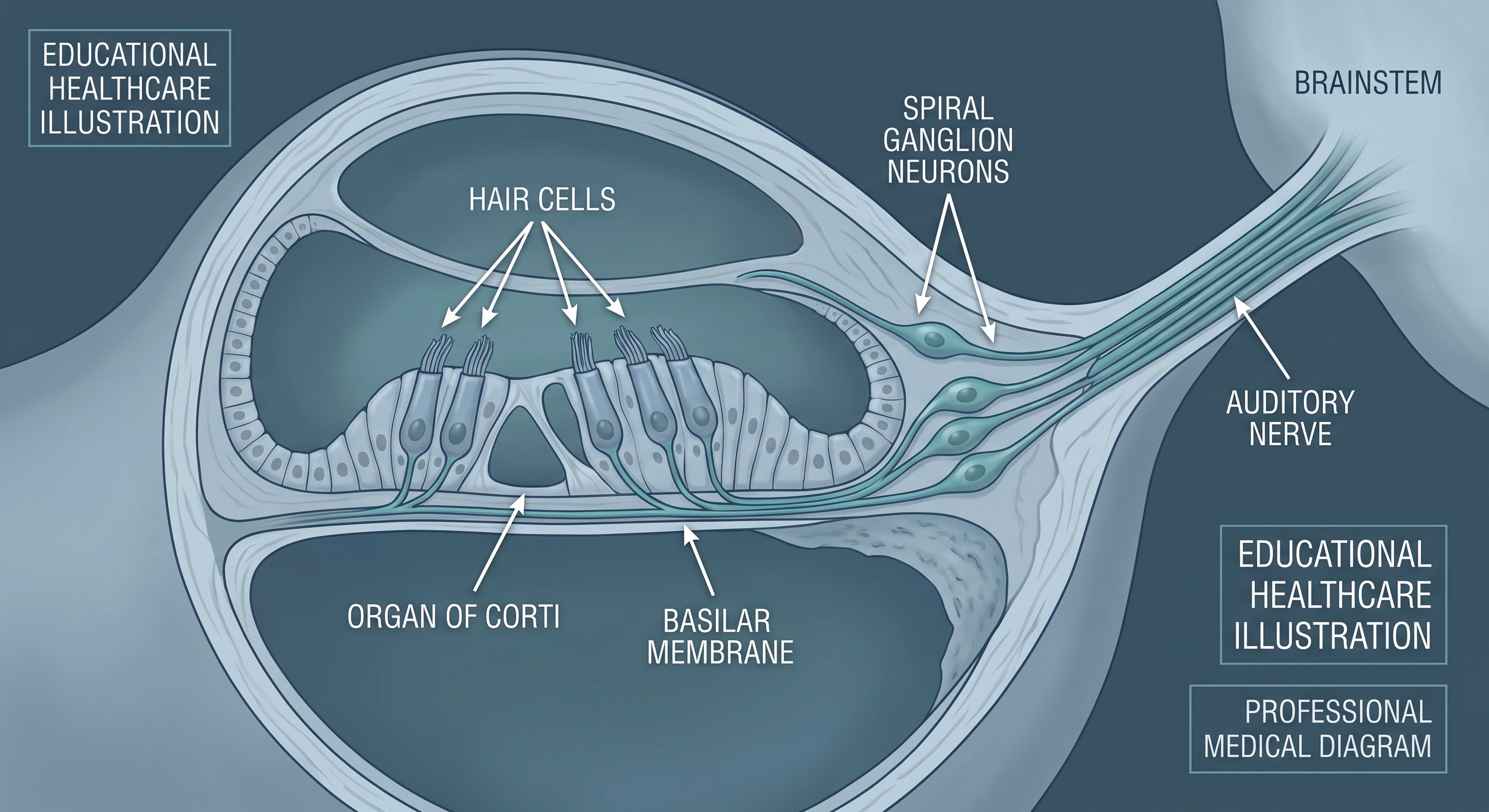
Sensorineural hearing loss occurs when the tiny hair cells inside the cochlea become damaged or when the auditory nerve that carries sound signals to the brain stops functioning properly. Unlike conductive hearing loss, which involves a physical blockage in the outer or middle ear, sensorineural loss involves a permanent reduction in sound clarity and volume. People often describe voices as sounding muffled or unclear, even when the speaker is nearby. This distinction is essential because it determines which treatment options offer real relief.
According to the National Institute on Deafness and Other Communication Disorders (NIDCD), age-related sensorineural loss (presbycusis) affects approximately one in three adults over age 65 and half of those over 75. A professional hearing evaluation can determine the exact type and severity, giving you a clear picture of your hearing health.
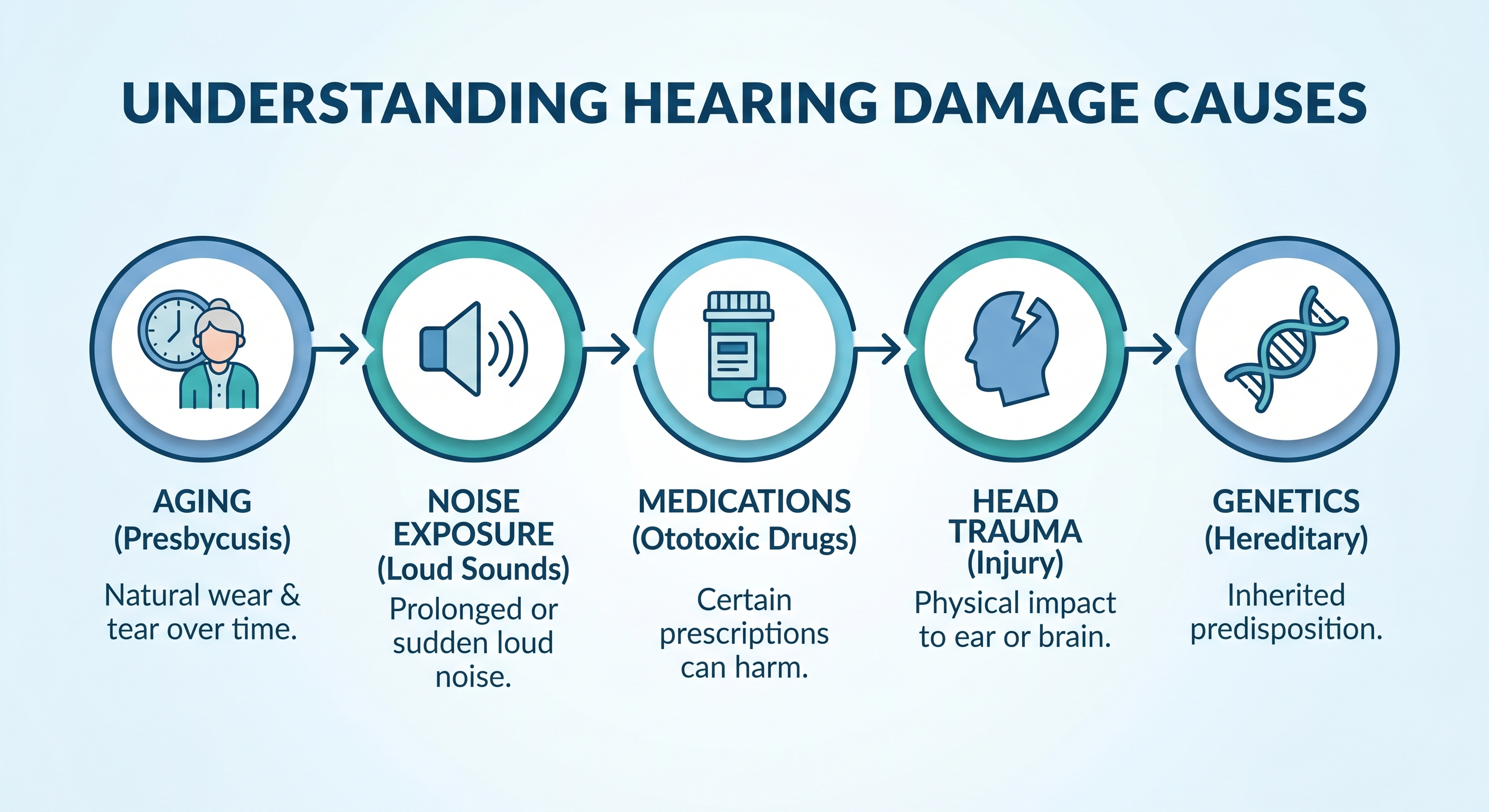
5 Common Causes of Sensorineural Hearing Loss
Several factors can damage the inner ear's delicate structures. Understanding the causes helps you take preventive steps and seek the right trusted treatment.
Age-Related Hearing Loss (Presbycusis)
The most common cause of sensorineural hearing loss is the natural aging process. Over decades, the hair cells in the cochlea gradually degenerate, reducing your ability to hear high-frequency sounds first. This progressive loss often goes unnoticed until conversations become difficult to follow in noisy environments.
Noise-Induced Damage
Prolonged exposure to loud environments-construction sites, concerts, or even heavy traffic-can permanently damage cochlear hair cells. A single intense event, like an explosion or gunshot at close range, can also cause immediate and irreversible harm. The FDA warns that personal audio devices at high volume are an increasingly common source of noise-induced damage, particularly among younger adults.
Ototoxic Medications
Certain prescription drugs-including some antibiotics, chemotherapy agents, and high-dose aspirin-can damage the inner ear. This is called ototoxicity. If your doctor prescribes one of these medications, ask about hearing monitoring and alternatives.
Head Trauma or Injury
A blow to the head can fracture the temporal bone, damage the cochlea, or disrupt the auditory nerve pathway. Even concussions without skull fractures can cause temporary or permanent hearing changes that warrant specialist evaluation.
Genetic and Congenital Factors
Some individuals are born with genetic variations that predispose them to inner ear damage. Congenital sensorineural loss may appear in childhood or develop later in life, even without a family history of hearing problems.
Recognizing the Symptoms: When Hearing Changes Signal Something Serious
Sensorineural hearing loss typically develops gradually, making it easy to overlook in its early stages. The American Speech-Language-Hearing Association (ASHA) recommends a professional evaluation if you experience any of the following:
- Voices sound muffled or unclear, as if people are mumbling
- You frequently ask others to repeat themselves, especially in group settings
- The television or phone volume needs to be higher than others prefer
- Tinnitus-ringing, buzzing, or hissing sounds-accompanies the hearing loss
- You struggle to follow conversations in noisy restaurants or gatherings
- Certain sounds seem excessively loud while others remain unclear
These symptoms often prompt a visit to a licensed specialist who can determine whether the cause is sensorineural, conductive, or mixed hearing loss. Early detection matters because untreated decline can affect cognitive function, social engagement, and emotional well-being. The Mayo Clinic reports that adults with untreated hearing loss face a higher risk of depression and social isolation.
Noticing Changes in Your Hearing?
A free hearing test from our trusted specialists provides the clear answers you need. We evaluate your hearing across all frequencies and recommend personalized next steps.
Book Your Free Hearing TestHow a Licensed Specialist Diagnoses Sensorineural Hearing Loss
A thorough diagnosis is the foundation of effective treatment. At Ear to Hear, our licensed hearing specialists use a comprehensive evaluation protocol:
Pure-Tone Audiometry
This standard hearing test measures the softest sounds you can hear across different frequencies. You wear headphones and respond to tones, and the results are plotted on an audiogram. A sloping high-frequency hearing loss pattern is the hallmark of sensorineural damage.
Speech Recognition Testing
Hearing sounds is only part of the equation-understanding speech is what matters most. Word recognition tests measure how clearly you process spoken language at comfortable volumes. Sensorineural loss often reduces speech comprehension even when volume seems adequate.
Tympanometry and Reflex Testing
These tests rule out middle ear problems (conductive loss) by measuring eardrum movement and acoustic reflexes. A trusted specialist uses these results to confirm that the hearing loss originates in the inner ear, not the eardrum or ossicles.
The entire evaluation takes about 30 to 45 minutes and is provided as a free hearing test at all Ear to Hear locations. You leave with a clear understanding of your hearing health and a personalized plan for next steps.
Hearing Aids for Sensorineural Loss: Your Most Dependable Path to Clear Sound
While the inner ear damage from sensorineural hearing loss is typically permanent, modern hearing aids provide remarkable relief. These devices do not restore the damaged hair cells-they amplify and process the sounds your ear can no longer capture on its own, delivering them with clarity and precision.
For sensorineural loss, hearing aids are the gold standard of treatment. Today's technology includes features specifically designed for this type of loss:
- Frequency compression moves high-frequency sounds into a range your ear can still detect
- Directional microphones focus on the speaker in front of you while reducing background noise
- Noise reduction algorithms distinguish speech from environmental sounds in real time
- Tinnitus masking provides soothing sounds that reduce the perception of ringing
At Ear to Hear, we offer top brands including Phonak, Signia, and Widex. Our specialist team matches you with the right device based on your unique audiogram, lifestyle, and budget-never a one-size-fits-all approach.
Can Sensorineural Hearing Loss Improve? Understanding Your Prognosis
This is one of the most common questions we hear, and it deserves a clear, honest answer. In most cases, the hair cell damage that causes sensorineural hearing loss is permanent. The human body does not regenerate cochlear hair cells once they are lost. However, there are important nuances:
Sudden Sensorineural Hearing Loss (SSNHL)
When hearing drops rapidly-over hours or days-this is a medical emergency that requires professional treatment within 48 to 72 hours. Steroid therapy can sometimes restore hearing if started quickly enough. If you experience sudden hearing loss, seek immediate medical attention. Do not wait to see if it resolves on its own.
Stabilization and Management
For gradual sensorineural loss, the goal shifts from recovery to effective management. With properly fitted hearing aids from a dependable provider, most patients experience significant improvement in their ability to communicate, engage socially, and enjoy daily life. The key is consistent use and regular follow-up with your licensed hearing care team.
Our professional services include ongoing adjustments, cleaning, and performance checks to ensure your devices continue delivering reliable relief year after year.
Protecting Your Hearing: Prevention Tips from Trusted Specialists
While you cannot reverse sensorineural damage, you can take proactive steps to preserve the hearing you still have:
- Use hearing protection in noisy environments. Foam earplugs reduce sound by 20 to 30 decibels; custom-molded plugs from a specialist offer an even more dependable and comfortable fit
- Follow the 60/60 rule - listen to headphones at no more than 60% volume for no more than 60 minutes at a time
- Give your ears recovery time after exposure to loud events; 16 hours of quiet rest helps reduce temporary threshold shifts
- Schedule annual hearing tests to catch changes early - a free hearing test at Ear to Hear is the easiest way to stay on top of your hearing health
- Manage cardiovascular health - good blood flowsupports the tiny blood vessels that nourish the cochlea
Prevention is always more effective than treatment. If you work in a noisy environment or enjoy loud hobbies, a consultation with our trusted team at Ear to Hear can help you choose the right protection strategy for your lifestyle.
Sensorineural Hearing Loss: Your Questions Answered
In most cases, no. The hair cell damage in the cochlea is permanent. However, sudden sensorineural hearing loss (SSNHL) can sometimes be partially reversed with immediate steroid treatment if started within 72 hours. For gradual loss, professional hearing aids provide dependable relief that restores functional hearing.
Sensorineural hearing loss involves damage to the inner ear (cochlea) or auditory nerve and is typically permanent. Conductive hearing loss involves a physical blockage in the outer or middle ear-such as earwax, fluid, or a damaged eardrum-and is often treatable with medication or minor procedures. A licensed specialist can determine which type you have through comprehensive testing.
The best hearing aid depends on the severity and pattern of your loss. For mild to moderate sensorineural loss, receiver-in-canal (RIC) devices offer a dependable balance of power and discretion. For severe loss, behind-the-ear (BTE) styles deliver the amplification needed. Brands like Phonak, Signia, and Widex each offer advanced features tailored for sensorineural patterns.
Age-related sensorineural loss typically progresses slowly over years. Noise-induced loss can worsen if exposure continues without protection. Regular hearing tests from a trusted specialist catch changes early so your treatment plan can be adjusted before communication suffers.
Yes. A comprehensive hearing evaluation at Ear to Hear includes pure-tone audiometry, speech testing, and tympanometry-the same professional-grade tests used in clinical settings. Our licensed specialists use this data to provide a clear, accurate diagnosis and personalized recommendations.
References
- National Institute on Deafness and Other Communication Disorders (NIDCD). "Age-Related Hearing Loss." nidcd.nih.gov
- U.S. Food and Drug Administration (FDA). "Hearing Loss and Headphones." fda.gov
- American Speech-Language-Hearing Association (ASHA). "Hearing Loss." asha.org
- Mayo Clinic. "Hearing Loss - Symptoms and Causes." mayoclinic.org