
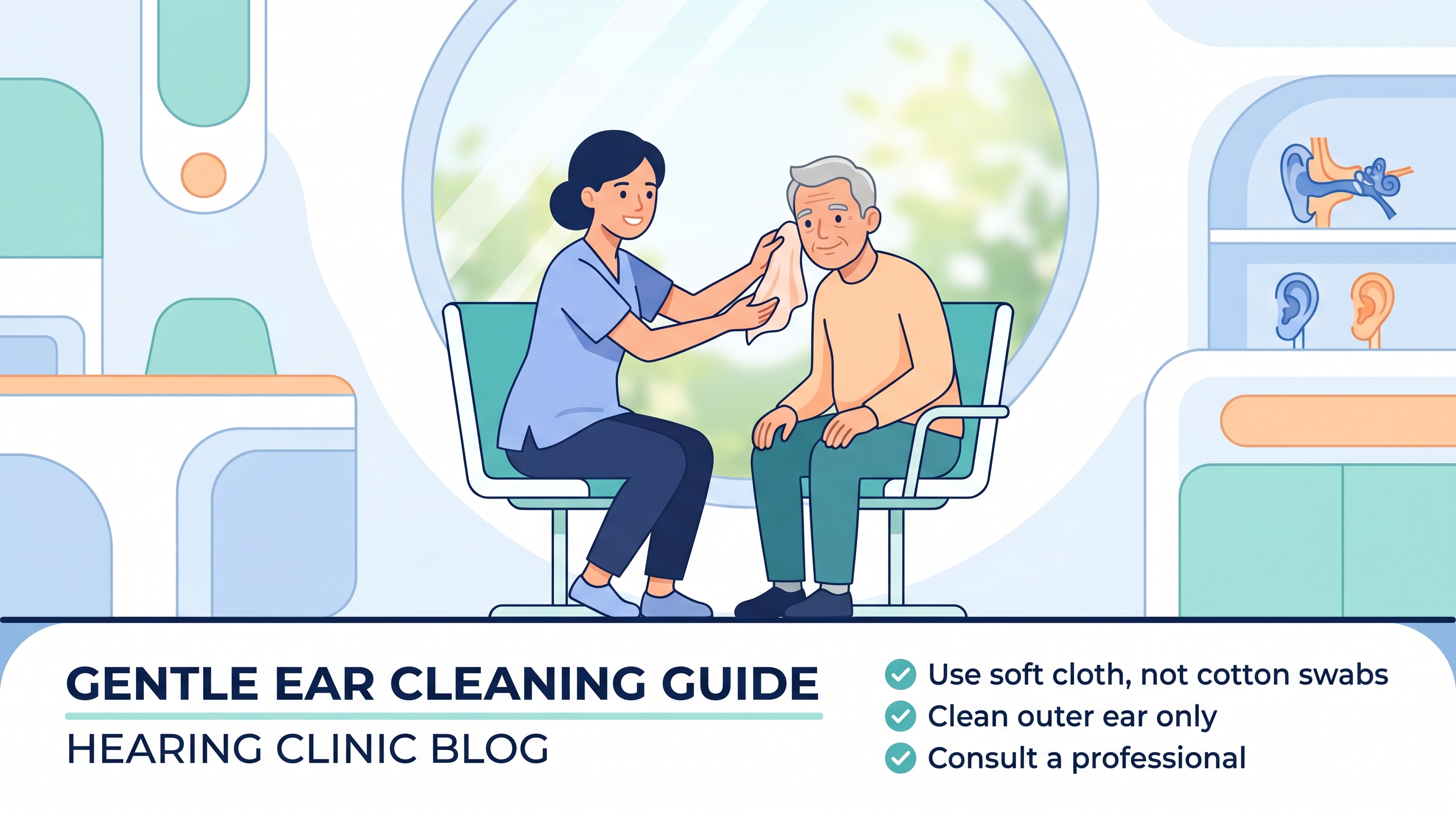
Learning how to clean ears safely starts with understanding what not to do. The most common mistake is inserting cotton swabs or other objects into the ear canal - this pushes wax deeper and can damage the tympanic membrane. At Ear to Hear in Wesley Chapel, our licensed specialists see the effects of improper ear cleaning every day and provide safe, effective alternatives.
Key Takeaways
- Never insert cotton swabs or objects into your ear canal - they push wax deeper and risk injury
- The safest method is wiping the outer portion of your ear with a soft washcloth
- Ear irrigation by a professional is the gold standard for removing stubborn wax
- Ear candling does not work and can cause burns or canal blockage
- If you have persistent earwax buildup or muffled hearing, schedule a professional evaluation
Why Earwax Is Actually Good for Your Ears
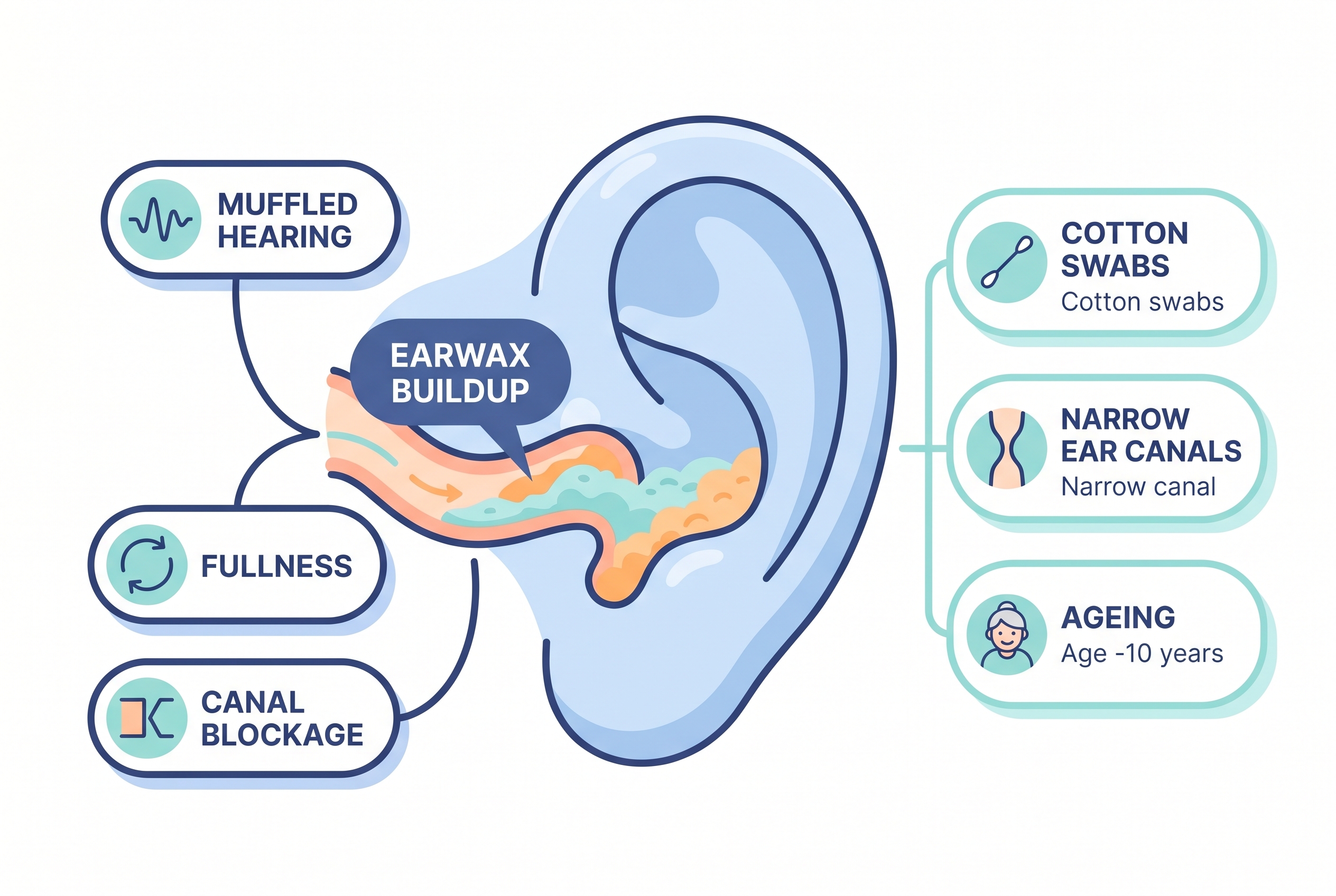
Your ears are self-cleaning. Earwax, or cerumen, is produced by glands in the ear canal and serves a vital purpose: it traps dust, debris, and bacteria before they reach the tympanic membrane. The wax moves outward naturally as you chew and talk. Most people never need to clean inside their ears at all.
But when wax builds up faster than it sheds - whether from narrow canals, hearing aid use, or excessive production - you may experience muffled hearing, a feeling of fullness, or mild discomfort. That is when safe ear cleaning methods become important.
The Safest Way to Clean Your Ears
The American Academy of Otolaryngology recommends cleaning only the outer portion of your ear. Here is what to do each day:
- Gently wipe the visible folds of your outer ear with a soft washcloth or tissue after showering
- Let lukewarm water from the shower rinse the entrance of your ear canal
- Tilt your head to let any water drain naturally
- Do not insert anything into your ear canal - not cotton swabs, not bobby pins, not your finger
For most people, that is all the cleaning your ears ever need. Your body handles the rest.
| Safe Ear Cleaning Methods | What to Avoid |
|---|---|
| Wipe the outer ear with a damp cloth | Cotton swabs - push wax deeper and risk eardrum damage |
| Let shower water rinse the ear canal entrance | Ear candling - no proven benefit and can cause burns |
| Use over-the-counter earwax removal drops if recommended by a specialist | Paper clips, bobby pins, or any small objects |
| Hydrogen peroxide drops to soften wax (with professional guidance) | Inserting anything past the outer ear |
| Visit a specialist for persistent wax buildup | Using hydrogen peroxide with a ruptured eardrum |
What Causes Earwax Buildup?
Some people produce more cerumen than others. Several factors contribute to earwax buildup:
Narrow or Curved Ear Canals
A smaller or more curved canal makes it harder for wax to exit naturally. This is especially common in children and older adults.
Hearing Aid and Earbud Use
Devices that sit in the ear canal block natural wax migration. If you wear hearing aids daily, schedule regular cleanings with a specialist.
Excessive Wax Production
Some people simply produce more cerumen than their canal can clear. This is normal and manageable with professional earwax removal.
Allergy and Sinus Inflammation
An allergy or sinus issue can swell the canal and slow drainage, causing wax to accumulate faster than it sheds.
When wax hardens or blocks the canal completely, it can cause muffled hearing, a plugged sensation, ringing, mild pain, or even coughing triggered by canal irritation. If these symptoms last more than a few days, schedule an evaluation.
Professional Earwax Removal Methods
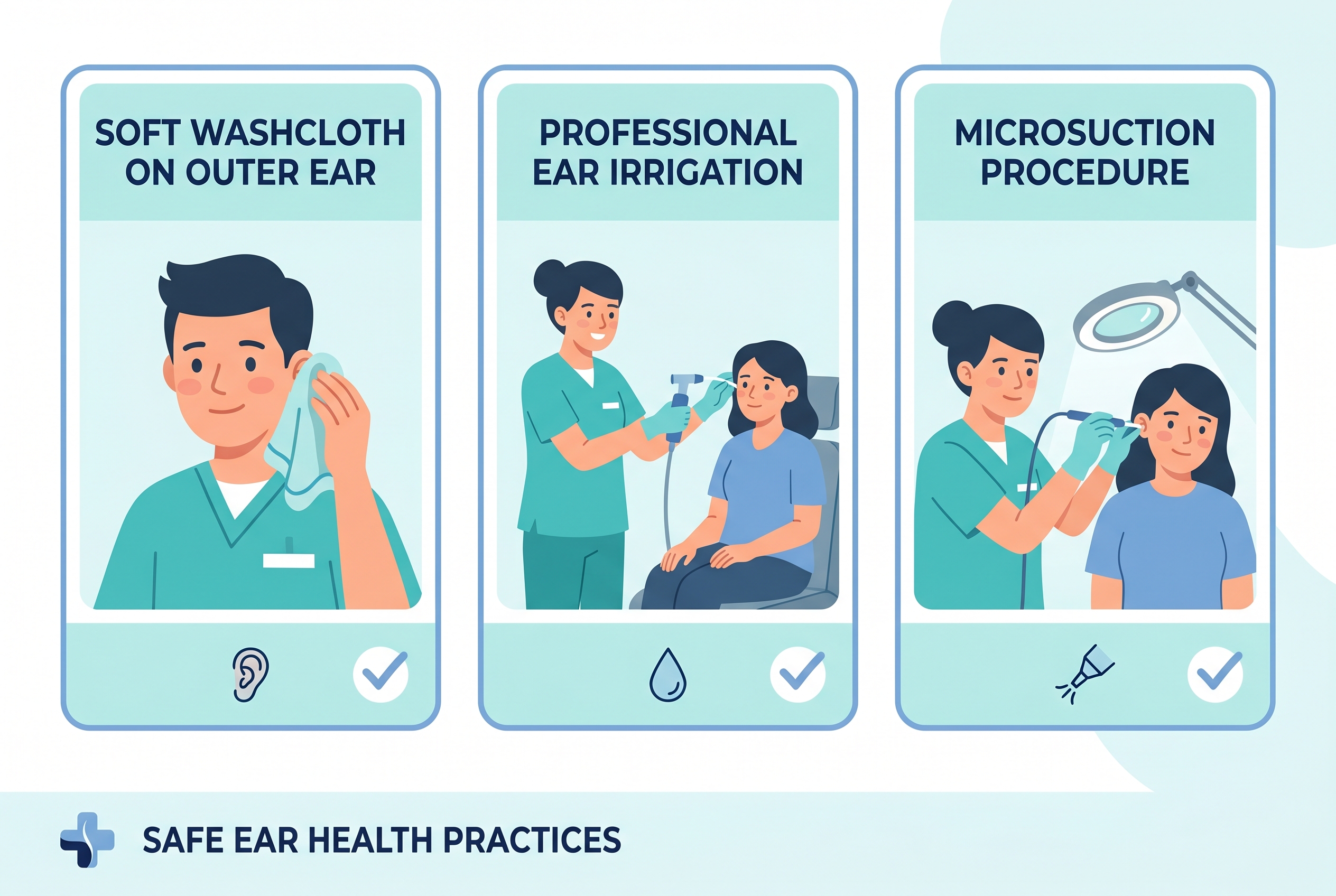
When home methods are not enough, a hearing health professional can remove wax quickly and safely. The three most common clinical approaches are:
1. Ear Irrigation
Ear irrigation uses a gentle stream of lukewarm water to flush out softened wax. It is fast, usually painless, and highly effective for routine removal. Your specialist first checks that the eardrum is intact before proceeding.
2. Manual Removal (Curettage)
A trained clinician uses a small instrument called a curette to carefully extract the wax under direct vision. This method works well for hard or stubborn blockages that over-the-counter earwax removal drops cannot dissolve.
3. Microsuction
Microsuction uses a tiny vacuum to remove wax under a microscope. It is the preferred method for patients with narrow canals, eardrum perforations, or hearing aid use. The procedure takes only a few minutes.
Can Hydrogen Peroxide Remove Earwax?
Yes, but with caution. A few drops of diluted hydrogen peroxide can soften wax and help it drain. Tilt your head to the side, place 2-3 drops in the affected ear, and wait one minute before draining onto a tissue. However, do not use peroxide if you have a ruptured eardrum, ear tubes, or recent ear surgery. Overuse can dry out your ear canal and cause irritation. When in doubt, ask a professional first.
Ear Candling: Why Experts Warn Against It
Ear candling involves placing a hollow cone into the ear and lighting the far end. Proponents claim it draws out wax through suction, but studies show it does not work. The FDA has issued warnings against ear candling due to documented risks of burns, ear canal blockage from candle wax, and eardrum perforation. A licensed clinic offers safer, proven alternatives.
How to Clean Ears for Children
Children are more prone to wax buildup because their ear canals are smaller. Never use cotton swabs on a pediatric patient - even a slight slip can damage a child's delicate canal. Instead, wipe the outer ear with a soft washcloth after bathing. If your child complains of ear discomfort or muffled hearing, visit a specialist for safe removal.
When to See a Specialist
Schedule a professional evaluation if you notice:
- Persistent muffled hearing lasting more than a few days
- Pain, drainage, or bleeding from the ear
- Ringing or buzzing that does not resolve
- A feeling of fullness that does not improve after showering
- Visible earwax buildup that is not clearing on its own
At Ear to Hear in Wesley Chapel, our licensed professionals provide safe, effective earwax removal and comprehensive hearing evaluations. If home methods are not working or you want a thorough cleaning, schedule a free hearing test today.
Professional Ear Cleaning in Wesley Chapel
Our licensed hearing specialists provide safe, effective earwax removal and comprehensive hearing evaluations. If home methods are not working, schedule a free hearing test today.
Frequently Asked Questions About Ear Cleaning
The correct way to clean your ears is to wipe only the outer portion with a soft washcloth or tissue. Let shower water gently rinse the entrance of your ear canal. Never insert cotton swabs or any object into the canal. If you have wax buildup, see a licensed hearing specialist for safe removal.
Hydrogen peroxide can soften earwax and help it drain, but it should be used with caution. Dilute a few drops, tilt your head, and let it sit for a minute before draining. Do not use peroxide if you have a ruptured eardrum, ear tubes, or recent ear surgery. When in doubt, consult a hearing health professional.
Wax buildup that does not clear on its own should be removed by a professional. Methods include ear irrigation with lukewarm water, manual removal with a curette, or microsuction. Avoid cotton swabs and ear candling, which can worsen the blockage or cause injury. Schedule an appointment with a hearing specialist.
No. Cotton swabs push wax deeper into the ear canal and can puncture the eardrum. The American Academy of Otolaryngology advises against inserting anything smaller than your elbow into your ear. The safest approach is to wipe only the outer ear with a soft washcloth.
References
- American Academy of Otolaryngology. "Earwax and Care." enthealth.org
- Cleveland Clinic. "Earwax Buildup: Symptoms, Causes & Treatment." my.clevelandclinic.org
- Mayo Clinic. "Earwax Blockage: Diagnosis & Treatment." mayoclinic.org
- Harvard Health. "What to do about earwax." health.harvard.edu
- University of Utah Health. "How to Clean Your Ears." healthcare.utah.edu