

Learning how to pop your ears can bring fast relief when that uncomfortable fullness will not release. The blocked feeling from tube dysfunction is a top reason people visit a hearing specialist. At Ear to Hear in Wesley Chapel, our licensed specialists identify what is keeping your ears from popping and guide you to clear relief - whether through home techniques or professional treatment.
Key Takeaways
- Ear pressure that will not pop usually comes from tube dysfunction, sinus swelling, or altitude changes
- Safe methods - gentle nose-blowing, swallowing, yawning, warm compresses, saline spray - can pop your ears in seconds
- Never force it - too much force can damage the tympanic membrane; gentle techniques are safer
- If the condition persists beyond a few days, or includes pain, hearing loss, or drainage, see a trusted specialist
Why Your Ears Will Not Pop: 5 Common Causes
Here are the five most common reasons your ears feel stuck:
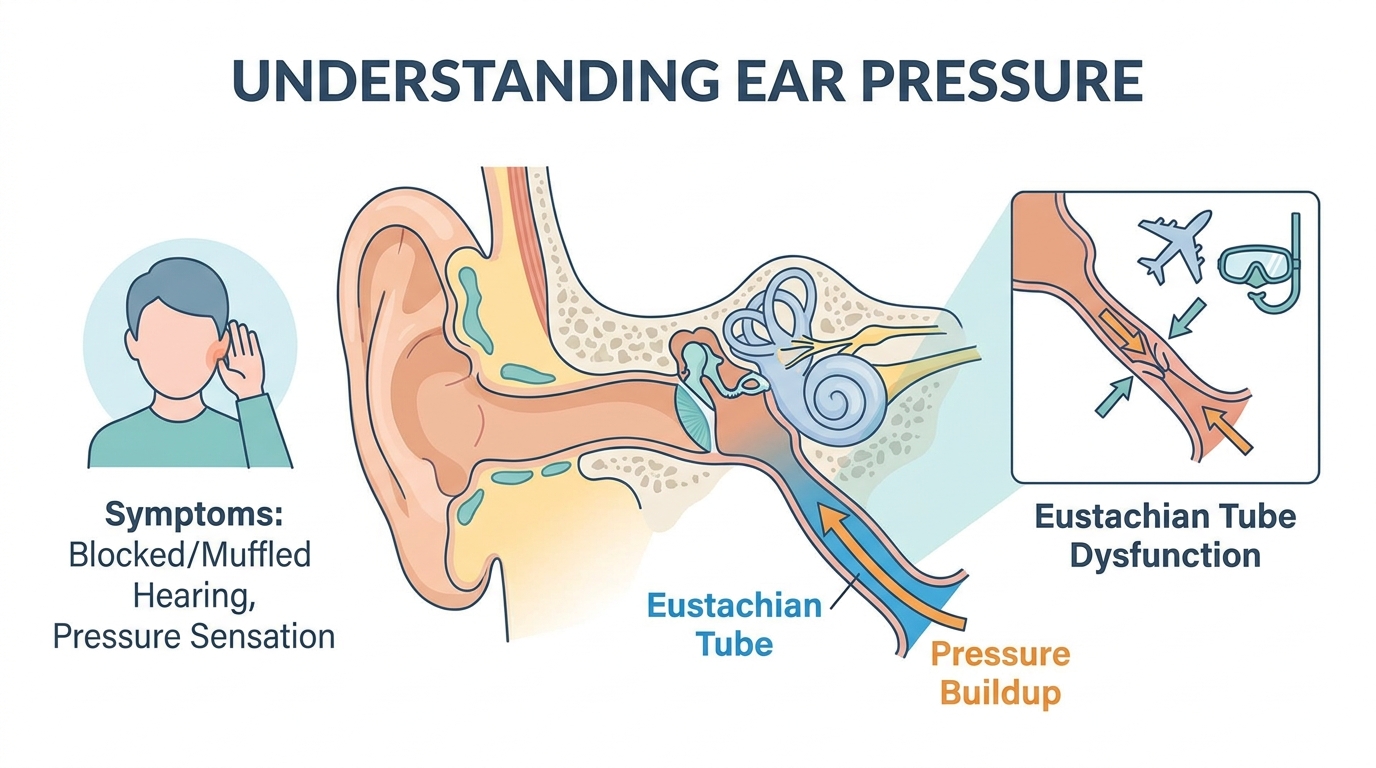
Eustachian Tube Dysfunction Traps Pressure Behind the Eardrum
The eustachian tubes connect your middle ear to your throat and regulate air levels behind the tympanic membrane. When inflamed from a cold, infection, or conditions like allergies, they cannot open to equalize. The result is persistent blockage, crackling, and muffled sound.
Sinus Symptoms Blocks the Pressure Relief Pathway
When sinuses swell from a cold, flu, or allergies, the inflammation extends to the tube openings, blocking air between your middle ear and throat. Clearing the blockage first often unlocks your ears.
Altitude Changes Overwhelm Your Ears Faster Than They Can Adapt
Flying, driving through mountains, or riding elevators changes external air faster than your tubes can adjust. The difference pushes your tympanic membrane inward or outward, causing airplane ear. Your ears usually pop naturally within hours once conditions stabilize.
Earwax Buildup Creates a Physical Barrier
Wax in the canal can block sound and create fullness that mimics tube dysfunction. Never use cotton swabs - they push wax deeper and risk medical damage. A specialist can remove wax safely and determine the cause.
Fluid Behind the Tympanic Membrane Muffles Everything
Middle ear fluid (otitis media with effusion) often follows a respiratory infection. It dampens vibration, making everything muffled. Your ears may feel too blocked to pop.
8 Safe Methods to Pop Your Ears and Relieve Pressure
These proven techniques can help restore clear sound:
1. The Valsalva Maneuver: Gentle Pressure Equalization
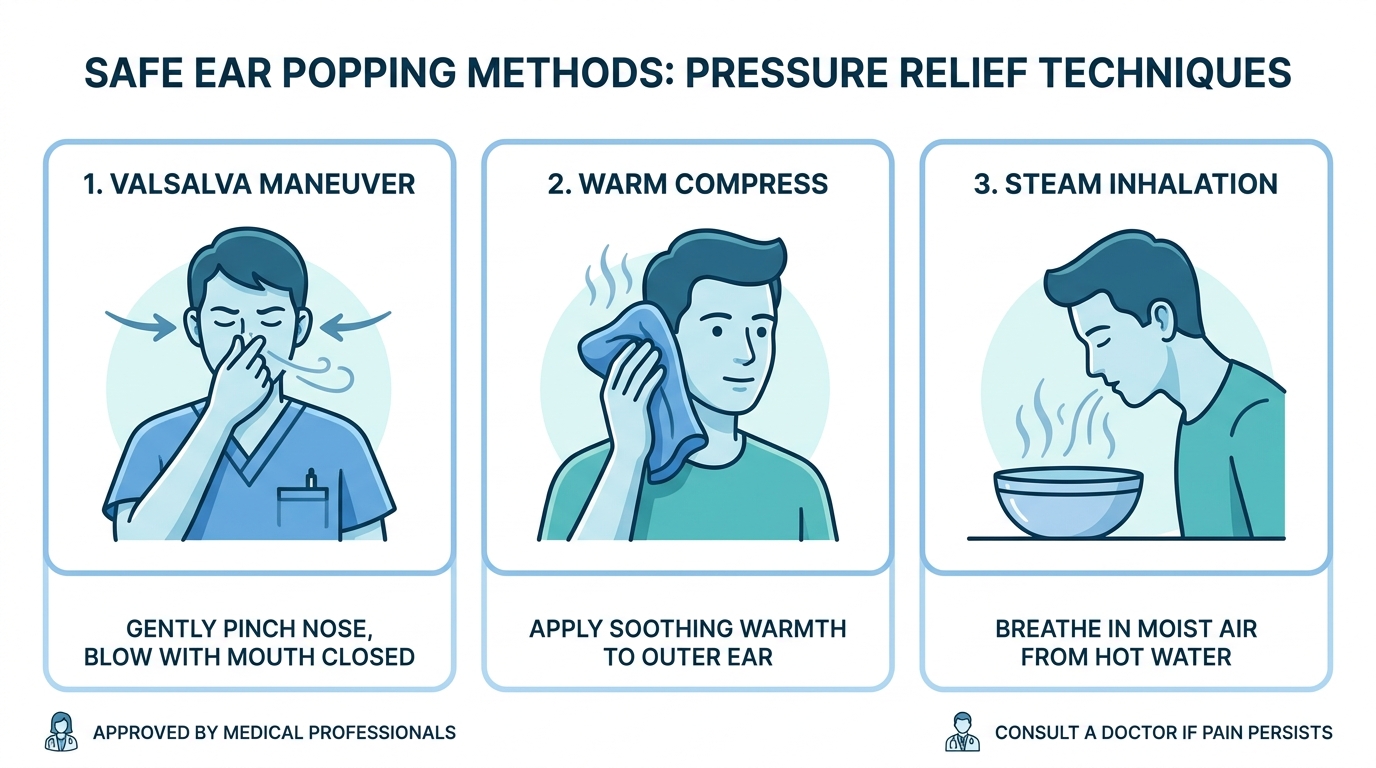
Close your mouth, pinch your nostrils, and gently exhale through your nose. This moves air through the tube to equalize. Important: exhale softly. Too much force can damage the tympanic membrane or push infection into the middle ear.
2. Swallow, Yawn, or Chew Gum to Activate Natural Pressure Release
The simplest and safest way. Swallowing, yawning, or chewing gum activates muscles that open the tube naturally. Best for mild conditions - after flights, elevator rides, or when symptoms are minimal. Try these first.
3. The Toynbee Maneuver: Combined Swallowing and Pressure
Close your nostrils and swallow simultaneously. This opens the tube while creating a slight change that clears stubborn blockage. Gentle and safe for most people, including children.
4. Warm Compress to Reduce Tube Inflammation
Place a warm, damp washcloth against the affected ear for 5-10 minutes. The heat reduces tube inflammation, making it easier to open. Safe for any age, including children.
5. Steam Inhalation Clears Sinus Symptoms First
Breathe steam from hot water or take a warm shower. Moisture and heat reduce nasal and tube swelling, making it easier to equalize. Works best when a cold or allergies are the underlying cause.
6. Saline Nasal Spray Rinses the Pathway Clear
Saline nasal spray flushes blockage from nasal passages and tube openings. Use 2-3 sprays per nostril, wait a minute, then gently clear your nose. Safe for daily use.
7. Over-the-Counter Decongestants for Stubborn Blockage
Oral decongestants (pseudoephedrine) or nasal sprays (oxymetazoline) shrink swollen tissue in the eustachian tube and restore normal tube function. Do not use nasal decongestant sprays for more than 3 days - rebound swelling can make the problem worse. Always follow package directions and consult a pharmacist if you have high blood pressure.
8. Autoinflation Devices for Persistent Tube Dysfunction
Devices like the Otovent use a small balloon you inflate through your nose, forcing the tube open. Research shows moderate effectiveness for persistent tube dysfunction. Available over the counter as a drug-free option when other methods fail.
What NOT to Do: 5 Methods That Can Damage Your Ears
Avoid these methods that can cause harm:
| Method to Avoid | Why It Is Dangerous |
|---|---|
| Forcing nose-blowing too hard | Excessive pressure can rupture the eardrum or push infected mucus into the middle ear, causing a painful infection |
| Cotton swabs (Q-tips) | These push wax deeper, create compacted plugs, and risk scratching the canal or puncturing the tympanic membrane |
| Ear candles | No scientific evidence supports their effectiveness. They can cause burns, canal blockage from candle wax, and tympanic membrane perforation |
| Paperclips, bobby pins, or any foreign object | Inserting anything into the ear canal risks infection, canal laceration, and tympanic membrane rupture |
| Prolonged decongestant nasal spray use | Beyond 3 days, these cause rebound swelling worse than the original symptoms |
If you wear hearing aids, they can contribute to wax buildup. Clean devices regularly and have your ears checked for impaction.
How to Pop Your Ears After Flying: Quick-Relief Tips
Airplane ear (barotitis media) is the most common altitude-related condition. These strategies work during and after flights:
| Technique | How It Helps |
|---|---|
| Chew gum or suck on hard candy | during descent - keeps the tube active |
| Use this method gently | during descent when you first feel pressure building |
| Filtered earplugs | (like EarPlanes) slow the rate of change, giving your tube time to adapt |
| Stay awake during descent | you cannot equalize while sleeping |
| Use a nasal spray | 30 minutes before landing if you have a cold or allergies |
| Try the Frenzel maneuver | seal your nostrils, close your throat, and make a "K" sound with the back of your tongue. This opens the tube with less pressure than Valsalva |
Most airplane ear resolves within a few hours. If muffled sound or pressure persists more than a few days after flying, schedule an evaluation with a trusted specialist.
How to Pop Your Ears with Sinus Symptoms
When sinuses are inflamed, clearing the underlying blockage first makes ear popping easier:
Start with Steam and Saline Before Pressure Techniques
Steam and saline spray reduce swelling in nasal passages and tube openings. Do these first, then try gentle nose-blowing or the Toynbee method.
Oral Antihistamines for Allergy-Related Congestion
Antihistamines (cetirizine, loratadine, fexofenadine) reduce the histamine response causing tubes to swell. Take them regularly during peak season for best results.
Nasal Steroid Sprays Target Inflammation Directly
OTC fluticasone (Flonase) or triamcinolone (Nasacort) directly reduce inflammation in the nasal passages and eustachian tube openings. These take a few days of consistent use to reach full effectiveness, so start before allergy season hits for the best results.
If sinus-related blockage keeps returning, a visit with a hearing specialist can help you build a prevention plan that keeps your tubes functioning year-round.
Ready to Hear Clearly Again?
Our licensed hearing specialists can pinpoint the cause of your ear pressure and recommend the right treatment - often in a single visit. Schedule a free comprehensive evaluation at a location near you.
Book Your Free Hearing TestHow to Pop Your Ears with Fluid Behind the Tympanic Membrane
Middle ear fluid (otitis media with effusion) sits behind the tympanic membrane where you cannot reach it directly. Treatment options include:
Watchful Waiting: Give Fluid Time to Drain Naturally
Most middle ear fluid clears on its own within 2 to 3 weeks after a cold. Continue using swallowing techniques and nasal saline to help the tube drain the fluid. Patience works for the majority of cases.
Autoinflation Devices: Gentle Pressure Assistance
Devices like the Otovent use a balloon you inflate through your nose, opening the tube and helping fluid drain. Moderate effectiveness for persistent cases.
Professional Treatment When Fluid Will Not Resolve
If fluid persists beyond 3 months, a specialist may recommend tube placement (tympanostomy) to ventilate and drain the middle ear. This brief outpatient procedure provides lasting relief.
When to See a Hearing Specialist for Ear Pressure
Many cases of ear pressure resolve with home care. But certain conditions and symptoms call for medical evaluation from a trusted hearing specialist:
- Ears that will not pop after several days
- Hearing loss that does not improve
- Pain that is severe or worsening
- Fluid or drainage
- Dizziness or balance issues
- Tinnitus (ringing) that persists
- Recurring episodes that affect quality of life
Untreated tube dysfunction can lead to chronic fluid, persistent loss, or tympanic membrane retraction. Early evaluation prevents complications.
At Ear to Hear in Wesley Chapel, our team pinpoints what is keeping your ears from popping and creates a personalized treatment plan. We offer free evaluations at our Florida, Illinois, and Missouri locations.
Your Ear Pressure Questions Answered
The Valsalva maneuver - gently pinching your nose closed and exhaling gently - often pops your ears in seconds. Swallowing, yawning, or chewing gum also work well for quick relief. If home methods do not resolve the pressure after a few days, a licensed specialist can determine the cause and provide clear, professional treatment.
Ears that will not pop after flying usually involve eustachian tube dysfunction - the tube connecting your middle ear to your throat stays closed. Sinus congestion, allergies, or a cold make it worse. A trusted specialist can provide personalized relief if the condition persists beyond a few days.
Gentle methods like swallowing, yawning, or gentle nose-blowing are safe. Forcing too hard with nose-blowing can risk a perforated tympanic membrane. If you feel sharp pain or pressure that will not release, a licensed specialist can evaluate your ears safely.
When congested, try a warm compress over the ear, steam inhalation, or over-the-counter decongestants before attempting the Valsalva maneuver. Be very gentle - sinus pressure makes ear popping harder. A specialist can provide professional treatment if sinus-related the symptoms linger.
See a specialist if ears will not pop after several days, or if you have pain, hearing loss, ringing, or drainage. Persistent tube dysfunction needs professional evaluation. Schedule a free evaluation.
References
- Cleveland Clinic. "Earwax Buildup: Symptoms, Causes & Treatment." my.clevelandclinic.org
- Harvard Health. "What to do about earwax." health.harvard.edu
- American Academy of Otolaryngology. "Earwax and Care." enthealth.org
- Mayo Clinic. "Ear infection (middle ear): Diagnosis & treatment." mayoclinic.org