
Key Takeaways
- The best hearing aids for seniors share four traits: rechargeable batteries, simple controls, a comfortable custom fit, and easy Bluetooth phone calls
- Our top 4 picks for 2026 are the Signia Pure Charge&Go MaX, Phonak Audéo EON Sphere, Widex Allure, and Oticon Zeal NXT
- Each model shines in a different situation - restaurants, one-on-one conversation, natural sound, or a discreet in-the-ear style
- A free hearing test with a licensed specialist is the only reliable way to know which model fits your hearing and your life
- We accept most insurance plans, and affordable options are available at every technology level
What Makes a Hearing Aid Senior-Friendly?
After fitting thousands of hearing aids for older adults across our 12 clinics in Florida, Illinois, and Missouri, our specialists have learned that the best hearing aids for seniors are not always the ones with the longest feature list. They are the ones you can put on in the morning, forget about all day, and trust in every listening situation. Four qualities matter most.
Rechargeable Batteries Mean No Fiddly Battery Changes
Tiny zinc-air batteries are one of the most common frustrations we hear about from new users. They are small, they are easy to drop, and they need changing every few days. Every model in this guide uses a built-in lithium-ion battery you recharge overnight, exactly like a smartphone. You place the hearing aids on a charging dock before bed and wake up to a full day of listening. For anyone with arthritis, reduced dexterity, or simply a preference for less fuss, rechargeability is the single most valuable senior-friendly feature.
Simple, Predictable Controls
Good hearing aids for seniors adjust themselves. Modern automatic programs detect whether you are in a quiet room, a busy restaurant, or on a phone call, and switch settings without you touching anything. When manual control is wanted, it should be one large, easy-to-find button - or a simple tap on the ear. Many of our senior patients also love smartphone apps that show volume and battery life in large, readable text, but the hearing aids must work beautifully even if the phone stays in a pocket.
A Comfortable, Secure, Custom Fit
A hearing aid only helps if you actually wear it, and you only wear it if it feels good. Every device we fit starts with a professional evaluation and ear examination, so the dome or earmold matches your ear canal exactly. A proper fit prevents whistling, keeps the device secure while walking or gardening, and makes long days of wear comfortable. This is one reason professionally fitted hearing aids consistently outperform generic, self-fitted devices.
Bluetooth That Makes Phone Calls Easy
Phone conversations are one of the first things hearing loss takes away, and one of the first things a good hearing aid gives back. Bluetooth streaming sends call audio, TV sound, and even video chats directly into both ears, where speech comes through clearly instead of muffled. For seniors who talk with grandchildren over video calls or take important calls from doctors, this feature is life changing - and every model below handles it well.
Not Sure Which Model Fits Your Life?
Our licensed specialists will test your hearing, learn your daily routine, and walk you through the right options - with no pressure and no obligation.
Schedule a Free Hearing TestOur Top 4 Picks: Best Hearing Aids for Seniors in 2026
These are the four hearing aids our specialists fit most often for senior patients this year. Each one earns its place for a different reason, so the "best" pick depends on where you struggle most. All four are rechargeable, all four stream phone calls over Bluetooth, and all four are available with professional fitting and ongoing care at Ear to Hear.
1. Signia Pure Charge&Go MaX
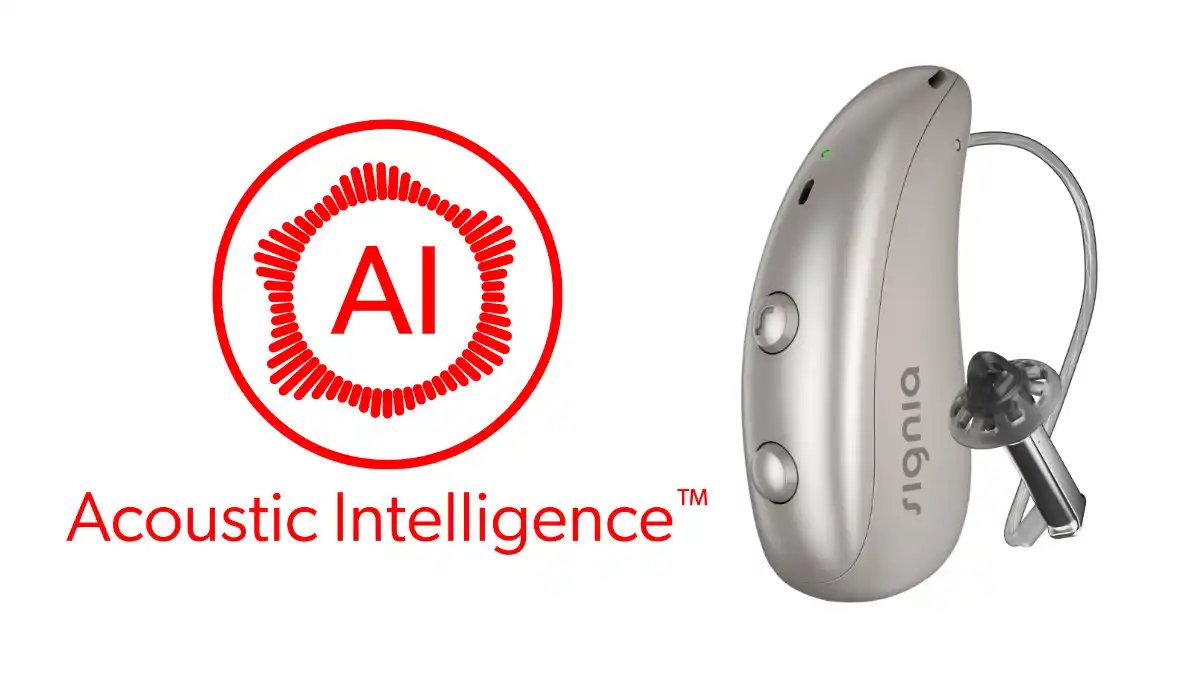
Restaurant dinners are where hearing loss frustrates people most, and this is the device we recommend for exactly that problem. The Signia Pure Charge&Go MaX uses four AI-powered strategies to handle live, changing noise. It continuously analyzes the busy soundscape around you, separates the voices you want from the clatter you do not, and sharpens speech in real time as the room changes. It also streams phone calls to both ears and includes a simple app for adjusting volume with large, readable controls.
- Why seniors love it: conversations stay clear and effortless even when the room is full
- Best for: social diners, travelers, and anyone whose favorite moments happen in busy places
- Learn more: Signia Pure Charge&Go MaX
2. Phonak Audéo EON Sphere
If one-on-one conversation is what matters most, the Phonak Audéo EON Sphere is our clearest performer. Its Spheric Speech Clarity 3.0 technology, driven by a powerful Hypersonic AI chip, picks out individual voices and delivers them with remarkable naturalness, even from a distance or across a table. This generation is also 25% smaller than the model it replaces, so it sits discreetly behind the ear while running some of the most advanced processing available. Rechargeable, Bluetooth-enabled, and simple to use day to day.
- Why seniors love it: voices sound clear and natural, so listening feels like less work
- Best for: anyone whose main goal is understanding people - family talks, doctor visits, church, and phone calls
- Learn more: Phonak Audéo EON Sphere
3. Widex Allure
Some people hear the difference between hearing aids immediately, and for them the Widex Allure is the standout. Widex has built its reputation on remarkably natural sound, and the Allure continues that tradition. Music, birdsong, and voices come through with a warmth and richness that many wearers describe as the closest thing to natural hearing. It reduces background noise without making the world sound processed or hollow, and its straightforward controls make it easy to live with.
- Why seniors love it: sound is pleasant all day, with no tinny or artificial quality
- Best for: music lovers, nature enthusiasts, and anyone sensitive to harsh or processed sound
- Learn more: see our hearing aids overview or ask your specialist about Widex Allure
4. Oticon Zeal NXT
Prefer a hearing aid that disappears entirely in your ear? The Oticon Zeal NXT is our top discreet pick. It sits fully in the ear, yet it still delivers AI sound processing that many behind-the-ear models cannot match. It supports the latest Bluetooth LE standard with Auracast, so it connects to phones, TVs, and public audio systems in new and useful ways. For seniors who want modern technology without anything visible behind the ear, the Zeal NXT proves you no longer have to choose between discreet and capable.
- Why seniors love it: virtually invisible in the ear, yet packed with the newest connectivity
- Best for: anyone who wants a discreet in-the-ear style with modern AI processing
- Learn more: Oticon Zeal
Quick Comparison: Our 2026 Senior Picks
| Model | Best For | Standout Feature | Style |
|---|---|---|---|
| Signia Pure Charge&Go MaX | Noisy restaurants and social settings | 4 AI strategies for live noisy scenes | Behind the ear |
| Phonak Audéo EON Sphere | Clear one-on-one speech | Spheric Speech Clarity 3.0 with Hypersonic AI chip | Discreet behind the ear, 25% smaller |
| Widex Allure | Natural sound quality | Signature natural sound signature | Behind the ear |
| Oticon Zeal NXT | Discreet in-the-ear style | AI sound processing with Bluetooth LE and Auracast | Completely in the ear |
How to Choose the Right Hearing Aid for You
Every hearing loss is different, which is why no single model is right for everyone. Three factors narrow the field quickly.
Match the Technology to Your Lifestyle
Think honestly about your typical week. If you eat out often, attend church or club meetings, or travel, prioritize the strongest noise management - the Signia MaX or Phonak EON Sphere lead here. If your days are quieter and your priority is rich, natural sound, the Widex Allure is hard to beat. If appearances matter most, ask about the in-the-ear Oticon Zeal NXT. Tell your specialist where you struggle most, and the right match usually becomes obvious.
Consider Dexterity and Handling
If changing tiny batteries or gripping small objects is difficult, focus on rechargeable models with larger bodies and simple controls. All four picks above charge on a dock overnight, but behind-the-ear styles like the Signia MaX, Phonak EON Sphere, and Widex Allure are generally easier to handle than fully-in-canal devices. Your specialist can let you handle each style during your visit so you know exactly what daily use feels like.
Think About Budget Tiers, Not Just Features
Hearing aids come in good, better, and best technology levels. Entry-level devices cover the essentials of clear hearing in everyday situations. Mid-level models add smarter noise handling and more natural sound in challenging places. Premium models bring AI-driven processing that adapts in real time. The honest news: many seniors are fully satisfied at a mid-level tier, and affordable options are available at every level. We accept most insurance plans, and our team will always tell you honestly which tier fits your hearing and your life - never more than you need.
Why a Professional Fitting Matters More Than the Model
Here is a truth our specialists see constantly: a professionally fitted mid-level hearing aid outperforms a poorly fitted premium one every time. Real-ear measurement, precise programming to your hearing test results, and follow-up fine-tuning are what turn a good device into a great daily experience. Research from the National Institute on Deafness and Other Communication Disorders supports this - professionally fitted hearing aids produce significantly better outcomes than self-fitted alternatives.
At Ear to Hear, every fitting includes a comprehensive hearing evaluation, a comfortable custom fit, real-ear verification, and follow-up adjustments at no extra worry. We also help you navigate your insurance benefits, since all major insurances are accepted at our clinics. The right model matters, but the right fitting is what makes it work.
One more thing our patients appreciate: hearing care is a relationship, not a one-time transaction. After your fitting, we schedule regular check-ins, cleanings, and adjustments for the life of your devices. If your hearing changes, we reprogram your hearing aids rather than pushing a new purchase. And if you ever have a question between visits, our team is one phone call or one quick form away. That ongoing support is included with every device we fit, at every clinic, at every technology tier. It is why so many of our senior patients refer their friends and spouses to us - and why the best hearing aid for you is one backed by a team that stays with you long after the fitting room.
Find Your Best Hearing Aid in 2026
Start with a free hearing test at one of our 12 clinics in Florida, Illinois, or Missouri. Try the models that fit your hearing and your life - with most insurance accepted and affordable options at every tier.
Schedule a Free Hearing TestFrequently Asked Questions About Hearing Aids for Seniors
Our licensed specialists rank the Signia Pure Charge&Go MaX (best for noisy restaurants), Phonak Audéo EON Sphere (best for speech clarity), Widex Allure (best natural sound), and Oticon Zeal NXT (best discreet in-the-ear style) as the top hearing aids for seniors this year. All four are rechargeable, stream phone calls over Bluetooth, and are available with professional fitting at Ear to Hear. The right choice depends on your hearing test results and daily lifestyle.
Hearing aids are available in good, better, and best technology tiers, with affordable options at every level. Most insurance plans are accepted at Ear to Hear, and many policies cover part or all of your devices. Rather than quoting prices online, we verify your benefits and walk you through your exact out-of-pocket situation during a free hearing test - so there are no surprises.
For most older adults, yes. Rechargeable hearing aids remove the need to handle tiny disposable batteries every few days, which is a real challenge with reduced dexterity or arthritis. You simply place the devices on a charging dock overnight, exactly like a smartphone. Every model in our 2026 top picks is rechargeable, and rechargeable lithium-ion batteries typically last several years before needing service.
Coverage varies by plan, and our team verifies your benefits for you. Traditional Medicare generally does not cover hearing aids, though it may cover diagnostic hearing testing ordered by a physician, and many Medicare Advantage plans do include hearing aid benefits. Ear to Hear accepts all major insurances, and our staff will check your specific coverage before any commitment is made.
Most seniors adjust within two to four weeks. Your brain needs time to relearn sounds it has not heard clearly in a while, so we start with settings matched to your hearing and fine-tune them as you report real-world experiences. Wearing your hearing aids consistently every day speeds up adjustment, and follow-up visits at our clinics make the process comfortable and predictable.
Ear to Hear offers free hearing tests at our 12 clinics across Florida, Illinois, and Missouri. A licensed specialist will test your hearing, explain your results in plain English, and demonstrate the hearing aids best suited to your hearing and your lifestyle. Schedule your free hearing test online or visit our locations page to find the clinic nearest you.