
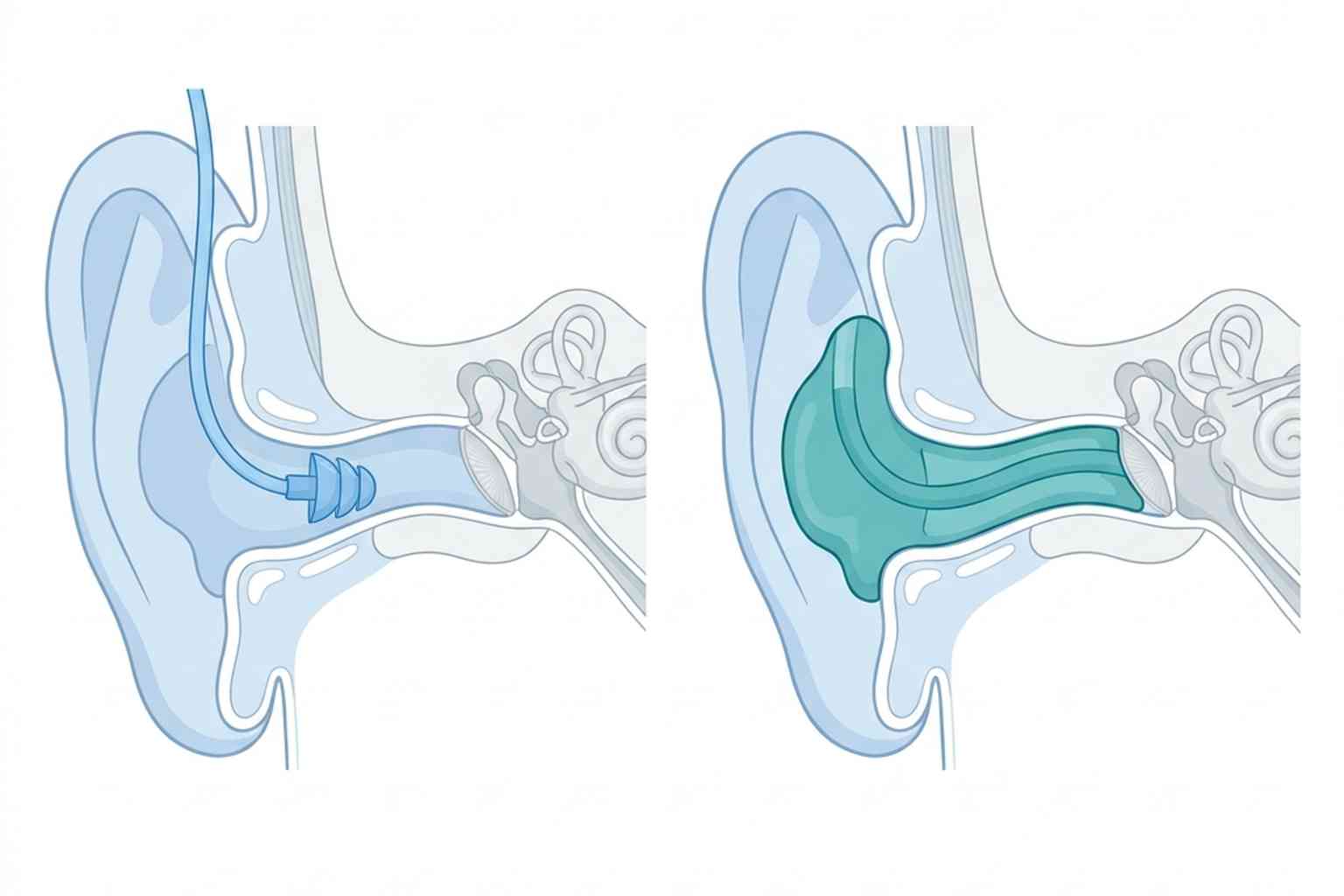
Choosing the right ear tip matters as much as choosing the hearing aid itself. The part that sits in your ear changes how comfortable the device feels and how well it carries sound. At Ear to Hear, our licensed specialists fit both options every day, and we help each patient find the pair that works best for their hearing loss.
Some people do well with soft, ready-made tips. Others need a mold shaped to their own ear canal. The right choice depends on your degree of loss and the style of device you wear. This guide compares the two in plain language for your next visit.
Key Takeaways
- Domes are soft, ready-made tips that fit most ears the same day.
- Custom earmolds are made in a lab from an impression of your ear canal.
- Domes suit mild to moderate hearing loss and many new wearers.
- Earmolds offer a more secure fit for severe hearing loss.
- Both options need daily cleaning to stay safe and reliable.
- Our team can test which option gives you the clear hearing you want.
What Hearing Aid Domes Are
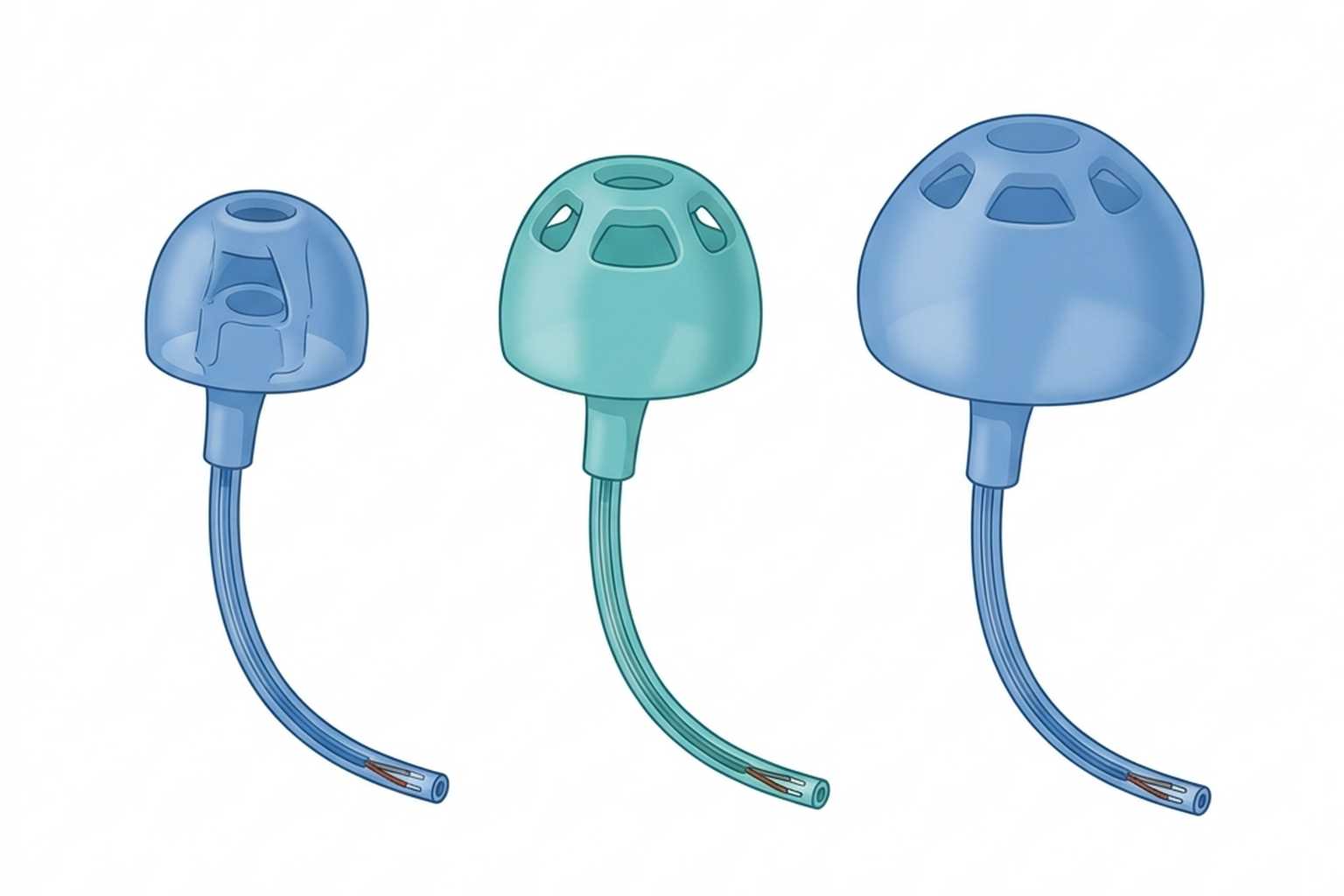
Domes are small tips made of soft silicone or rubber. They slide onto the thin receiver tube of a receiver-in-canal (RIC) hearing aid. They come in standard sizes, so you can try a few and pick the best feel.
Common styles include open, closed, double and triple dome tips, and power domes. Because they come off the shelf, there is no wait and no impression needed. Comparing domes across styles is quick at an office visit.
What Custom Earmolds Are
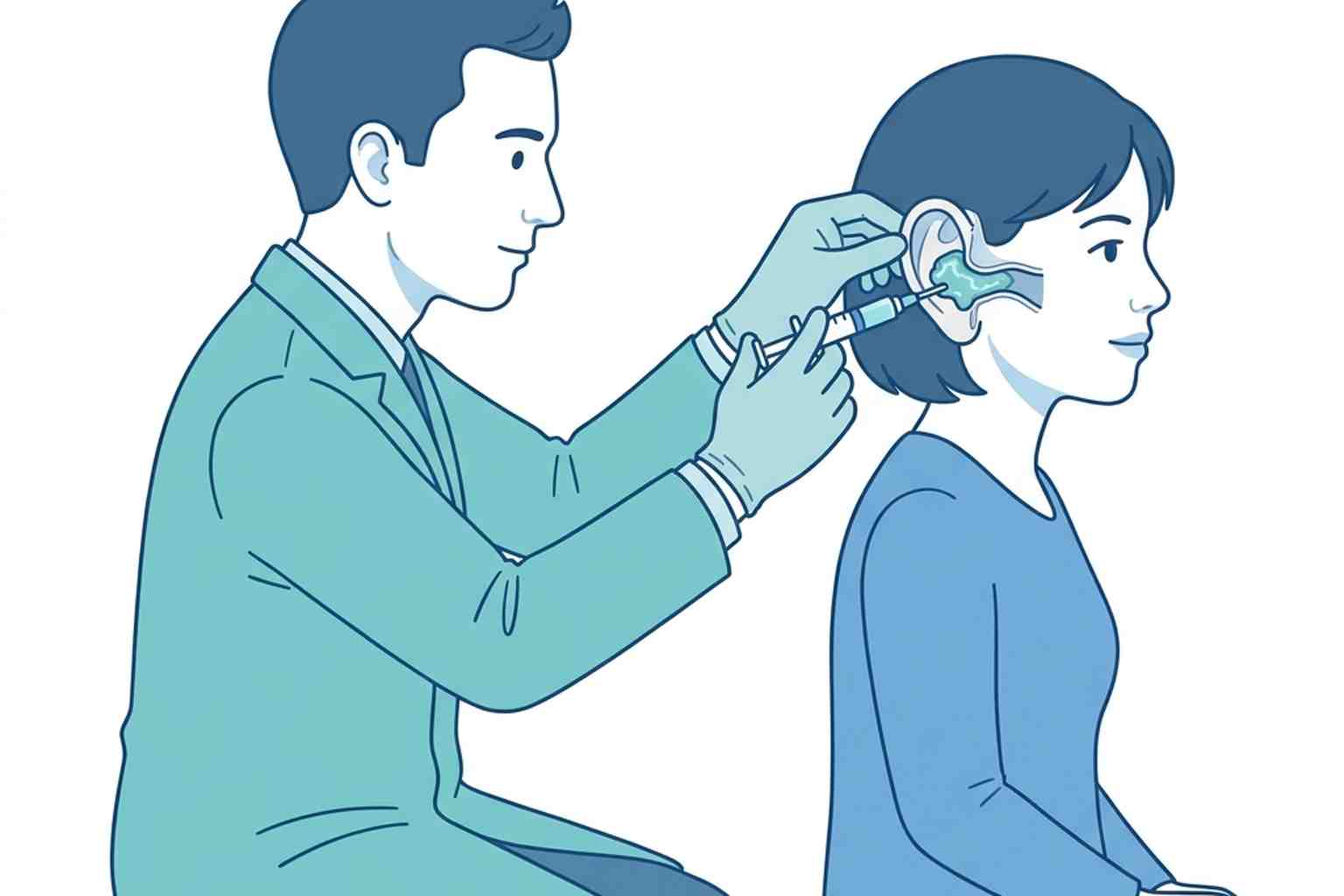
A custom mold starts with an impression. Our specialist fills your ear canal with soft material, lets it set, and sends the cast to a lab. The lab then builds a shell that matches your ear only. Being custom-made, earmolds offer a superior fit and a tighter seal. No two are alike.
Earmolds work with behind-the-ear (BTE) aids that use earmold tubing. BTE aid earmolds date back decades and remain a proven solution for strong amplification. Modern RIC aids can use a custom mold receiver, where the mold replaces the dome. Venting can reduce that blocked, echo feeling. The lab takes one to two weeks.
Custom Earmolds vs Instant Fit Domes: The Main Differences
The biggest difference is fit. Domes fit like a stocking cap, while a mold fits like a cast. A mold offers a superior fit and locks the receiver position inside your ear. A tighter seal holds more power inside.
Speed is the second difference. Instant fit tips go home with you the same day, while molds take one to two weeks. Cost is the third: custom-molded earmolds tend to be more expensive than domes, though we review every option with you. Ear tips also swap in seconds, while a mold is built for one ear. Some brands call these ear moulds, but they are the same thing.
Pros and Cons of Instant Fit Domes
Here are domes pros and cons at a glance. You get an instant fit, easy swaps, and easy cleaning. If your ears change with swelling, a different size is always in the drawer. They are a reliable pick for mild to moderate loss.
On the minus side, domes can slip out of place. A loose tip may cause feedback, that sharp whistling you may have heard in a quiet room. A poor seal also lets amplified sound leak. People needing high power often do better with a full mold.
Pros and Cons of Custom Earmolds
Where Earmolds Shine
Earmolds give a secure, dependable fit that will not slip during daily activity. More amplification reaches your ear, and whistling drops sharply. For severe to profound loss, a full mold with a power BTE is a safe, professional choice. Molds also last longer.
Where They Fall Short
Molds take one to two weeks and can cost more, though our experienced team walks through every option. A full seal can feel blocked, so a custom vent is often added for relief.
Who Should Choose Instant Fit Tips
Domes are a dependable pick when loss is mild to moderate. They also suit new wearers who want to test how an instrument feels first. If tiny parts are hard to handle, swapping a dome is simpler than managing a mold and tubing. You can browse current devices on our hearing aids page.
Who Should Choose Custom Earmolds
Choose an earmold if your loss is severe to profound, or if your device needs high power. Choose one too if loose tips have given you feedback. People with chronic ear drainage do better with molds, since a mold can be cleaned and re-ordered more easily. See devices that pair with either option on our latest models page.
Getting Fitted for Custom Earmolds
The process is simple and trusted. First we check your canal and review your results from a hearing test. You can book one at any of our 12 clinics on the locations page. Next, our specialist fills your ear with soft material for the impression. It sets in minutes and never hurts.
The mold returns in one to two weeks. We fit it, check the seal, adjust the vent, and program your device. If you wear RIC aids, ask about a mold receiver, which many wearers pair with brands like Phonak.
Caring for Domes and Earmolds
Both options need quick daily care. Wipe them each night, and keep wax out of the opening. Instant fit domes should be replaced every few months, since worn silicone loses its seal. Molds last longer, though tubing may need replacing at checkups.
Never wear either option in the shower or pool. If one causes pain or whistling, stop wearing it and call our office for professional help. For more on long-term health, read our guide on hearing loss and dementia.
If you are ready to find out which tip fits you best, schedule a free hearing test with our team at Ear to Hear and we will show you both options in person.
Frequently Asked Questions
They hold the speaker part of a RIC device in your canal and carry clear sound inside your ear. They seal the canal enough to keep amplified audio from leaking. Our specialist picks the size that matches your ear and your degree of loss.
Yes, and it is a common switch. We take an impression and order a mold that works with your current aid. Most transfers take one to two weeks, and we program your device at the fitting.
Often, yes. A better seal keeps amplified sound inside your ear, so speech is easier to follow and feedback drops. For high-power needs, a mold delivers more of what your device produces. The right vent prevents a blocked feeling.
BTE devices with tubing are the classic match. Many modern RIC models also accept these receivers. Our specialist will confirm fit for your exact model, and you can book a time on our schedule appointment page.
References
- Hearing Tracker. Earmolds for Hearing Aids: The Complete Guide. https://www.hearingtracker.com/resources
- Healthy Hearing. Hearing aid domes and earmolds: What's the difference? https://www.healthyhearing.com/report/52524-Hearing-aid-domes
- NIDCD. Hearing Aids. https://www.nidcd.nih.gov/health/hearing-aids
- American Academy of Audiology. Consumer resources. https://www.audiology.org/consumers
- Starkey. Hearing Aid Domes blog. https://www.starkey.com/blog