

Key Takeaways
- Yes, you can wear both - Most hearing aids and eyewear work together comfortably with the right style choices and fitting approach for dual-device wear.
- RIC is the best style - Receiver-in-canal devices sit closer to the ear and leave more room for eyewear temple arms.
- Put frames on first - Always place eyewear before inserting your hearing device to reduce friction and feedback.
- Hearing glasses are emerging - Products like Nuance Audio combine vision correction and hearing enhancement in one frame.
Can You Wear Both Devices Together?
If you wear prescription lenses and need hearing support, a common concern is whether two devices can comfortably share the space behind your ears. The answer is yes - most people who wear hearing aids also use eyewear without major issues, provided they choose the right style and follow a few simple fitting tips.
For many, wearing both devices feels natural after a short adjustment period. Licensed specialists at Ear to Hear regularly help patients across Florida, Illinois, and Missouri find comfortable solutions for dual-device use. The key is understanding how each device interacts with the other and making informed choices about style, fit, and wearing sequence.
The main physical challenge is simple anatomy: eyewear temple arms and behind-the-ear hearing devices both rest on the same narrow strip of skin between the top of the ear and the skull. As one user on X noted, "I could never have imagined how much of my life is now dedicated to managing the real estate available behind my ears" (@katietiedrich, Aug 26, 2021). When both devices compete for this space, discomfort can include pressure soreness, feedback whistling, and slippage. The good news is that modern designs have become slim enough that most wearers find a comfortable setup within days.
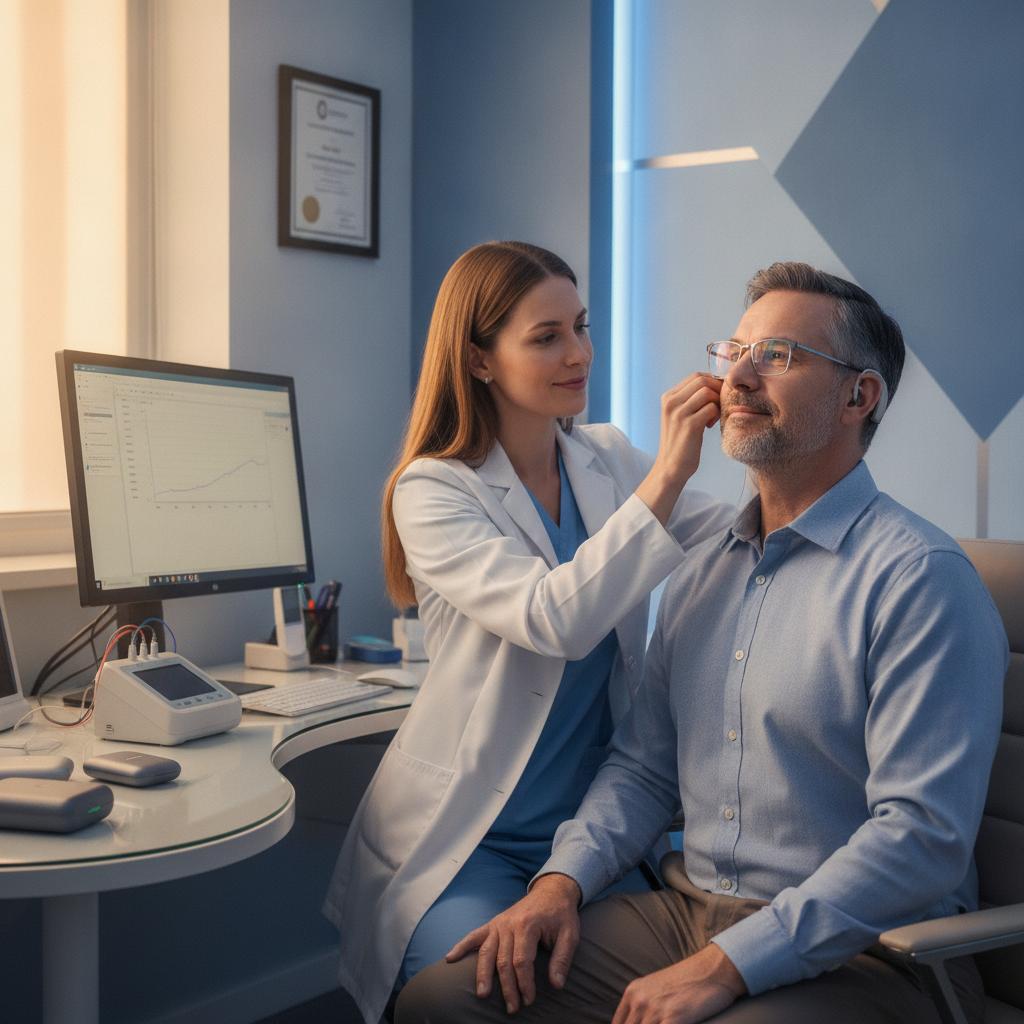
Best Hearing Aid Styles for Eyewear Wearers
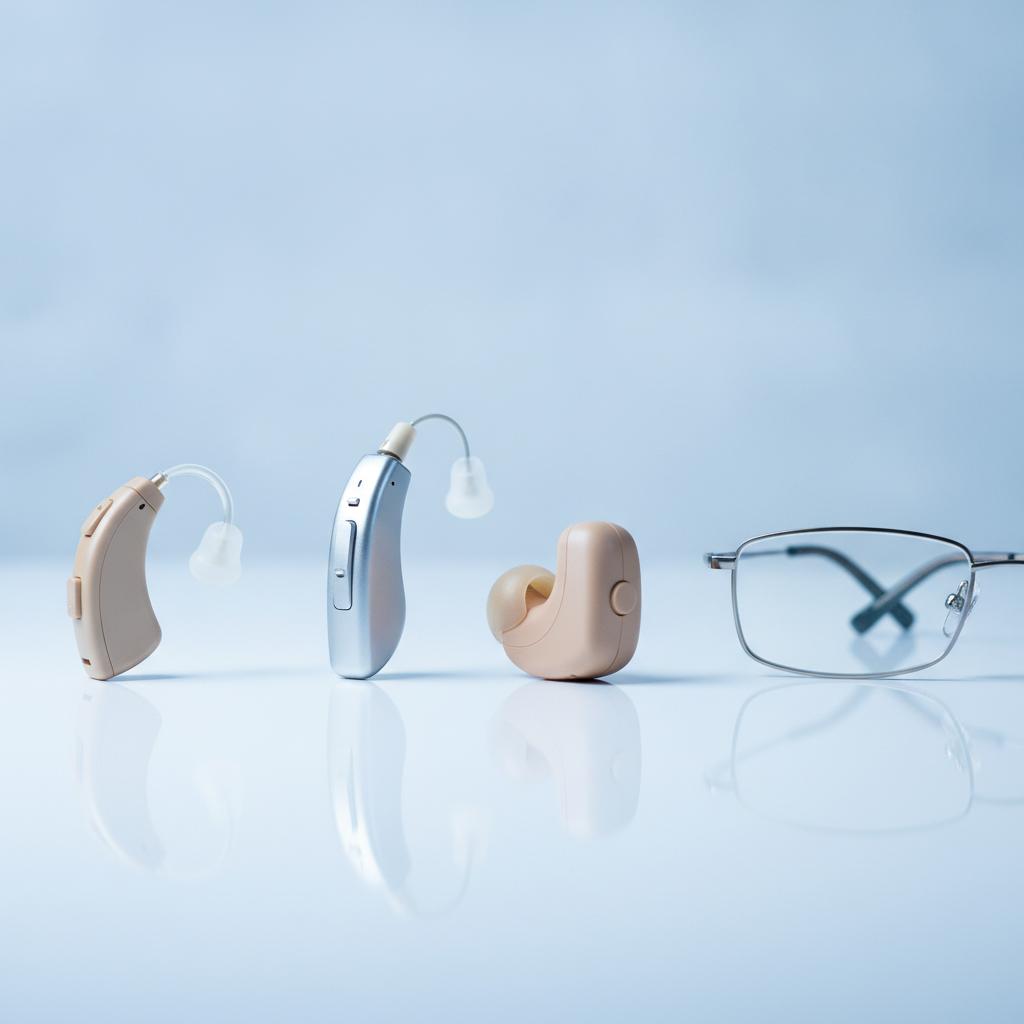
Not every style works equally well with frames. The right choice depends on your hearing impairment severity, lifestyle, and comfort preferences. Here is how the three main styles compare for people who wear prescription eyewear.
Behind-the-Ear (BTE) Hearing Aids
BTE hearing aids sit behind the ear with a tube connecting to an ear mold inside the canal. While powerful and reliable, traditional BTE models can feel bulky when paired with thick frames. The hearing aid body and eyewear temple arm sit directly on top of each other, which may cause pressure over long wearing periods. However, some BTE users on X report success by keeping frames closest to the head and then placing the hearing device between the frame arm and the back of the ear (@roiben, May 29, 2021).
Receiver-in-Canal (RIC) Hearing Aids
RIC devices are widely considered the best option for eyewear wearers. The receiver sits inside the ear canal while the main body rests behind the ear, but the behind-the-ear portion is significantly smaller than a traditional BTE. This slimmer profile means less competition with frame temples and a more comfortable fit throughout the day. Popular RIC models from Phonak and Signia offer excellent sound quality in a compact design that pairs naturally with most prescription eyewear. When selecting an aid model, RIC should be the first choice for anyone who wears frames daily.
In-the-Ear (ITE) Hearing Aids
ITE devices sit entirely inside the ear canal, which eliminates the behind-the-ear conflict entirely. For eyewear wearers with mild to moderate hearing impairment, ITE and completely-in-canal models remove the physical interference problem. The tradeoff is that these styles are typically less powerful than BTE or RIC devices and may not suit severe hearing loss. They can also be harder to adjust for people with dexterity concerns. If you already wear prescription glasses, an audiologist can help determine whether ITE models provide enough amplification for your specific needs.
Tips for Comfortable Wear
Small adjustments make a meaningful difference when wearing a hearing device alongside prescription lenses. These practical steps help reduce discomfort, prevent feedback, and keep both devices secure throughout the day.
The single most important tip is to always put frames on before inserting your hearing aid. Eyewear temple arms should sit closest to the head, with the hearing device resting on top. This order reduces the chance of dislodging the hearing aid when you remove or adjust your frames, and it minimizes feedback caused by the temple arm pressing against the microphone.
When selecting new eyewear, opt for frames with thin, wire-like temple arms rather than thick plastic ones. Thin temples take up less space behind the ear and leave more room for the hearing device to sit comfortably. Many eyewear brands offer lightweight frames suited for hearing aid users. If you already own thick frames, an optician can sometimes adjust the temple angle to create more clearance. Similarly, ask your audiologist about thin tubing options for BTE models, which reduce bulk behind the ear and make daily wearing more pleasant.
Additional comfort strategies include using a retention clip to prevent loss when removing frames, scheduling regular check-ups to ensure both devices still fit properly, and removing both devices at night to give your ears a complete break. Some wearers also find that switching between different frame styles throughout the week reduces pressure points from developing in any single spot behind the ear.
The 5-Minute Rule for Hearing Aids
The "5-minute rule" is a widely recommended practice for new users. The concept is simple: wear your device for just five minutes at first, then gradually increase wearing time each day. This slow buildup gives your brain time to adjust to new sounds without becoming overwhelmed.
For eyewear wearers, the 5-minute rule serves a second purpose. It lets you test how the hearing aid feels alongside your frames in short sessions before committing to all-day wear. If you notice pressure points or feedback during those five minutes, you can address the issue with your specialist before it becomes a daily frustration. Most people reach full-day wearing comfort within two to three weeks, progressing from quiet rooms to conversations and eventually noisy environments.

New Technology: Hearing Glasses
The hearing care industry is evolving rapidly, and one of the most exciting developments is the emergence of hearing glasses - eyewear that combines vision correction with hearing enhancement in a single frame. This innovation directly addresses the comfort issues that some people experience when wearing two separate devices behind the ear.
EssilorLuxottica, the parent company of LensCrafters and Ray-Ban, has introduced Nuance Audio hearing glasses as a combined solution. These frames feature built-in directional microphones and open-ear audio technology designed to improve speech understanding in noisy environments. A recent study highlighted on X evaluated whether Nuance Audio eyewear can improve speech comprehension in challenging listening environments (@WeekinHearing, Jul 6, 2026). One X user who switched after four years of painful dual-device wear reported: "Hearing aids didn't fit well with glasses on, was painful. Had them 4yrs. These [hearing glasses] are good so far" (@jagjetfly, Jun 30, 2026).
Ray-Ban Meta smart eyewear, while not classified as medical hearing devices, offer open-ear audio and AI-enhanced features that some users find helpful for situational hearing support. These may serve as a stepping stone for people who are not yet ready for traditional hearing aids but want improved audio awareness in social settings. However, they are not a replacement for a properly fitted hearing device prescribed by a licensed specialist.
Pricing for these audio-integrated frames varies widely. Traditional hearing aids typically cost $1,000 to $4,000 per pair through a clinic. These audio-integrated frames like Nuance Audio are newer to the market, with early reports suggesting they may cost less than premium traditional devices. One X user noted their hearing eyewear with prescription lenses were "still half the price of one hearing aid" (@jagjetfly, Jul 7, 2026). Insurance coverage for these devices is currently limited, as most plans do not yet classify them as medical hearing devices. Check with your insurance provider to understand what benefits may apply.

Getting Fitted and When to See a Specialist
Coordinating your hearing aid fitting with an eyewear appointment saves time and ensures both devices work together comfortably. Ear to Hear offers comprehensive hearing tests at their locations in Florida, Illinois, and Missouri, and licensed specialists can advise on which models pair best with your current frames. During your appointment, bring the eyewear you wear most often so your specialist can assess the space behind your ear and make real-time adjustments.
Several signs indicate it is time to schedule an appointment: difficulty following conversations in noisy restaurants, frequently asking people to repeat themselves, turning up the television louder than others prefer, or ringing in the ears. Early intervention for hearing loss leads to better outcomes, as untreated hearing impairment can affect social connections and cognitive health. A simple hearing test at your local clinic can determine whether you need support and which device style suits your lifestyle.
There is also an emotional dimension to consider. As one X user observed: "Wearing glasses is normal. Wearing hearing aids carries stigma. It's a similar purpose, but has a completely different perception" (@bentenwoodring, Jul 4, 2026). Addressing hearing loss with the same matter-of-fact approach as vision correction can help reduce that stigma. To schedule a consultation, visit the appointment page or call (813) 345-8135.
Ready to Find the Right Fit?
Our licensed specialists help you choose hearing aids that work comfortably with your glasses. Schedule a free hearing test today.
Schedule Your AppointmentYour Hearing Aids and Glasses Questions Answered
The 5-minute rule means wearing new hearing aids for just five minutes at first, then gradually increasing wear time each day. This allows your brain to adjust to amplified sound without becoming overwhelmed. For eyewear wearers, it also provides a short testing window to check comfort and fit before committing to all-day use. Most people reach comfortable full-day wear within two to three weeks.
Receiver-in-canal (RIC) devices are generally the best choice for people who wear glasses because their behind-the-ear component is smaller and slimmer than traditional BTE models. This leaves more room for frame temples. In-the-ear (ITE) models are another excellent option since they sit entirely inside the canal and avoid the behind-the-ear space entirely. Brands like Phonak and Signia offer popular RIC models well suited for eyewear wearers.
Meniere's disease often involves fluctuating hearing loss, tinnitus, and balance issues. A licensed specialist or audiologist should evaluate each case individually, but RIC and BTE devices with multiple program settings tend to work well because they can be adjusted as hearing levels change. Some patients with Meniere's also benefit from masking features for tinnitus relief. Schedule a hearing test with Ear to Hear to discuss options suited to your symptoms.
Yes, frames with built-in hearing technology - often called hearing eyewear - are an emerging solution that works for many people with mild to moderate hearing loss. Products like Nuance Audio hearing glasses by EssilorLuxottica combine prescription lenses with directional microphones and open-ear audio. While they may not replace traditional hearing aids for severe hearing loss, they eliminate the comfort issues of wearing two separate devices and are gaining positive reviews from early adopters.
References
- @katietiedrich. "I started wearing glasses, hearing aids, and a mask every day, and I could never have imagined how much of my life is now dedicated to managing the real estate available behind my ears." X/Twitter, Aug 26, 2021. https://x.com/katietiedrich/status/1430891994163732498
- @roiben. "Some prefer HA closest to head, others have glasses closest to head (I do this and then HAs for between glasses & back of ears)." X/Twitter, May 29, 2021. https://x.com/roiben/status/1398638183257186304
- @jagjetfly. "Hearing aids didn't fit well with glasses on, was painful. Had them 4yrs. These [hearing glasses] are good so far." X/Twitter, Jun 30, 2026. https://x.com/jagjetfly/status/2071927557910573276
- @bentenwoodring. "There's a double standard... Wearing glasses is normal. Wearing hearing aids carries stigma." X/Twitter, Jul 4, 2026. https://x.com/bentenwoodring/status/2073405737230028808
- @WeekinHearing. "New Study Evaluates Nuance Audio Glasses: Can They Improve Speech in Noise?" X/Twitter, Jul 6, 2026.