

Key Takeaways
What Is the Average Cost of Hearing Aids?
If you are researching how much do hearing aids cost, you have likely encountered prices ranging from $300 to $7,500 with very little explanation of what drives those numbers. The hearing aid market shifted dramatically after the FDA approved over-the-counter devices in 2022, and pricing continues to evolve in 2026. At Ear to Hear, our team hears the same questions every week from patients in Wesley Chapel and across the Tampa Bay area. This guide breaks down real hearing aid prices by type, technology level, and provider so you can make an informed decision for your hearing and your budget.
The average cost of hearing aids spans a wide range depending on where you buy them and what technology you choose. Our team regularly sees patients who paid $7,500 at an audiologist for the same devices available at Costco for $1,500 - same aids, all markup (@SkyleDye, May 2026). That kind of price gap is not unusual, and it explains why so many people feel confused about what they should actually pay.
National Averages
Across the United States, prescription hearing aids from a licensed clinic average $4,000 to $6,000 per pair. Insurance typically covers $0 toward that cost (@nicstas_, Jul 2026). OTC devices average $300 to $800 per pair after FDA deregulation, while Costco prices sit around $1,400 to $1,800 per pair.
Why Prices Vary So Much
Several factors explain the spread:
- Provider type: Audiologists bundle professional services into the price, while big-box retailers and OTC sellers do not
- Technology level: Basic, mid-tier, and premium devices from the same manufacturer can vary by thousands
- Service model: Clinic prices include fitting, programming, follow-up visits, and warranties that other channels charge separately for
- Brand and model: Premium brands carry premium pricing, though the internal components often come from the same manufacturers
One patient shared that she paid $1,600 at Costco for devices quoted at $4,000 to $5,000 elsewhere (@ShannonHortman, Jun 2026). The difference came down to the bundled service package - not the devices themselves.
Hearing Aid Price Ranges by Type
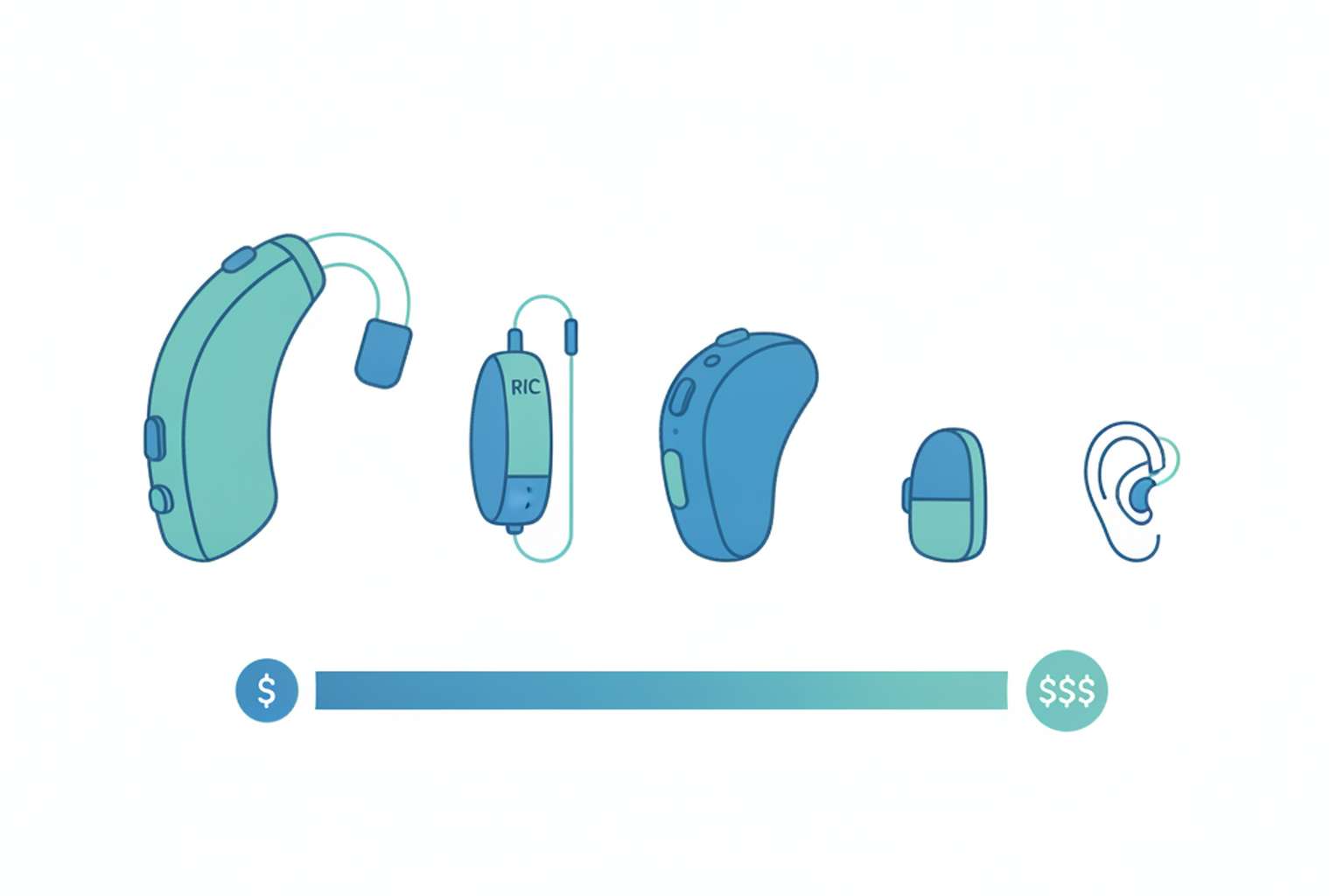
Hearing aid style affects both price and performance. Here is a general breakdown of what you can expect to pay per pair in 2026:
- Behind-the-ear (BTE): $2,500 to $7,000
- Receiver-in-canal (RIC): $2,500 to $6,500
- In-the-ear (ITE): $2,000 to $5,500
- In-the-canal (ITC): $2,200 to $5,800
- Completely-in-canal (CIC): $2,800 to $6,000
- Invisible-in-canal (IIC): $3,000 to $7,000
Smaller devices tend to cost more because they require custom shells and miniaturized components. Larger devices can accommodate more features and bigger batteries at a lower manufacturing cost.
Behind-the-Ear (BTE) Hearing Aid Costs
BTE hearing aids sit behind the ear and deliver sound through a tube to a custom earmold. They handle severe to profound hearing loss well and offer the most power per dollar.
Standard BTE Models
Standard BTE models range from $2,500 to $5,000 per pair at a clinic. These devices include directional microphones, feedback cancellation, and multiple listening programs. They work well for patients with significant hearing loss who need strong amplification.
Power BTE Models
Power BTE models cost $3,500 to $7,000 per pair and deliver higher output for profound hearing loss. They are larger than standard BTEs but offer the amplification power that smaller devices cannot match.
Receiver-in-Canal (RIC) Hearing Aid Costs
RIC hearing aids are the most popular style dispensed in clinics today. They combine a discreet behind-the-ear housing with a thin wire that connects to a speaker inside the ear canal.
- Basic RIC: $2,500 to $3,500 per pair
- Mid-tier RIC: $3,500 to $5,000 per pair
- Premium RIC: $5,000 to $6,500 per pair
RIC devices offer a natural sound quality, comfortable fit, and open-ear design that reduces the plugged-up feeling some patients experience with custom molds. Our team fits RIC devices more than any other style because they balance performance, discretion, and value.
Custom-Molded Hearing Aid Costs: ITE, ITC, CIC, and IIC
Custom-molded hearing aids are built from an impression of your ear canal. They range from full-shell models that fill the outer ear to tiny invisible-in-canal devices that sit deep within the canal.
Full-Shell ITE and ITC Models
Full-shell ITE devices cost $2,000 to $5,500 per pair. Their larger size accommodates bigger batteries, volume controls, and program buttons - helpful for patients with dexterity concerns. ITC models range from $2,200 to $5,800 per pair and sit partially in the ear canal while still offering manual controls and dual microphones.
IIC and CIC Models
IIC and CIC devices are the smallest hearing aids available. CIC models cost $2,800 to $6,000 per pair while IIC models range from $3,000 to $7,000 per pair. They require precise custom shells and miniaturized components, which drives the price up. These devices suit mild to moderate hearing loss and patients who prioritize cosmetics above all else. Their small size means shorter battery life and fewer manual controls.
Prescription vs OTC Hearing Aid Costs
The FDA's 2022 OTC hearing aid rule created a new pricing tier for adults with mild to moderate hearing loss. Understanding the difference between prescription and OTC devices helps you compare value accurately.
Prescription Hearing Aids
Prescription hearing aids require a hearing test and professional fitting by a licensed specialist. They cost $2,000 to $7,000 per pair but include programming, follow-up care, and warranties. They handle all levels of hearing loss, including severe and profound.
Over-the-Counter Hearing Aids
OTC hearing aids cost $300 to $800 per pair and are available without a prescription. One consumer reported paying $300 online versus $6,000 at a clinic for devices that served similar needs after OTC deregulation (@Siarl1950, Aug 2022). OTC devices work for mild to moderate loss only and do not include professional fitting or customized programming.
What Factors Affect Hearing Aid Cost and Technology Level
Multiple variables shape the final price you pay, and technology level is the single largest price driver within a given brand. The same manufacturer may offer three or four tiers with dramatically different feature sets.
Basic Technology
Basic devices include 4 to 8 channels, directional microphones, and basic noise reduction. They cost $2,000 to $3,500 per pair and work well for patients who spend most of their time in quiet environments.
Mid-Tier Technology
Mid-tier devices offer 12 to 16 channels, wind noise reduction, and automatic program switching. They range from $3,500 to $5,000 per pair and suit patients who socialize regularly and encounter varied listening environments.
Premium Technology
Premium devices feature 16 to 24+ channels, artificial intelligence noise processing, motion sensors, and Bluetooth streaming. They cost $5,000 to $7,500 per pair. Premium technology benefits patients with active lifestyles who frequently navigate restaurants, meetings, and group settings.
Other factors that affect cost include provider and service model, brand reputation, warranty length, and geographic location. Clinic prices bundle services that other channels charge separately for, which explains much of the price gap between providers.
Professional Services Included in the Price
When you pay $4,000 to $6,000 at a clinic, a significant portion covers professional services - not just the hardware. Our team bundles the following into every hearing aid purchase:
- Comprehensive hearing evaluation
- Device selection and fitting consultation
- Custom ear impressions and molding (for ITE, ITC, CIC, IIC styles)
- Real-ear measurement and fine-tuning programming
- Follow-up adjustment visits for 1 to 3 years
- Wax guard and dome replacements
- Manufacturer warranty and loss-and-damage coverage
- In-office repairs and loaner devices
These services are what separate a clinic purchase from a Costco or OTC transaction. When one patient compared a $1,600 Costco price to a $4,000 clinic quote, the difference was the multi-year service package - not the hearing aids themselves.
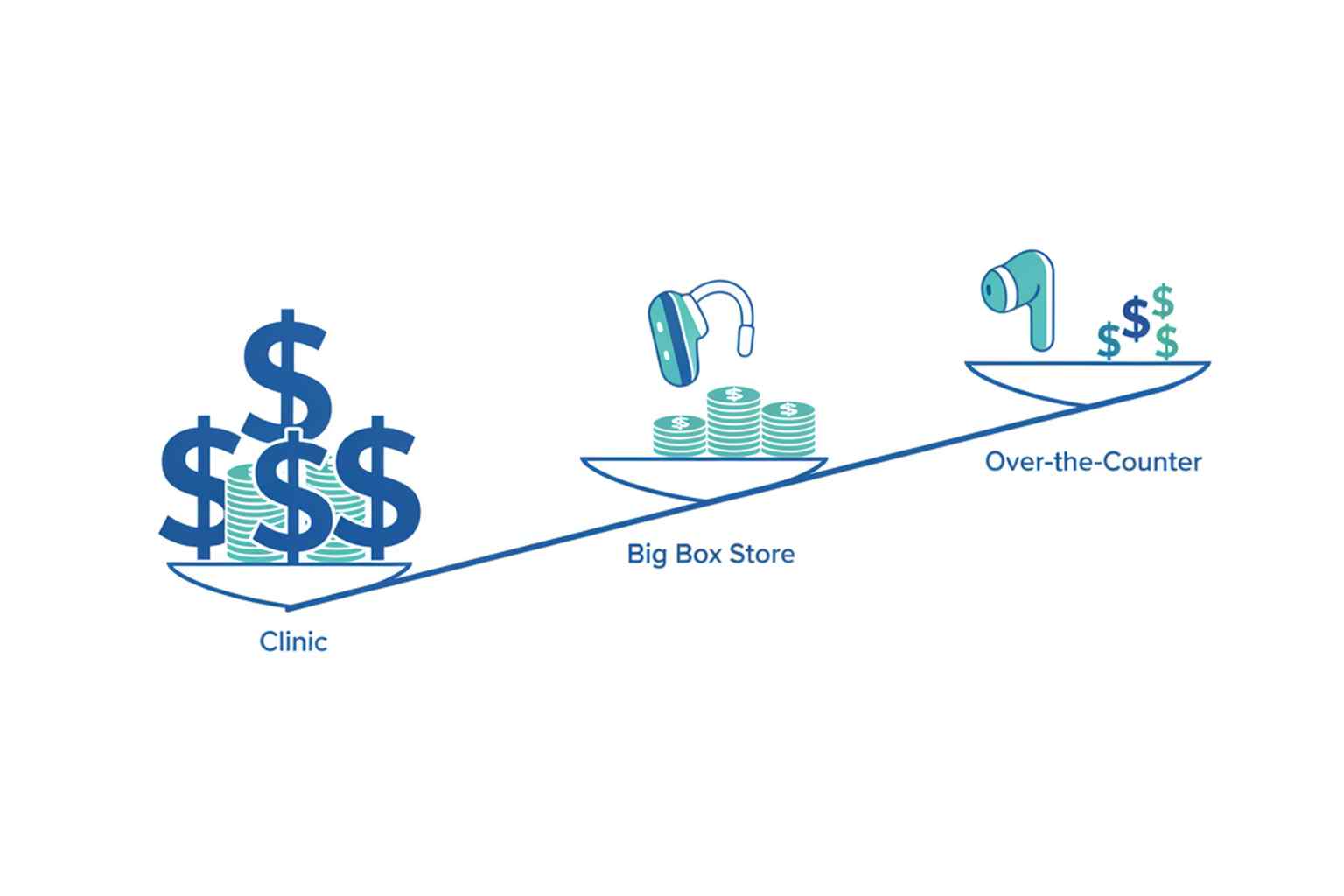
Clinic vs Costco vs OTC: Real Price Comparisons
The table below compares the three main hearing aid purchasing channels side by side.
| Channel | Price Range (per pair) | What Is Included | Pros | Cons |
|---|---|---|---|---|
| Audiology Clinic | $4,000 - $7,500 | Hearing test, fitting, programming, follow-up visits, warranty, repairs | Professional fitting, custom programming, ongoing care, all loss levels | Highest upfront cost |
| Costco Hearing Center | $1,400 - $1,800 | Basic hearing screening, fitting, limited follow-up | Significant cost savings, reputable brands | Fewer service visits, limited brand selection, membership required |
| Over-the-Counter (OTC) | $300 - $800 | Self-fitting app, basic instructions | Lowest price, no prescription needed, convenient | No professional fitting, mild to moderate loss only, limited support |
A real-world example: a patient paid $7,500 at an audiologist for devices available at Costco for $1,500 - the same hearing aids with all the difference in markup and bundled services (@SkyleDye, May 2026). Another patient compared $1,600 at Costco to $4,000 to $5,000 quotes from clinics (@ShannonHortman, Jun 2026).
Hidden Costs: Batteries, Replacements, and Maintenance
The sticker price is not the full cost of owning hearing aids. Over a 30-year period, one patient calculated total costs of $1,100 to $7,400 per pair - plus thousands in batteries and replacement cycles (@MichaelCHaymes, Jun 2026).
Battery Costs
Traditional zinc-air batteries cost $30 to $150 per year depending on device size and daily wear time. The smallest devices (IIC, CIC) use the most expensive batteries and drain them fastest.
- Size 10 (yellow): $0.80 to $1.20 per battery, 3 to 7 day lifespan
- Size 312 (brown): $0.50 to $0.90 per battery, 5 to 10 day lifespan
- Size 13 (orange): $0.40 to $0.70 per battery, 6 to 14 day lifespan
- Size 675 (blue): $0.40 to $0.60 per battery, 10 to 20 day lifespan
Rechargeable Battery Replacement
Rechargeable hearing aids eliminate disposable battery costs but require battery pack replacement every 3 to 5 years. Replacement costs $200 to $500 per device. One patient noted that at $3,000 per hearing aid, replacement cycles add up to $6,000 each time (@duck_duck_bitch, Mar 2024).
Repairs and Maintenance
Out-of-warranty repairs cost $150 to $600 per device. Annual maintenance including cleaning, tubing replacement, and reprogramming may add $100 to $300 per year if not covered by your service package.
Does Insurance Cover Hearing Aids?
Most private insurance plans cover $0 toward hearing aids. This is one of the most frustrating realities for patients. A patient shared that their hearing aids cost $4,000 to $6,000 per pair with insurance covering nothing (@nicstas_, Jul 2026).
Medicare and Medicaid
Original Medicare does not cover hearing aids or hearing exams for fitting them. Medicare Part B covers diagnostic hearing tests ordered by a doctor for medical necessity, but not the devices themselves. Medicaid coverage varies by state. Florida Medicaid provides limited hearing aid benefits for eligible adults, but coverage amounts and qualifying criteria are restrictive.
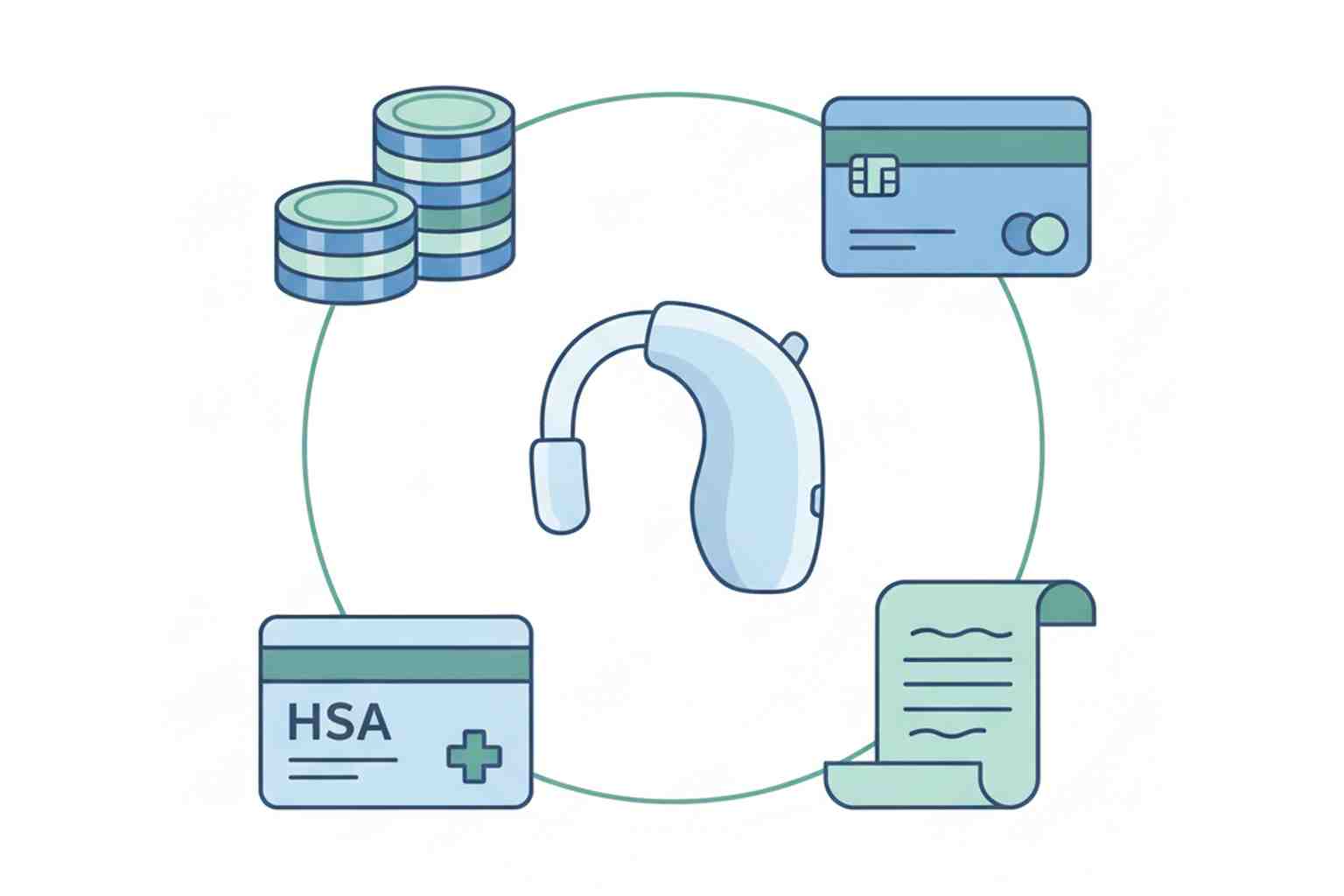
Private Insurance, HSA, and FSA
Some employer plans offer hearing aid benefits ranging from $500 to $3,000 per ear, typically every 3 to 5 years. Check your plan documents carefully - many plans list hearing aids as explicitly excluded. Health savings accounts and flexible spending accounts can be used for hearing aids and related services. These accounts provide tax savings even when insurance offers no direct benefit.
How to Pay for Hearing Aids: Financing and Payment Options
Several financing paths can make hearing aids more manageable on a monthly budget.
- Payment plans: Many clinics offer monthly payment plans through third-party financing companies like CareCredit. These plans may offer 0% interest for 6 to 24 months depending on the purchase amount and your credit
- Veterans benefits: The VA provides hearing aids at no cost to eligible veterans with service-connected hearing loss or certain qualifying conditions
- Vocational rehabilitation: Florida's Division of Vocational Rehabilitation may cover hearing aids for individuals whose hearing loss affects their employment
- Nonprofit assistance: Organizations like Hearing Aid Project, Sertoma, and Lions Clubs provide hearing assistance programs for individuals with financial need
Are Expensive Hearing Aids Worth It?
Higher prices do not always mean better outcomes. The right hearing aid depends on your hearing loss, lifestyle, and listening needs - not just the price tag.
When Premium Technology Pays Off
Premium devices justify their cost for patients who work in demanding listening environments like classrooms or offices, attend frequent social gatherings, or have hearing loss that requires sophisticated noise processing. Patients who use Bluetooth hearing aids for phone calls and media streaming also benefit from premium features, as do those who need automatic adjustments across multiple environments.
When Basic Technology Suffices
Basic or mid-tier devices work well for patients who spend most of their time in quiet settings, primarily need hearing assistance for one-on-one conversations, or watch television and talk on the phone at home. Patients with mild to moderate hearing loss often find that mid-tier technology delivers the performance they need without paying for features they will never use.
How to Get the Best Value for Your Hearing Aid Investment
Getting the best value means matching the device to your needs and understanding exactly what you are paying for. Start with a comprehensive hearing test to reveal your exact hearing loss profile. Without this information, you cannot choose the right technology level or device style.
Compare total cost of ownership by factoring in battery or rechargeable battery replacement costs over 4 to 5 years, warranty length and what it covers, number of included follow-up visits, loss-and-damage replacement terms, and out-of-warranty repair costs. Some clinics offer unbundled pricing that separates the device cost from professional services, which can lower your upfront cost if you have hearing aid benefits through insurance.
Consider affordable hearing aids at every technology level. Our team helps patients identify where they can save without sacrificing the performance their hearing requires.
How Ear to Hear Can Help You Find the Right Hearing Aid
Our team at Ear to Hear understands that hearing aid cost is a major decision. We work with patients every day who are weighing their options and trying to make sense of conflicting prices. We provide transparent pricing, comprehensive hearing evaluations, and honest recommendations based on your hearing loss and budget - not sales targets.
We offer hearing aids across multiple technology levels and price points, and we walk you through exactly what each option includes. Every fitting includes real-ear measurement verification, follow-up adjustment visits, and ongoing support to ensure your devices perform as they should. Call us at (813) 345-8135 to speak with our licensed specialists.
We serve patients in Wesley Chapel and the greater Tampa Bay area with professional, dependable hearing care. Schedule a free hearing test today and let our experienced team guide you through every option.
Frequently Asked Questions
The average cost of prescription hearing aids from a clinic is $4,000 to $6,000 per pair. Costco hearing aids average $1,400 to $1,800 per pair, and OTC devices range from $300 to $800 per pair. The price depends on technology level, style, provider, and included services. Call us at (813) 345-8135 for a personalized quote.
Hearing aids with tinnitus masking features or fractal tone therapy work well for many patients. Mid-tier to premium devices from brands like Oticon, Phonak, and ReSound offer dedicated tinnitus programs. A professional hearing evaluation determines which device best addresses both your hearing loss and tinnitus symptoms.
Not always. Lower-cost OTC devices work for mild hearing loss in quiet environments, but they lack the professional fitting, custom programming, and noise processing that prescription devices provide. The key is matching the technology to your hearing loss and lifestyle. Overspending on features you do not use wastes money, but underspending on a device that cannot handle your loss leads to poor results.
No. Original Medicare does not cover hearing aids or hearing exams for fitting them. Medicare Part B covers diagnostic hearing tests when ordered by a doctor for medical necessity, but the hearing aids themselves are not covered. Some Medicare Advantage plans offer limited hearing aid benefits, so check your specific plan.
References
Ready to find the right hearing aid? Schedule a free hearing test or call us at (813) 345-8135.