
Key Takeaways
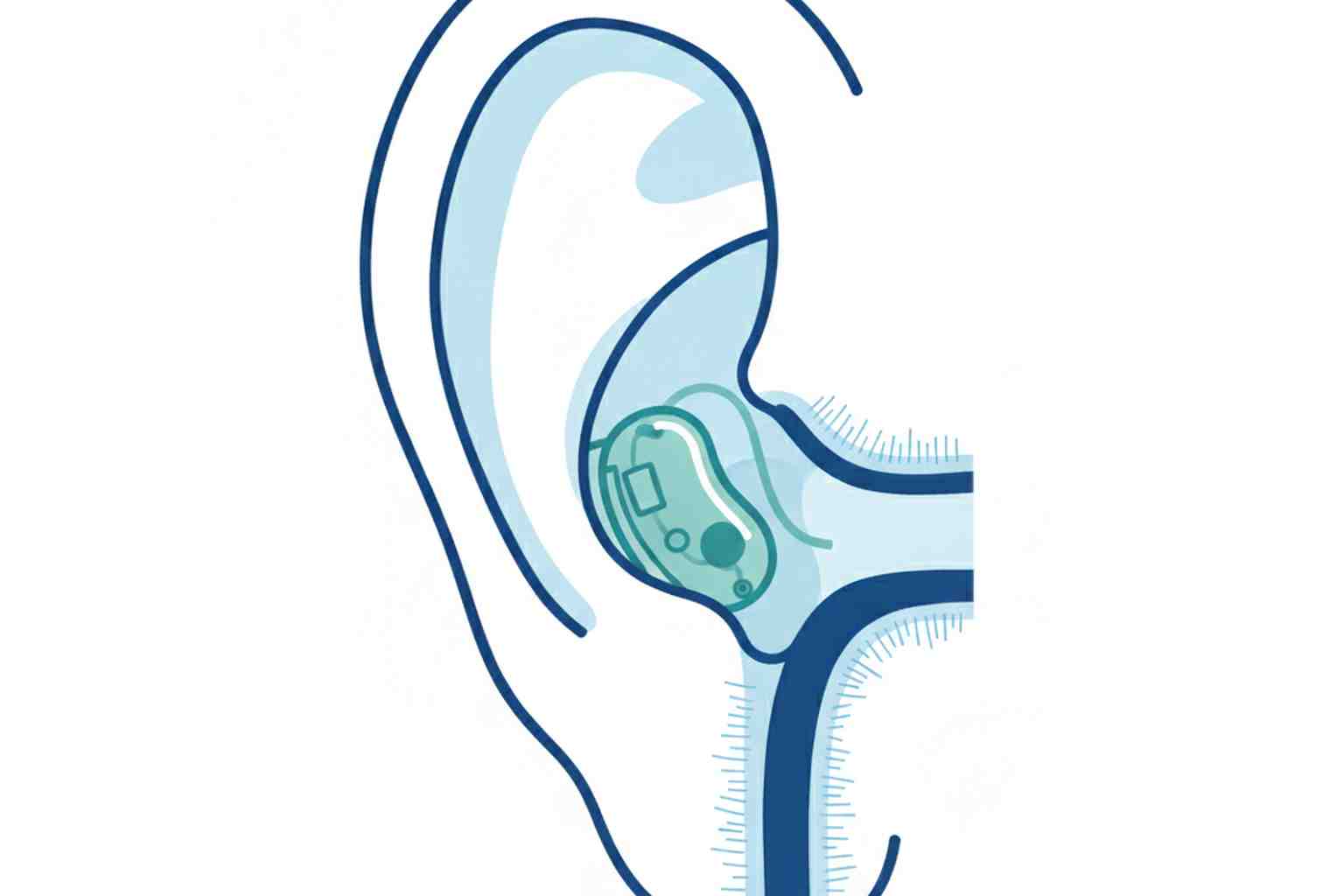
- Invisible hearing aids fit deep inside the ear canal so nobody can see them
- IIC and CIC are the two main styles of invisible hearing aids available
- Best for mild to moderate hearing loss with limited power for severe loss
- Custom-molded for each patient from a precise ear canal impression
- Natural sound quality from deep canal placement using the ear's anatomy
- Ear to Hear provides professional fittings across Florida, Illinois, and Missouri
That moment when you realize everyone can see your hearing aid - the self-conscious glance in the mirror, the worry that coworkers or friends will notice. At Ear to Hear in Wesley Chapel, our licensed specialists help patients find hearing solutions so discreet they are practically invisible.
Invisible hearing aids have transformed how people experience hearing care. These small hearing devices fit deep inside the ear canal, delivering clear amplification without anyone knowing you wear them. This guide covers the types of invisible hearing aids available, how they work, who they help most, and what to expect during a fitting.
What Are Invisible Hearing Aids?
Invisible hearing aids are hearing devices designed to sit completely inside the ear canal, hidden from view. Unlike traditional behind-the-ear (BTE) models, these devices use the natural shape of your ear canal to deliver sound. The two main categories are IIC (Invisible-in-Canal) and CIC (Completely-in-Canal) hearing aids.
IIC hearing aids fit the deepest in the ear canal, making them the most discreet option available. They sit past the second bend of the canal, so they are invisible hearing even when someone looks directly into your ear. CIC hearing aids sit slightly shallower but still remain hidden from outside view. Both styles are custom-molded to fit your unique ear canal shape.
These devices prove that hearing aids do not need to be visible to deliver outstanding performance. Modern invisible hearing aids include advanced features like noise reduction, directional microphones, and wireless connectivity in packages smaller than a peanut.
How Do Invisible Hearing Aids Work?
Invisible hearing aids work on the same principle as all hearing aids. A tiny microphone picks up sound from your environment, a microchip processes and amplifies that sound, and a speaker delivers it directly to your eardrum. The difference lies in placement.
Because invisible hearing aids fit deep inside the ear canal, they take advantage of the ear's natural acoustic properties. The pinna (outer ear) and canal shape naturally collect and funnel sound. When the hearing aid sits deep in the canal, it preserves these natural sound-gathering effects. This natural resonance often produces a more realistic sound quality compared to BTE models.
The deep placement also helps with telephone use. You can hold a phone to your ear normally, just as you always have, because the hearing aid sits inside the canal rather than behind the ear. This is a significant advantage for professionals who spend hours on calls.
Types of Invisible Hearing Aids
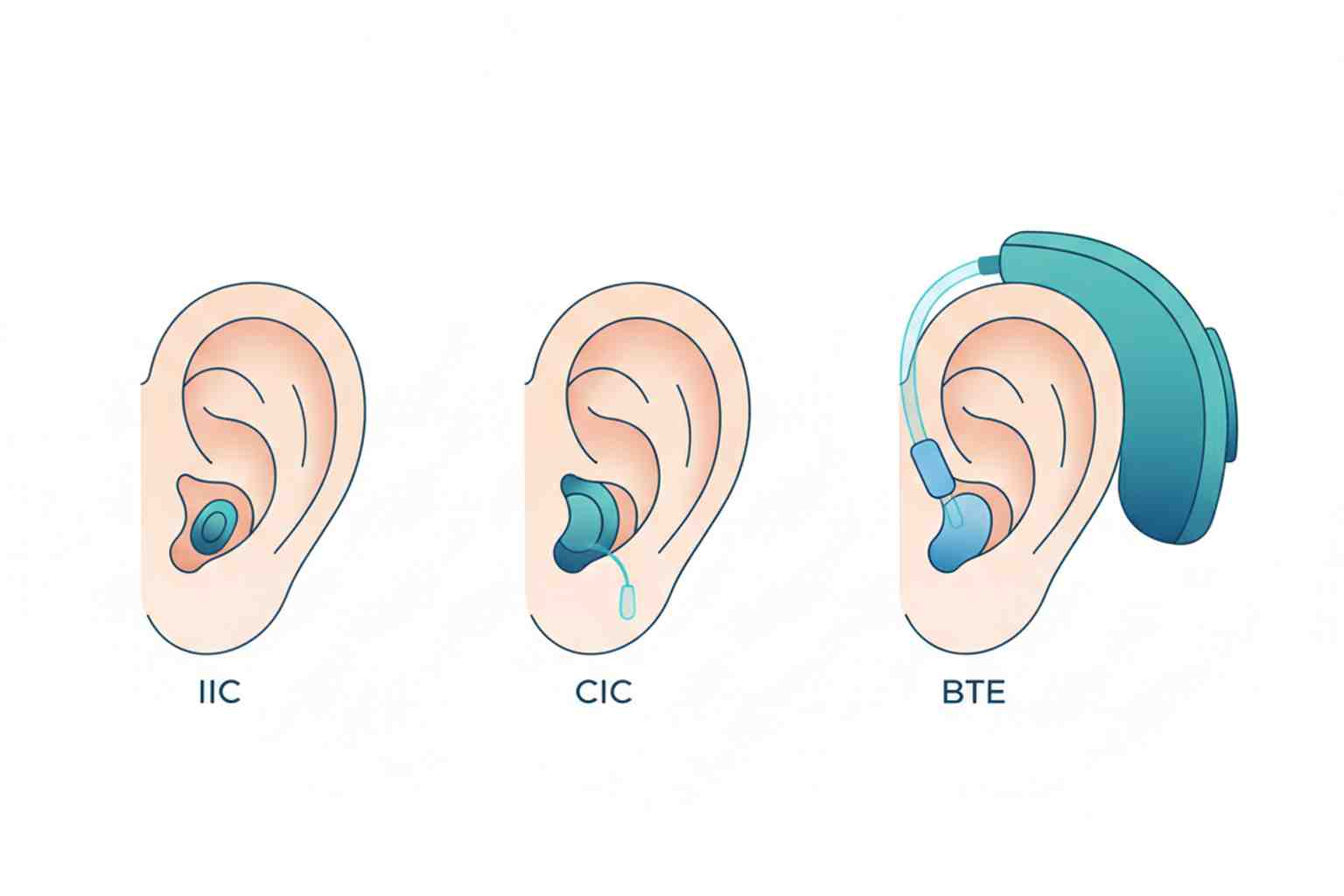
Understanding the different types of invisible hearing aids helps you choose the right option for your hearing loss and lifestyle. Each style has distinct advantages.
IIC (Invisible-in-Canal)
IIC hearing aids are the smallest and most discreet hearing devices available. They fit deep in the ear canal, past the second bend, making them truly invisible to outside observers. These devices are ideal for mild to moderate hearing loss. Their deep placement provides natural sound quality and reduces the occlusion effect (the plugged-up feeling common with hearing aids).
CIC (Completely-in-Canal)
CIC hearing aids sit slightly shallower in the ear canal but remain hidden from view. They are slightly larger than IIC models, which allows for more features and slightly more power. CIC hearing aids work well for mild to moderately severe hearing loss. The slightly larger size means easier handling for battery insertion and removal.
Extended-Wear Hearing Aids
Some manufacturers offer extended-wear invisible hearing aids that stay in the ear canal for months at a time. A licensed specialist inserts and removes them during office visits. These devices are ideal for patients who want a truly maintenance-free experience. You can wear them through showers, sleep, phone calls, and daily activities without ever touching them.
Who Is a Good Candidate for Invisible Hearing Aids?
Invisible hearing aids work best for people with mild to moderate hearing loss. The small size of these devices limits their power, so they may not provide enough amplification for severe or profound hearing loss.
Good candidates typically share these characteristics:
| Candidate Characteristic | Why It Matters |
|---|---|
| Hearing loss level | Mild to moderate across frequencies |
| Ear canal size | Large enough to accommodate the device |
| Manual dexterity | Good for handling small batteries (unless using extended-wear) |
| Lifestyle | Active where discreet appearance matters |
| Telephone preference | Preference for natural telephone use |
A hearing care professional can evaluate your ear canal size, hearing loss pattern, and lifestyle needs to determine if invisible hearing aids are right for you. The evaluation includes a thorough hearing test and a physical examination of your ear canals.
Benefits of Invisible Hearing Aids
The advantages of invisible hearing aids go beyond cosmetic appeal. These devices offer several practical benefits that improve daily hearing experiences.
Discreet appearance is the primary reason most patients choose invisible hearing aids. Nobody needs to know you wear hearing aids. This matters for professionals, active adults, and anyone who feels self-conscious about visible devices.
Natural sound quality comes from the deep canal placement. The ear's natural anatomy collects and shapes sound before it reaches the hearing aid microphone. This produces a richer, more realistic sound compared to behind-the-ear styles.
Comfortable fit results from custom-molded manufacturing. Each invisible hearing aid is made from an impression of your ear canal, so it fits your ear perfectly. Many patients report forgetting they are wearing them.
Normal telephone use is a major advantage. Because the device sits inside the canal, you hold the phone to your ear as you always have. No feedback whistling or awkward positioning needed.
Wind noise reduction happens naturally. The ear canal shields the microphone from wind, reducing the whooshing sound that plagues behind-the-ear models during outdoor activities.
Limitations to Consider
Invisible hearing aids are not perfect for every situation. Understanding the limitations helps set realistic expectations.
Limited power means invisible hearing aids may not work for severe hearing loss. The tiny components cannot produce the amplification needed for profound hearing loss. Patients with severe loss may need BTE or receiver-in-canal (RIC) models.
Small batteries are a practical challenge. IIC and CIC hearing aids use size 10 batteries, the smallest available. These batteries last only 3 to 5 days and can be difficult for people with dexterity issues to handle. Extended-wear options eliminate this concern.
Limited advanced features exist because of the small size. While modern invisible hearing aids include noise reduction and directional microphones, they may not have room for Bluetooth streaming or large rechargeable batteries. However, some newer models now offer Bluetooth connectivity.
Cerumen (earwax) sensitivity affects invisible hearing aids more than other styles. Because they sit deep in the canal, earwax can easily block the speaker. Regular cleaning and maintenance are essential.
Not suitable for all ear canals is a physical limitation. Some people have ear canals too narrow or too curved for invisible hearing aids. Your specialist will determine this during the fitting process.
The Fitting Process

Getting invisible hearing aids requires several visits to a hearing care professional. The process ensures your devices fit perfectly and deliver the right amplification.
Step 1: Hearing evaluation. Your specialist conducts a comprehensive hearing test to determine your hearing loss pattern and whether invisible hearing aids can address it.
Step 2: Ear canal examination. The specialist examines your ear canals to ensure they are healthy, wide enough, and shaped appropriately for deep-fitting devices.
Step 3: Ear impressions. The specialist takes precise impressions of your ear canals. These impressions are sent to the manufacturer to create your custom-molded hearing aids.
Step 4: Fitting appointment. Two to three weeks later, your custom hearing aids arrive. The specialist inserts them, programs them to your hearing loss prescription, and verifies the fit and sound quality.
Step 5: Follow-up visit. After wearing the hearing aids for a week or two, you return for adjustments. The specialist fine-tunes the programming based on your real-world experience.
Invisible Hearing Aids vs. Other Styles
Choosing between invisible hearing aids and other styles depends on your priorities. Here is how they compare:
| Comparison | Key Differences |
|---|---|
| IIC vs. BTE | IIC offers invisibility and natural sound. BTE offers more power, easier handling, and more features including Bluetooth. Learn more about behind the ear hearing aids to see if they fit your needs. |
| IIC vs. RIC | RIC sits behind the ear with a wire into the canal. It offers a good compromise of discretion and power, but is visible. |
| IIC vs. OTC invisible | Over-the-counter hearing aids cannot match the custom fit, sound quality, and professional programming of prescription IIC models. |
Cost and Insurance
The cost of invisible hearing aids varies based on technology level and features. Premium IIC models with advanced noise processing cost more than basic models. Many insurance plans offer partial coverage, and some manufacturers provide financing options.
Medicare does not cover hearing aids, but some Medicare Advantage plans include hearing benefits. Your specialist can help you understand your options and navigate insurance questions.
Maintaining Your Invisible Hearing Aids
Proper maintenance extends the life of your invisible hearing aids and keeps them performing well. Daily care takes just a few minutes.
- Clean the device daily with a soft, dry cloth
- Use a wax loop to remove debris from the speaker opening
- Store hearing aids in a dehumidifier when not wearing them
- Replace batteries promptly when you hear the low-battery alert
- Schedule professional cleanings every 3 to 6 months
- Avoid moisture exposure (remove before showering or swimming)
- National Institute on Deafness and Other Communication Disorders (NIDCD) - Hearing Aids
- American Speech-Language-Hearing Association (ASHA) - Hearing Aid Styles
- Hearing Loss Association of America - Types of Hearing Aids
- FDA regulations on hearing aid devices and OTC hearing aids
The best invisible hearing aid depends on your hearing loss, ear canal shape, and lifestyle. IIC models from manufacturers like Phonak, Signia, and ReSound consistently rank highly. However, the right choice is the one your licensed specialist recommends after evaluating your specific needs. A hearing test and ear canal examination determine which model fits your ear and addresses your hearing loss pattern effectively.
Yes, invisible hearing aids work effectively for mild to moderate hearing loss. They use the same proven amplification technology as larger hearing aids, just in a smaller package. The deep canal placement provides natural sound quality. However, they are not suitable for severe or profound hearing loss because the small size limits amplification power. A hearing care professional can tell you if your hearing loss falls within the treatable range for invisible models.
Original Medicare does not cover hearing aids or hearing aid fittings. This includes both the devices and the exams needed for fitting. However, some Medicare Advantage plans offer hearing benefits that include partial coverage. Check with your plan provider. Ear to Hear also offers financing options to help make hearing aids affordable. Our team can review your insurance and discuss payment plans during your visit. Schedule a free hearing test to get started, or call us at (813) 345-8135.
Hearing aids for Meniere's disease need to address fluctuating low-frequency hearing loss. Invisible hearing aids may work for mild Meniere's-related loss, but many patients benefit from BTE or RIC models that offer more power and flexibility. Your specialist will program the hearing aid to match your specific audiogram. Call (813) 345-8135 to schedule a consultation. Regular hearing tests help track changes in your hearing so your specialist can adjust the programming as needed.
References
- National Institute on Deafness and Other Communication Disorders (NIDCD) - Hearing Aids
- American Speech-Language-Hearing Association (ASHA) - Hearing Aid Styles
- Hearing Loss Association of America - Types of Hearing Aids
- FDA regulations on hearing aid devices and OTC hearing aids
Ready to Explore Invisible Hearing Aids?
A free hearing evaluation from our licensed specialists determines if invisible hearing aids are right for you. We check your ear canal, test your hearing, and recommend the most discreet solution for your needs. Schedule your free hearing test today or call (813) 345-8135.