
Key Takeaways
- A perforated eardrum is a hole or tear in the tympanic membrane that can result from infections, pressure changes, loud sounds, or injury
- Common symptoms include ear pain, ear drainage, hearing loss, and a feeling of fullness in the ear
- Most eardrum perforations heal on their own within 3 to 6 weeks without treatment
- See a doctor if you experience severe pain, hearing loss, or drainage lasting more than a few days
- Avoid ear drops, swimming, and cotton swabs until your eardrum has fully healed
- An audiologist or ENT specialist can evaluate the perforation and recommend treatment if needed
What Is a Perforated Eardrum?
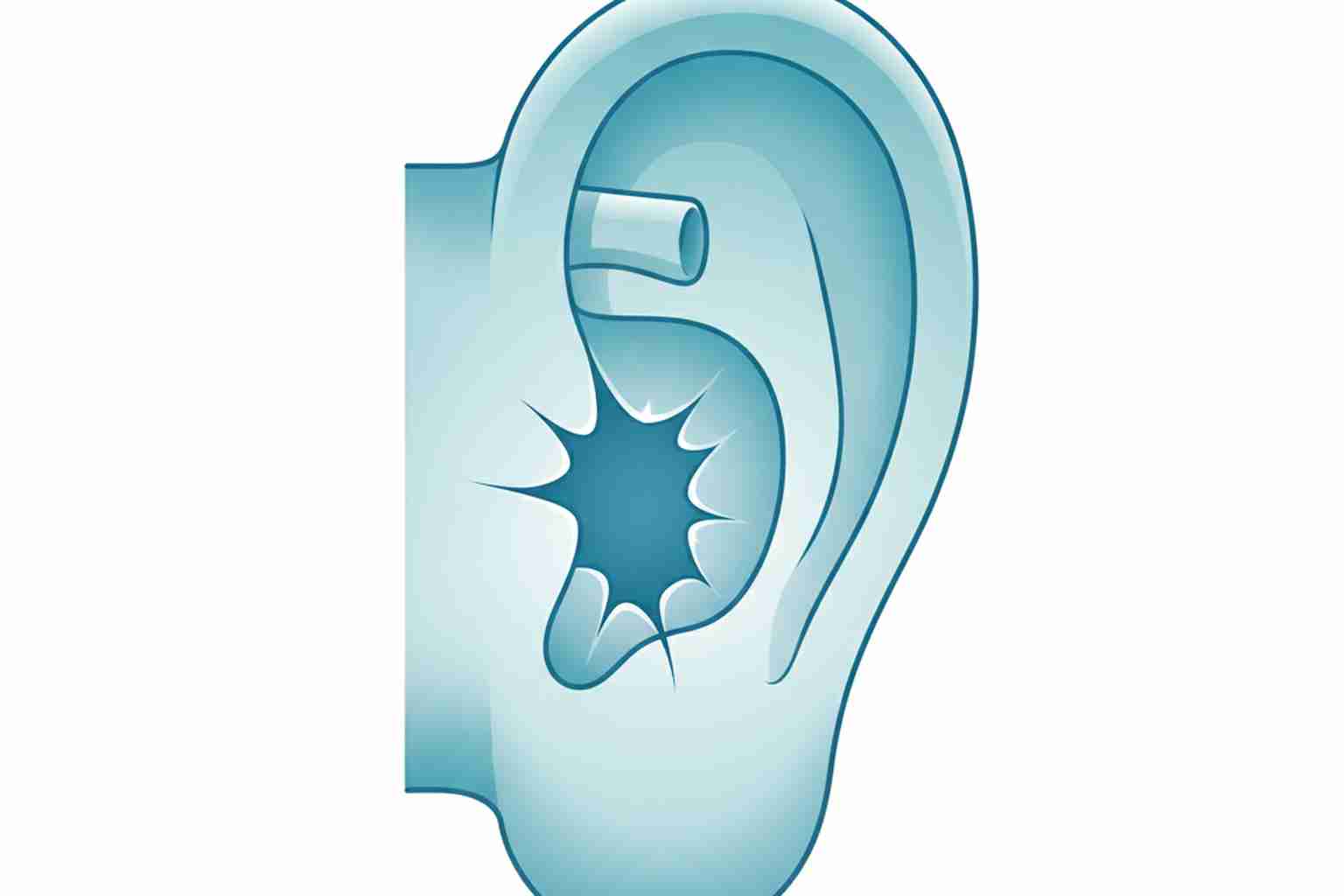
A perforated eardrum is a tear or hole in the tympanic membrane, the thin tissue that separates your outer ear from your middle ear. This condition can cause discomfort, hearing changes, and ear drainage. At Ear to Hear, our team helps patients understand what a ruptured eardrum means for their hearing health and guides them through treatment options.
Most perforated eardrums heal on their own within a few weeks, but some require medical treatment or surgical repair. Knowing the symptoms and when to seek professional care can prevent complications like hearing loss or middle ear infections.
A perforated eardrum, also called a ruptured eardrum or tympanic membrane perforation, is a hole or tear in the thin membrane that vibrates when sound waves enter your ear. This membrane plays a vital role in hearing. It transmits sound vibrations to the tiny bones in your middle ear, which then send signals to your brain.
When the eardrum tears, sound transmission becomes less efficient. This can lead to temporary hearing loss in the affected ear. The size of the hole matters. Small perforations may cause no noticeable symptoms, while larger tears can produce significant hearing loss and discomfort.
The eardrum also acts as a barrier. It protects your middle ear from water, bacteria, and foreign objects. A perforation breaks that barrier, increasing the risk of middle ear infections. If you wear hearing aids, let your audiologist know about any ear drainage before continuing use.
Perforated Eardrum Symptoms
Recognizing the symptoms of a perforated eardrum helps you seek treatment early. The most common signs include:
- Ear pain that may start suddenly and then stop quickly
- Ear drainage or fluid leaking from the ear canal
- Hearing loss or muffled hearing in the affected ear
- A feeling of fullness or pressure in the ear
- Ringing in the ear, also called tinnitus
- Dizziness or balance problems in some cases
Some people notice a popping sensation when the eardrum ruptures. This may happen during a flight, after a loud noise, or during a severe ear infection. The pain often improves once the pressure releases, but the other symptoms can persist.
If you experience these symptoms, a hearing test with a hearing specialist can examine your ear canal and eardrum using an otoscope. This painless exam confirms whether you have a perforation and helps determine the best course of action.
Perforated Eardrum Causes
Several factors can cause a tympanic membrane perforation. Understanding the cause helps prevent future occurrences.
Middle ear infections are the most common cause. Fluid builds up behind the eardrum, creating pressure that can eventually rupture the membrane. This often happens with severe or untreated ear infections.
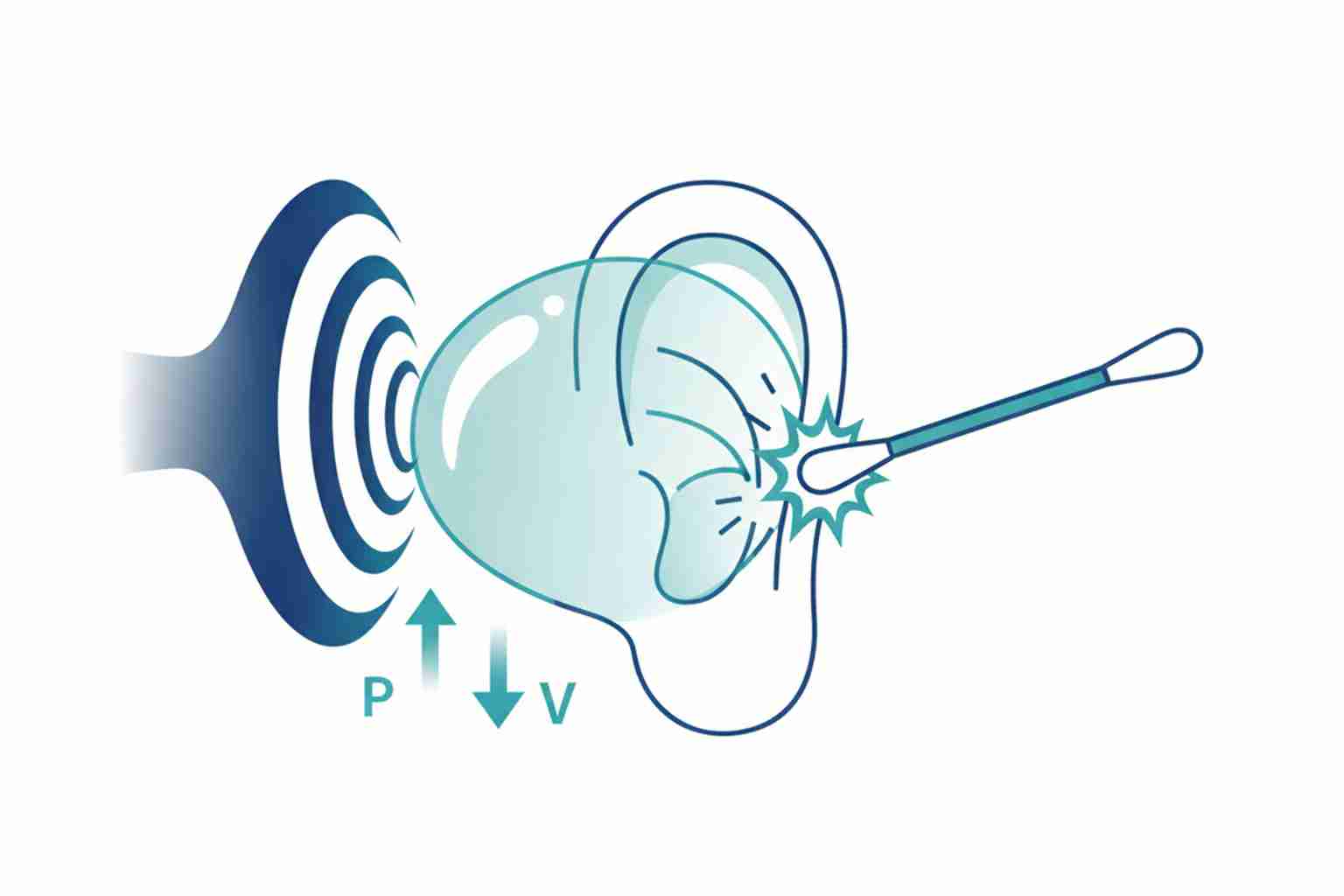
Barotrauma is another frequent cause. Rapid pressure changes during air travel, scuba diving, or driving through mountains can stress the eardrum until it tears. The condition is common among frequent flyers and divers.
Acoustic trauma from exposure to extremely loud sounds can also rupture the eardrum. Explosions, gunshots, and loud concerts produce sound waves intense enough to damage the membrane.
Other causes include:
- Inserting cotton swabs, hairpins, or other objects into the ear canal
- Head trauma or a direct blow to the ear
- Severe slaps to the ear
- Chemical burns from improper ear drop use
Avoid putting anything smaller than your elbow in your ear canal. This simple rule prevents many perforated eardrums and earwax impaction injuries. Patients who use behind the ear hearing aids should have their audiologist check for safe fitting after an eardrum rupture.
Perforated Eardrum Treatment
Treatment for a perforated eardrum depends on the size of the hole and the cause of the rupture. Most small perforations heal without medical intervention within a few weeks.
Your doctor may prescribe antibiotic ear drops if an infection caused the perforation. This prevents bacteria from entering the middle ear through the opening. Over-the-counter pain relievers can help manage discomfort while the eardrum heals.
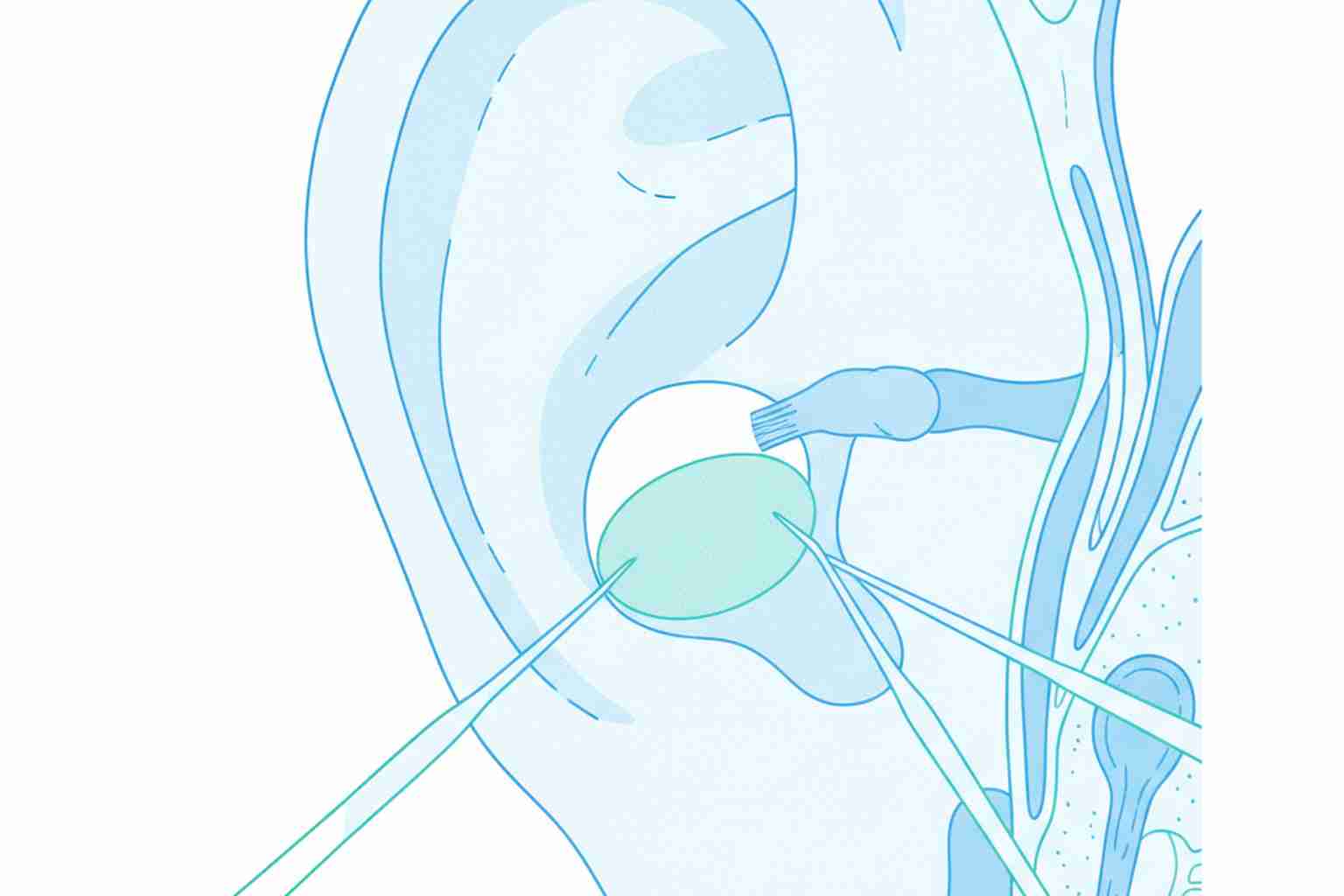
For larger perforations that do not heal on their own, a procedure called a paper patch myringoplasty may help. The doctor places a small patch over the hole to encourage the tissue to grow back together. This is a simple in-office procedure.
Surgical repair may be needed for perforations that fail to close after several months. A tympanoplasty uses a tissue graft to rebuild the eardrum. This surgery has a high success rate and can restore hearing in most cases. An ENT specialist performs this procedure under local or general anesthesia.
While waiting for the eardrum to heal, keep water out of your ear. Avoid swimming, and use cotton balls with petroleum jelly to protect the ear during showers. Do not use ear drops unless prescribed by your doctor. If you use rechargeable hearing aids or Bluetooth hearing aids, ask your audiologist when it is safe to resume wearing them.
Perforated Eardrum Healing Time and Stages
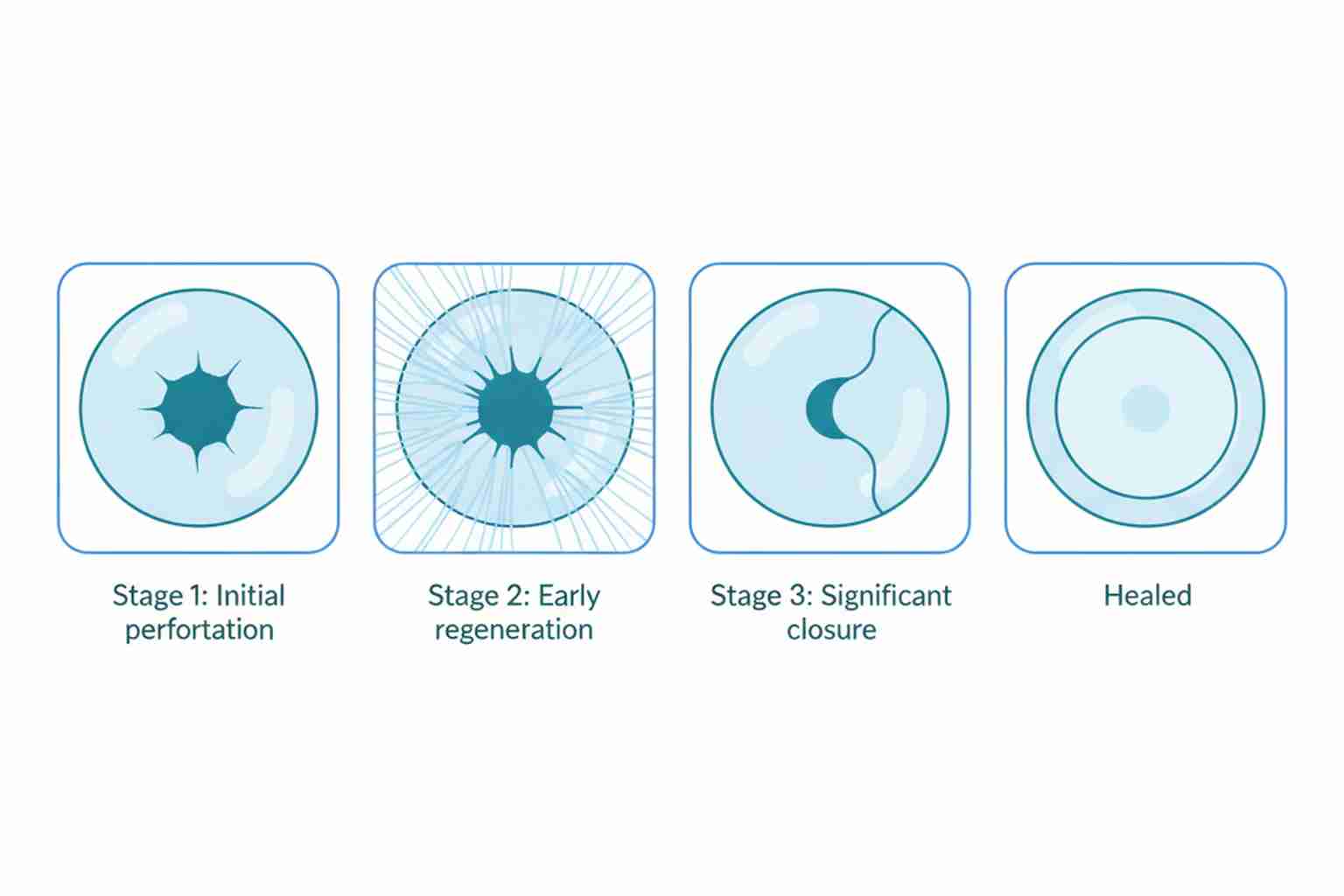
Most perforated eardrums heal on their own within 3 to 6 weeks. The healing process happens in stages as the tissue around the hole regenerates and closes the gap.
In the first few days after the rupture, the edges of the perforation begin to heal. You may notice reduced pain and less drainage during this period. The body sends cells to the damaged area to start rebuilding the membrane.
Over the next few weeks, new tissue grows across the hole. Small perforations can close completely within 2 to 3 weeks. Larger tears may take 4 to 6 weeks or longer.
Factors that affect healing time include:
- The size and location of the perforation
- Your overall health and immune system function
- Whether an infection is present
- How well you keep water and debris out of the ear
- Whether you avoid cotton swabs and ear drops during healing
A follow-up exam with your audiologist or doctor confirms the eardrum has closed. They can also check that your hearing has returned to normal. If the perforation has not healed after 2 to 3 months, surgical options become more likely.

When to See a Doctor for a Ruptured Eardrum
Not every perforated eardrum requires an emergency visit, but certain symptoms warrant prompt medical attention. Seek care right away if you experience:
- Severe ear pain that does not improve
- Hearing loss that persists after the initial rupture
- Blood or pus draining from the ear
- Dizziness, vertigo, or balance problems
- A foreign object stuck in your ear
- Symptoms that do not improve after 3 to 5 days
Should I go to the ER for a perforated eardrum? Most cases do not require an emergency room visit. However, if the rupture resulted from head trauma, a severe blow to the ear, or an explosion, emergency evaluation is appropriate. The same applies if you experience significant hearing loss, severe dizziness, or high fever with ear drainage.
For non-emergency cases, schedule an appointment with your audiologist or primary care physician. They can examine the eardrum, assess the size of the perforation, and determine whether you need a referral to an ENT specialist.
At Ear to Hear, our team provides comprehensive hearing evaluations and hearing care services. If you suspect a perforated eardrum, call us at (813) 345-8135 to schedule a hearing test. Early evaluation helps prevent complications and ensures your eardrum heals properly. You can also schedule a free hearing test online at your convenience. Our experienced specialists are here to help with any ear or hearing concerns you may have. Call (813) 345-8135 today.
Frequently Asked Questions
The most common signs are sudden ear pain that improves quickly, followed by ear drainage, muffled hearing, and a feeling of fullness in the ear. You may also hear a popping sound when the rupture occurs. An audiologist or doctor can confirm the diagnosis by examining your ear canal with an otoscope.
Most perforated eardrums heal on their own within 3 to 6 weeks. Small perforations can close in as little as 2 weeks, while larger tears may take longer. If the hole has not healed after 2 to 3 months, surgical repair may be needed.
Most cases do not require an emergency room visit. However, you should go to the ER if the rupture resulted from head trauma, an explosion, or a severe blow to the ear. Seek emergency care if you experience severe dizziness, high fever, or significant hearing loss.
Yes, many people describe a perforated eardrum as a clogged or full sensation in the ear. This happens because the hole in the eardrum changes how pressure and sound move through the ear canal. The clogged feeling usually improves as the eardrum heals.
References
- National Institute on Deafness and Other Communication Disorders. "Ear Infections in Children." NIH, 2024.
- American Academy of Otolaryngology-Head and Neck Surgery. "Perforated Eardrum." 2024.
- Mayo Clinic. "Ruptured Eardrum (Perforated Eardrum)." Mayo Foundation for Medical Education and Research, 2024.
- Hearing Health Foundation. "Understanding Ear Anatomy and Hearing Loss." 2024.
- Ear to Hear. "Hearing Tests and Ear Health Services." eartohearonline.com, 2026.
Ready to take the first step? Schedule a free hearing test or call us at (813) 345-8135.