
Key Takeaways
- Real ear measurement (REM) is the gold standard for verifying hearing aid performance in your actual ear canal
- A probe microphone is placed in your ear canal to measure sound pressure levels at your eardrum
- REM ensures your hearing aid delivers the right amplification at every frequency, not just average settings
- Studies show REM-verified hearing aids result in significantly better patient satisfaction
- The procedure is painless, quick, and should be part of every hearing aid fitting
- Ear to Hear performs real ear measurement on every hearing aid fitting at our Florida locations
What Is Real Ear Measurement?
If you have been fitted for a hearing aid, you may have heard the term "real ear measurement" from your audiologist. But what does it mean, and why should you care? At Ear to Hear, we consider real ear measurement the gold standard for hearing aid fitting, using it with every patient to ensure your device is tuned to your unique ear canal and hearing needs.
Real ear measurement, often abbreviated as REM, is a verification process that measures exactly how sound travels through your ear canal when wearing your hearing aid. Rather than relying on generic manufacturer settings, REM allows your audiologist to see the actual sound pressure level reaching your eardrum and adjust your device accordingly.
We will explain what real ear measurement is, how it works, why it is essential for proper hearing aid fitting, and what to expect at your appointment. If you are considering hearing aids or feel your current device is underperforming, call us at (813) 345-8135 to schedule a consultation.
Real ear measurement is a clinical verification technique used during hearing aid fitting to confirm your device provides the correct amplification for your specific hearing loss. Unlike initial programming, which relies on mathematical formulas applied to your audiogram, REM measures the actual sound pressure level inside your ear canal while you wear your hearing aid.
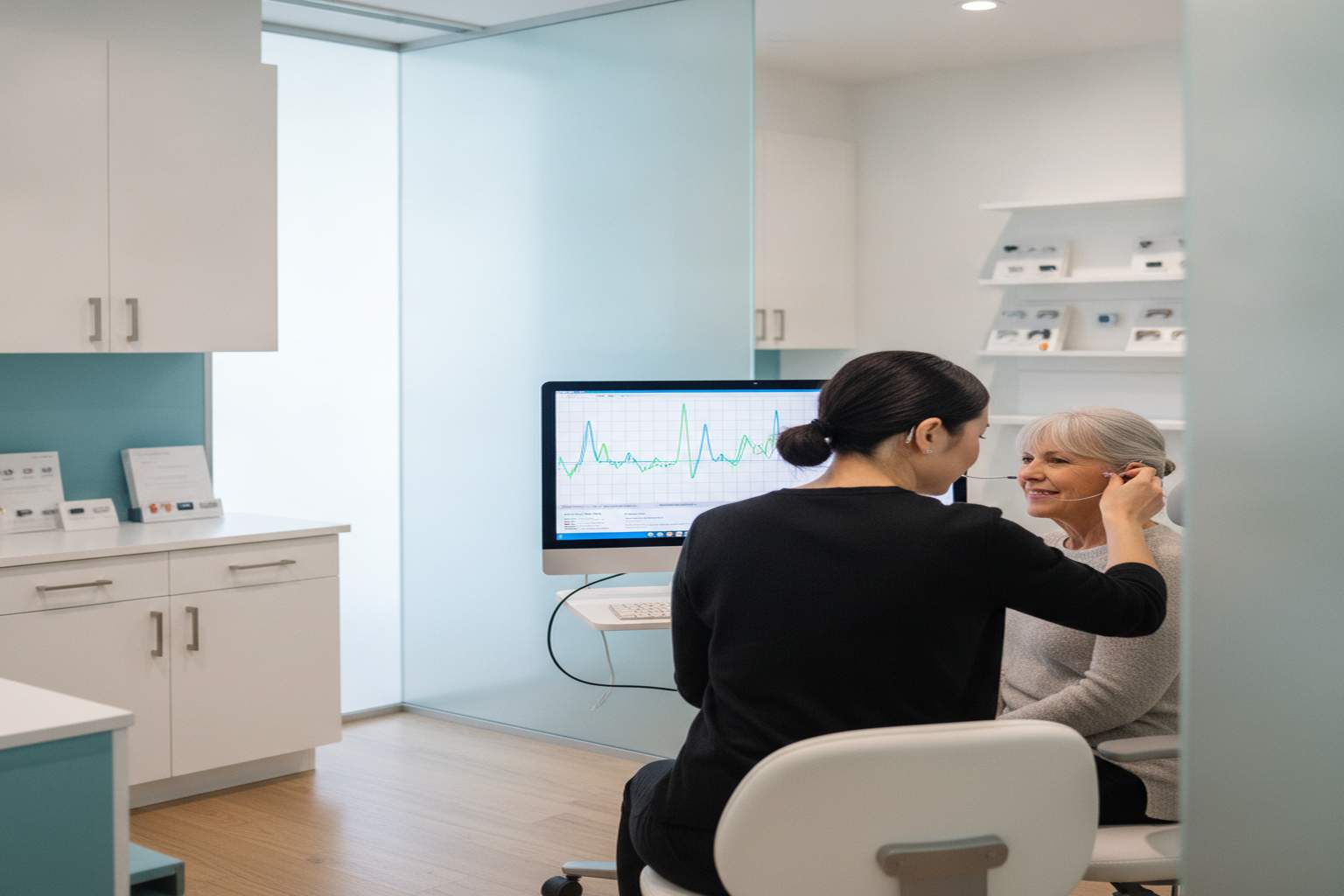
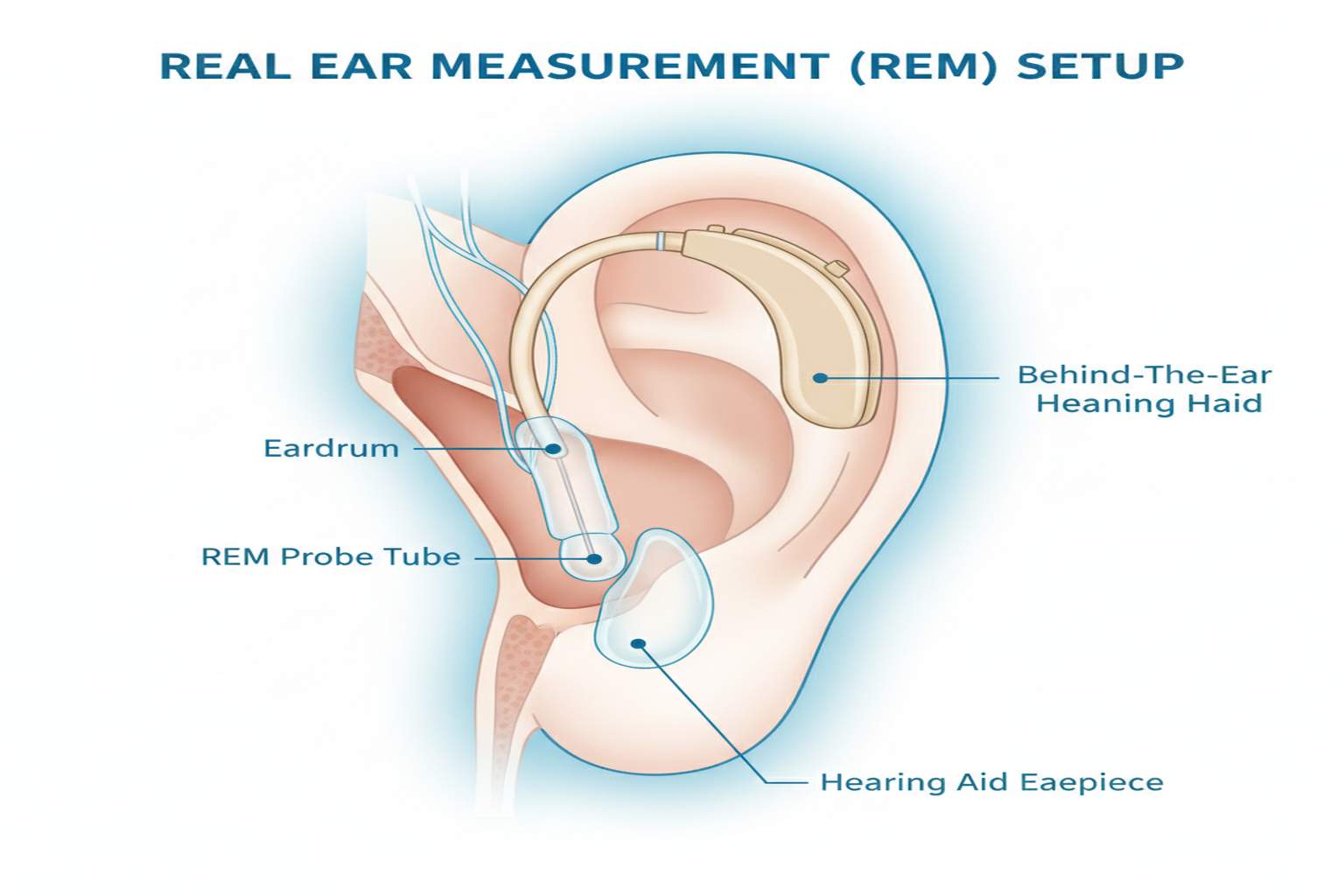
During this process, your audiologist places a small tube called a probe microphone, or REM probe, into your ear canal. This thin tube sits near your eardrum and captures the real-time output of your hearing aid as it processes speech and other sounds. The measurement point at the eardrum is critical because every person's ear canal is shaped differently, and those differences affect how sound travels through the ear.
Your ear canal acts as a resonator that modifies sound before it reaches your eardrum. Two people with identical hearing loss and identical hearing aids may experience very different sound levels simply because their ear canals differ in size and shape. Without REM, your audiologist is guessing how the hearing aid performs in your ear. With REM, they can see exactly what is happening and make precise adjustments.
Real ear measurements are considered the verification gold standard by the American Speech-Language-Hearing Association and the American Academy of Audiology. Learn more about comprehensive hearing tests that form the foundation for proper programming.
How Does Real Ear Measurement Work?
The real ear measurement process follows a specific sequence your audiologist guides you through during your appointment.
First, your audiologist reviews your audiogram, which shows your hearing thresholds at different frequencies. This audiogram serves as the target for your hearing aid prescription. The goal of REM is to verify that the hearing aid output matches these targets when measured at your eardrum.
Next, a probe microphone tube is placed gently into your ear canal. The tube is extremely thin and flexible and does not cause discomfort. It sits just a few millimeters from your eardrum at the correct measurement point. Your audiologist also places your hearing aid in your ear, so both devices coexist in the canal during testing.
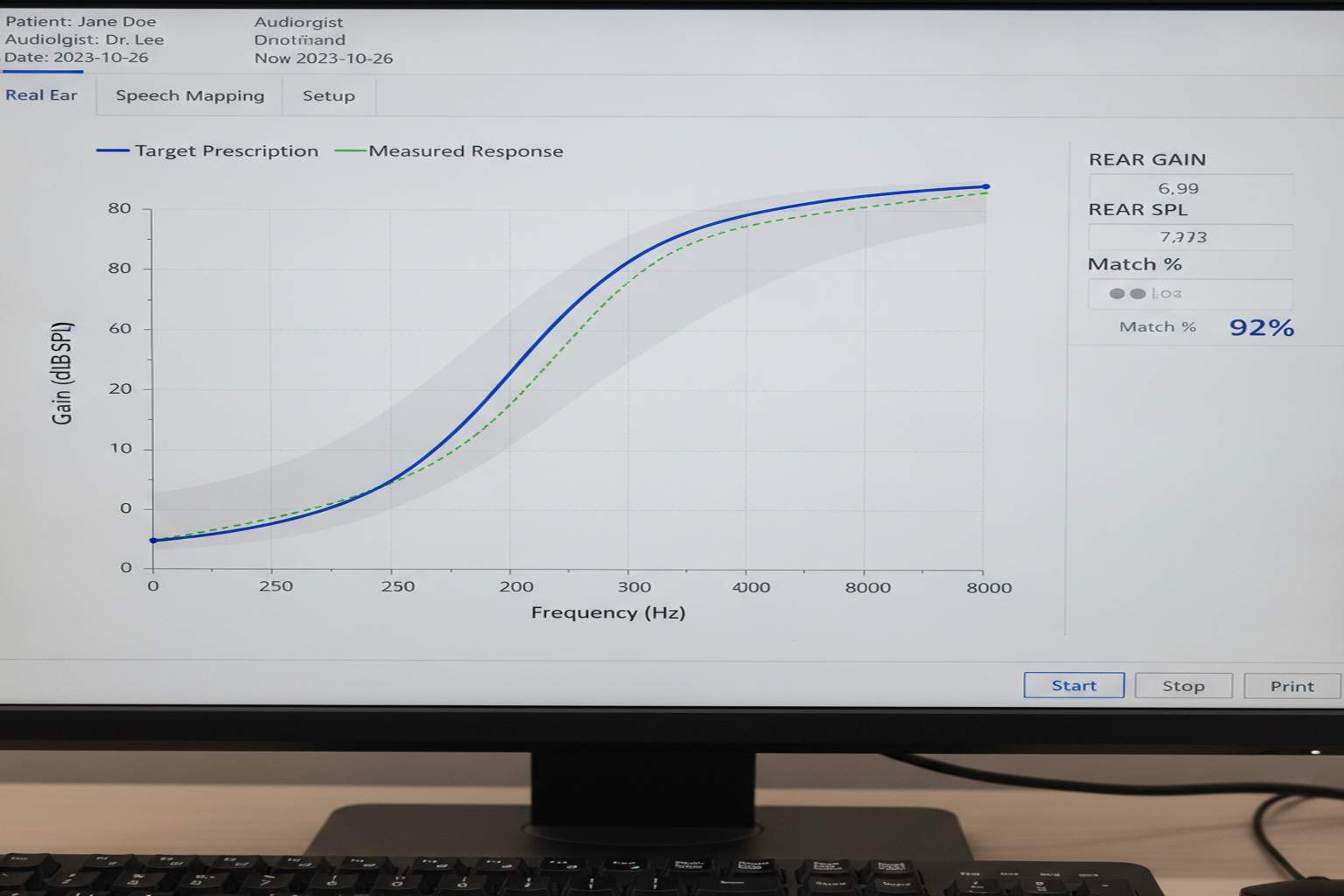
Once positioned, your audiologist plays calibrated speech signals through a speaker. These sounds pass through your hearing aid, which processes and amplifies them, and the probe microphone measures what actually reaches your eardrum. The audiologist views results on a screen in real time, comparing measured output to prescribed targets.
If gaps appear between target and actual output, your audiologist adjusts the programming and repeats the measurement. This verification loop continues until the response closely matches the prescription across all key frequencies. The process typically takes about 15 to 20 minutes per ear.
Why Real Ear Measurement Is Essential
Many patients wonder whether real ear measurement is really necessary, especially since some providers skip this step. The short answer: yes, REM is essential.
Without real ear measurement, hearing aid fitting relies on manufacturer first-fit algorithms. These use average ear canal data to set gain levels, but averages do not account for your individual anatomy. Research shows first-fit settings often under-amplify speech sounds by 10 to 15 decibels compared to prescriptive targets. That difference can mean hearing clearly versus struggling to follow conversations.
REM addresses this by measuring the actual sound pressure level in your ear canal with your specific hearing aid in place. This verification confirms the hearing aid works across the full range of speech frequencies, from low vowel sounds to high consonant sounds like "s" and "th."
Another benefit is identifying feedback and distortion early. If your hearing aid produces whistling or distorted sounds at certain frequencies, REM reveals those problems on screen, allowing your audiologist to fix them before you leave.
For patients with hearing aids offering advanced features like noise reduction and directional microphones, REM also verifies these features activate properly. See our services page for a full overview of what we offer.
Common Misconceptions About Real Ear Measurement
Several misconceptions about real ear measurement persist among patients and even some providers.
Myth: REM is only for complex hearing losses. In reality, every hearing aid wearer benefits from REM regardless of their degree of hearing loss. Even mild losses can be under-amplified without verification, and small inaccuracies affect speech clarity and listening comfort.
Myth: Modern hearing aids self-adjust and do not need REM. Today's hearing aids are sophisticated devices with automatic features, but they cannot measure what is happening inside your ear canal. They adjust based on algorithms, not actual ear measurements. REM provides objective data confirming those algorithms work correctly for your ear.
Myth: REM is uncomfortable or time-consuming. The probe tube is tiny and flexible. Most patients describe the sensation as a mild tickle or report not feeling it at all. The process adds about 15 to 30 minutes to your fitting appointment.
Myth: If my hearing aid sounds fine, I do not need REM. Perceived sound quality is subjective, and many people adapt to under-amplified sound over time. REM provides objective verification that your hearing aid meets prescriptive targets. This is particularly important for behind-the-ear hearing aid users, where tube length and ear mold fit significantly affect sound delivery.
What to Expect During Your REM Appointment
Knowing what happens during a real ear measurement appointment helps you feel prepared.
When you arrive, your audiologist reviews your hearing test results and discusses your concerns. Bring your current hearing aids along with any accessories or replacement parts.
The process begins with a quick otoscopic check of your ear canal to ensure no wax blockages could affect the measurement. If significant wax is present, removal may be recommended.
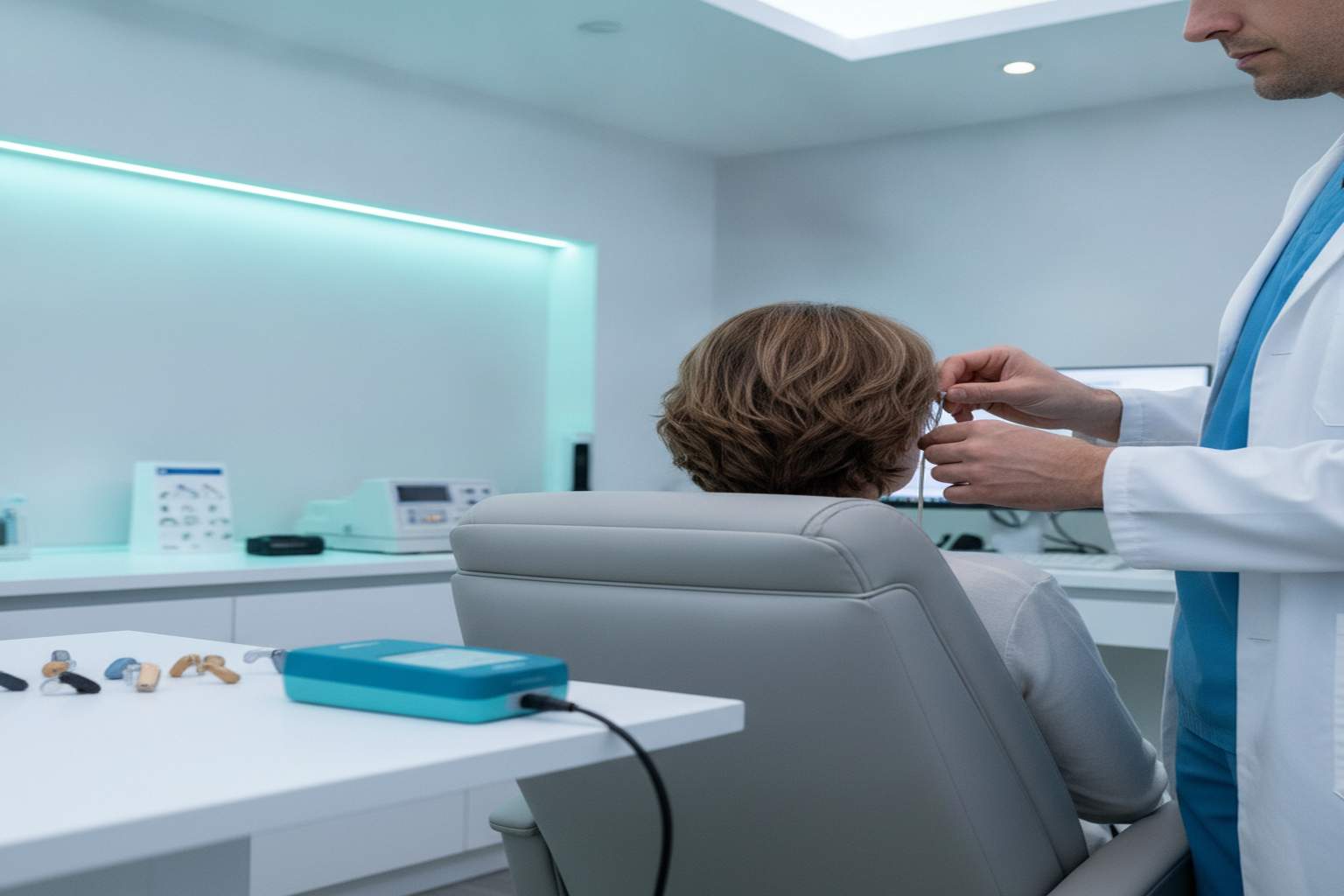
Next, your audiologist places the probe tube into your ear canal. The tube is so thin that most patients barely notice it. Your hearing aid is inserted alongside the probe, and both devices sit comfortably during testing. Your audiologist may use a system from Audioscan, which provides detailed visual feedback on a screen.
During the measurement, you hear speech sounds played from a speaker at a comfortable volume. You simply sit still and listen. The probe microphone captures the amplified sound at your eardrum and displays results graphically. The audiologist compares the measured curve to your prescriptive target and makes adjustments as needed.
The entire appointment typically lasts 30 to 45 minutes. To book your REM, schedule an appointment at any of our Florida locations or call (813) 345-8135.
Choosing a Provider Who Uses Real Ear Measurement
Not all hearing care providers perform real ear measurement as part of their standard fitting process. This distinction matters because the quality of your hearing aid fitting directly affects your satisfaction and long-term success.
When selecting an audiologist, ask whether they use REM for every hearing aid fitting. Providers who invest in REM equipment demonstrate a commitment to evidence-based practice. Clinics that skip REM may rely on first-fit settings that do not account for your individual ear canal.
At Ear to Hear, we perform real ear measurement on every hearing aid fitting, whether you choose a rechargeable hearing aid, a Bluetooth hearing aid, or any other style. We believe verification is fundamental to proper hearing care. Our audiologists use REM data to fine-tune your device across all frequencies, ensuring you hear speech clearly and comfortably.
Patients with REM-verified hearing aids consistently report better speech understanding, improved sound quality, and greater satisfaction. Call us at (813) 345-8135 to learn more or book your appointment.

Frequently Asked Questions
Yes. REM is the most reliable way to verify that your hearing aid delivers the amplification your ears need. Insisting on REM ensures your provider customizes your device to your unique ear canal.
Very accurate. REM directly measures the sound pressure level at your eardrum using a calibrated probe microphone, eliminating guesswork. Research consistently shows REM-guided fittings match prescriptive targets more closely than first-fit approaches.
Some Costco hearing centers may offer REM, but it is not standard practice at all locations. If you are considering Costco, ask specifically whether REM verification is included. Many independent audiology practices, including Ear to Hear, perform REM on every fitting as a standard of care.
Professional REM equipment for clinics ranges from several thousand to over ten thousand dollars. For patients, the measurement is usually included in the cost of the hearing aid fitting. At Ear to Hear, real ear measurement is part of every fitting at no additional charge.
References
- American Speech-Language-Hearing Association. (2024). Guidelines for hearing aid fitting and verification.
- Mueller, H. G., Ricketts, T. A., & Bentler, R. (2020). Modern Hearing Aids: Verification, Outcome Measures, and Follow-Up. Plural Publishing.
- Amlani, A. M. (2014). Efficacy of real-ear measurements. American Journal of Audiology, 23(3), 401-415.
- National Academies of Sciences, Engineering, and Medicine. (2016). Hearing Health Care for Adults: Priorities for Improving Access and Affordability.
Ready to experience the difference real ear measurement can make? Schedule an appointment with Ear to Hear or call us at (813) 345-8135.