
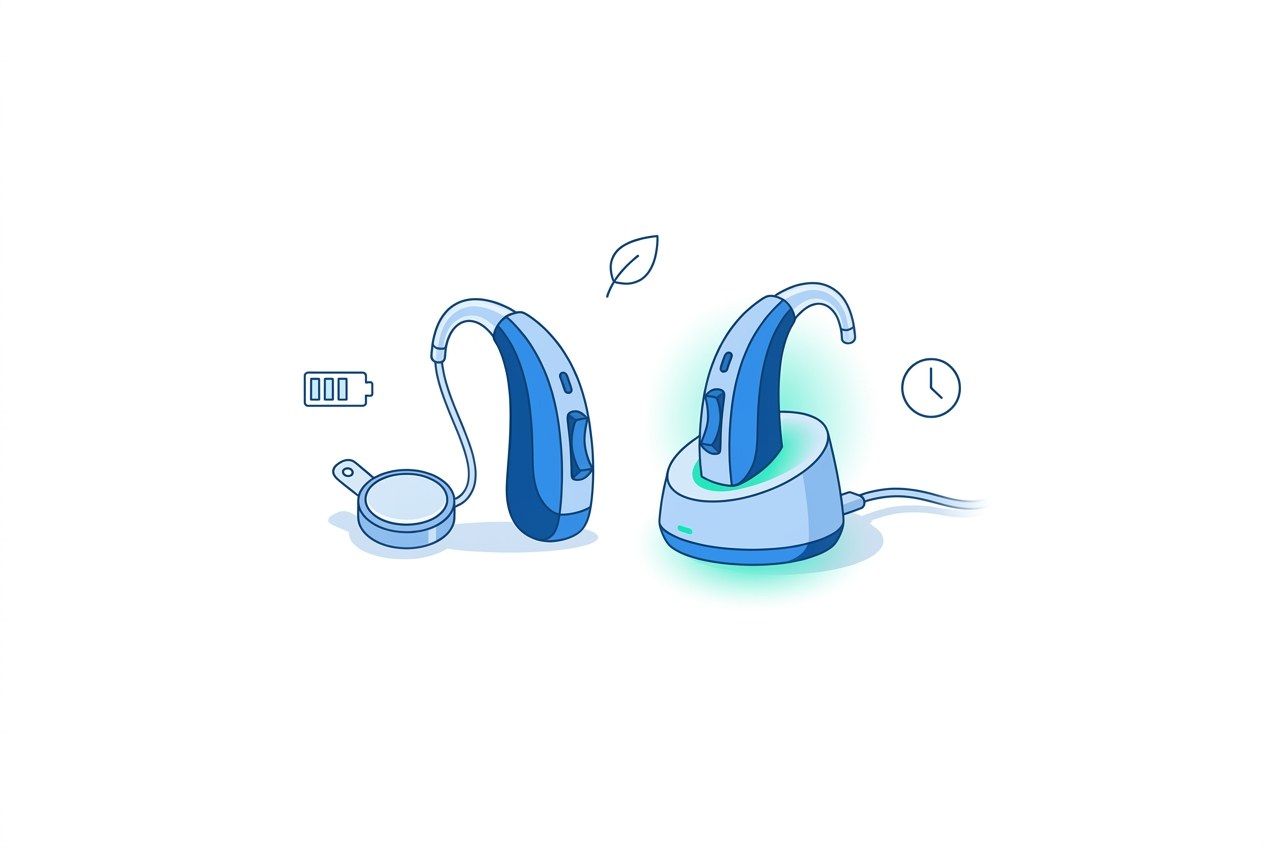
At Ear to Hear, our team fields battery questions almost every day. The choice between hearing aid batteries rechargeable vs disposable shapes how you charge, store, and care for your devices.
Choosing the right battery type affects your daily routine, your budget, and your confidence in what you wear on your ears. In this guide, we explain both paths in plain English so you can decide what fits your life. Our licensed specialists see many clients with both styles, and we share what we have learned here.
Key Takeaways
- Disposable zinc-air batteries run most traditional devices and last roughly 3 to 10 days per cell
- Rechargeable lithium-ion packs run about 24 to 30 hours per charge and often last the life of the aid itself
- The 5 minute rule says to wait about five minutes after removing the sticker before you insert a cell
- Silver-zinc rechargeable systems let you swap cells yourself, while lithium-ion packs are sealed inside most modern aids
- Streaming audio, dexterity, and travel plans all matter when you pick between the two power types
- Our team offers a 7-day risk-free trial on private-pay office stock, so you can test both paths before you commit
Why Battery Type Matters for Hearing Aids
Batteries are the heartbeat of every device. If the charge fades mid-day, your world goes quiet at work, at dinner, or on a walk. The cell type you choose decides how often you think about that risk.
Devices have grown smaller and smarter, and streaming audio pulls more energy than ever. That makes this cell choice a bigger decision now than it was ten years ago. Our specialists walk every new client through both paths during a free hearing test.
How Disposable Hearing Aid Batteries Work
Zinc-air cells create energy through a chemical reaction between zinc and oxygen from the air. Air flows in through tiny holes once you pull off the sticker, so a cell cannot run until that tab comes off. This simple, proven design has served wearers for decades.
Sticker Tabs and Air Activation
The colored sticker seals the air holes during storage and shipping. Once removed, the battery starts working and cannot be paused again. Keep the sticker on until you are ready to use the cell, because an activated battery slowly drains even if it sits in a drawer.
Battery Replacement Basics
Swapping a cell takes less than a minute with a little practice. Open the door, lift the used cell out, and set the new one in with the flat side up. Many clients do it at the bathroom sink, where a dropped disc is easy to find and hard to lose.
Understanding Battery Sizes (10, 13, 312, 675)
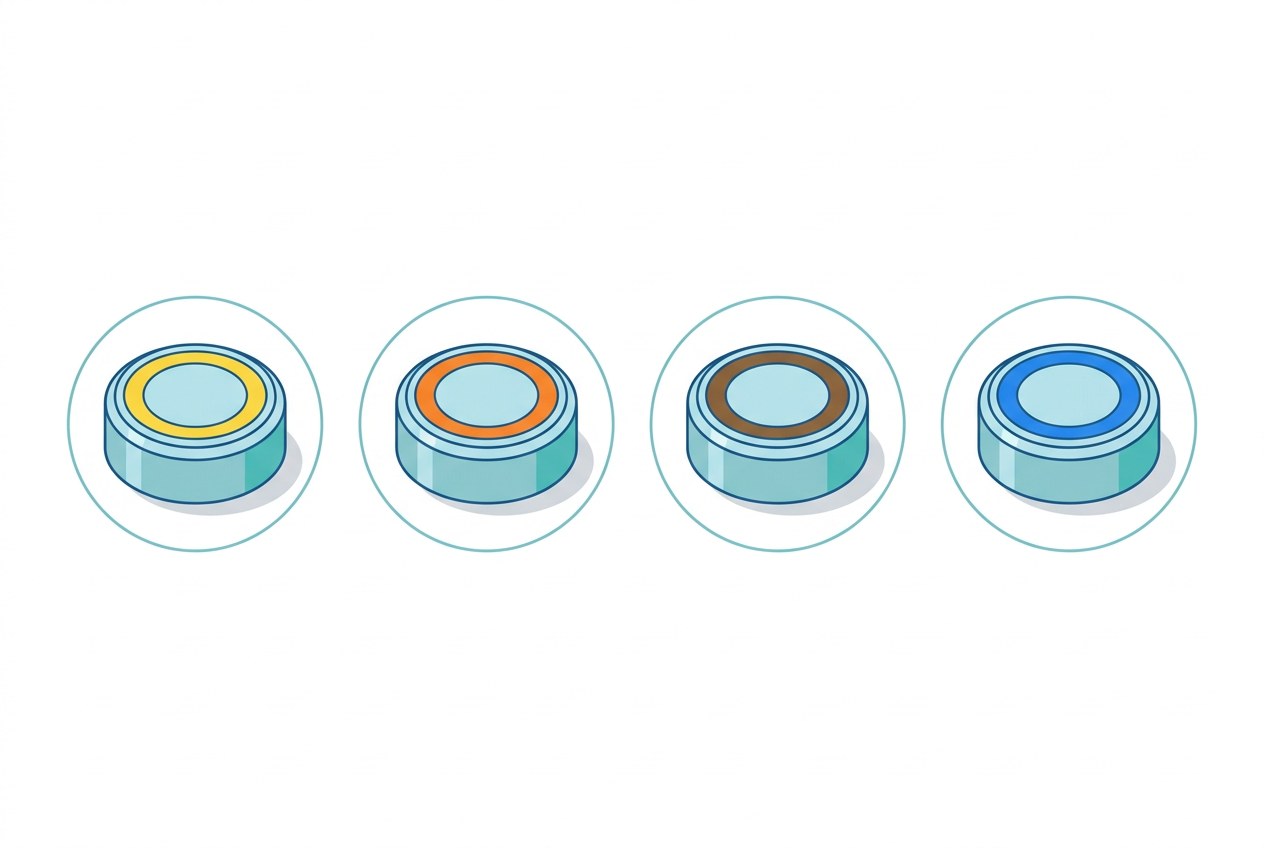
These small cells come in four standard sizes, and each fits a different device style. Smaller in-canal products take smaller cells, and high-output BTE devices take the largest. The four sizes are 10, 13, 312, and 675.
- Size 10, yellow: the smallest cell, made for the tiniest in-canal products.
- Size 312, brown: the most common size for thin-wire receiver products.
- Size 13, orange: a mid-size cell for standard in-the-ear and BTE products.
- Size 675, blue: the largest cell, built for long-wear BTE devices.
Color Coding Makes Sizes Easy to Spot
Every package and every cell carries the same color as its size, so you never need to read tiny numbers. Yellow means 10, brown means 312, orange means 13, and blue means 675. Our team teaches this color code to every new wearer, and most people have it memorized within a week.
Which Size Fits Your Devices
Your specialist confirms the right size at your fitting and writes it on your instruction card. If you ever lose track, the size is also printed inside the battery door. Bring that card when you buy replacements, and our team will match it for you.
The Zinc-Air Chemistry Behind Modern Cells
Zinc-air cells hold a lot of energy in a very small space. The design is simple, dependable, and time-tested. It also explains the quirks that confuse new wearers.
Air is the active partner in the reaction, so the cell needs air to work and cannot be refilled. Once the zinc is spent, the cell is done. That is why an opened, unused battery still loses charge over weeks, and why fresh stock matters.
How Rechargeable Systems Work
Clients ask us about rechargeable hearing aids more than almost any other modern feature. Rechargeable hearing aids are often the easiest fit for busy households. These devices use built-in lithium-ion packs or removable silver-zinc cells, and you set them in a charging stand each night instead of opening a door. In the morning, the charge is ready without you touching a single cell.
Both systems are reliable, and both remove the weekly errand of buying fresh cells. The sealed design also keeps dust and moisture out of the compartment, which helps some devices last longer.
Lithium-Ion vs Silver-Zinc Rechargeable Systems
Lithium-ion charges in about 3 to 4 hours and runs 24 to 30 hours per charge. These packs are sealed, so you cannot swap them yourself. When a pack wears out after about 4 to 6 years, the manufacturer or our clinic replaces it, often when the product itself reaches the end of its service life.
Silver-zinc cells give about 24 hours per charge and reach a full charge in about 2 to 4 hours. Their big advantage is that you can replace the cells yourself with fresh ones. That makes silver-zinc a strong pick for wearers who want convenience without a sealed device.
Which Chemistry Fits Your Routine
Users who travel light tend to prefer sealed lithium-ion, since there are no spares to pack. Wearers who want a backup plan often pick silver-zinc, because spare cells work even without wall power. Ask your specialist to demo both during your visit.
Rechargeable vs Disposable: Everyday Convenience
Rechargeables can feel more expensive at the counter, yet disposable batteries costs add up over a year of weekly purchases. The most convenient option is a personal call. Here is how the two compare in daily life.
- Daily care: disposable wearers insert a fresh cell every few days, while rechargeable wearers drop their devices in the charger each night.
- Spares: disposable users buy and carry extra cells, while sealed rechargeables need no spares at all.
- Handling: disposables involve tiny discs and sticky tabs, while rechargeables use simple docking with larger contacts.
- Travel: disposables call for packed cells and a case, while rechargeables need a charger and its cord.
Rechargeable products fit naturally into bedtime routines, the same way you charge a phone. Disposable wearers instead build cell changes into their week. Neither path is wrong, and many long-time clients are happy with the system they know.
Battery Lifespan: What to Expect From Each Type
A disposable zinc-air cell lasts roughly 3 to 10 days depending on the size of the device and how many hours you wear it. A 675 cell in a long-wear device may run at the low end, while a 13 cell in a mild-loss device can stretch toward a full week or more. Streaming audio trims those numbers.
Lithium-ion packs hold 24 to 30 hours per charge and stay strong for about 4 to 6 years. Silver-zinc cells hold about 24 hours and are easy to refresh with new ones as they age. If you want the bigger picture on device service life, read our guide on how long hearing aids last.
What Shortens Battery Lifespan
Heavy streaming, long wearing days, and cold weather all drain cells faster. Heat and humidity speed up self-discharge as well. None of these will ruin your day, but they are worth knowing as you plan spares.
Charging Routines and Bedtime Habits
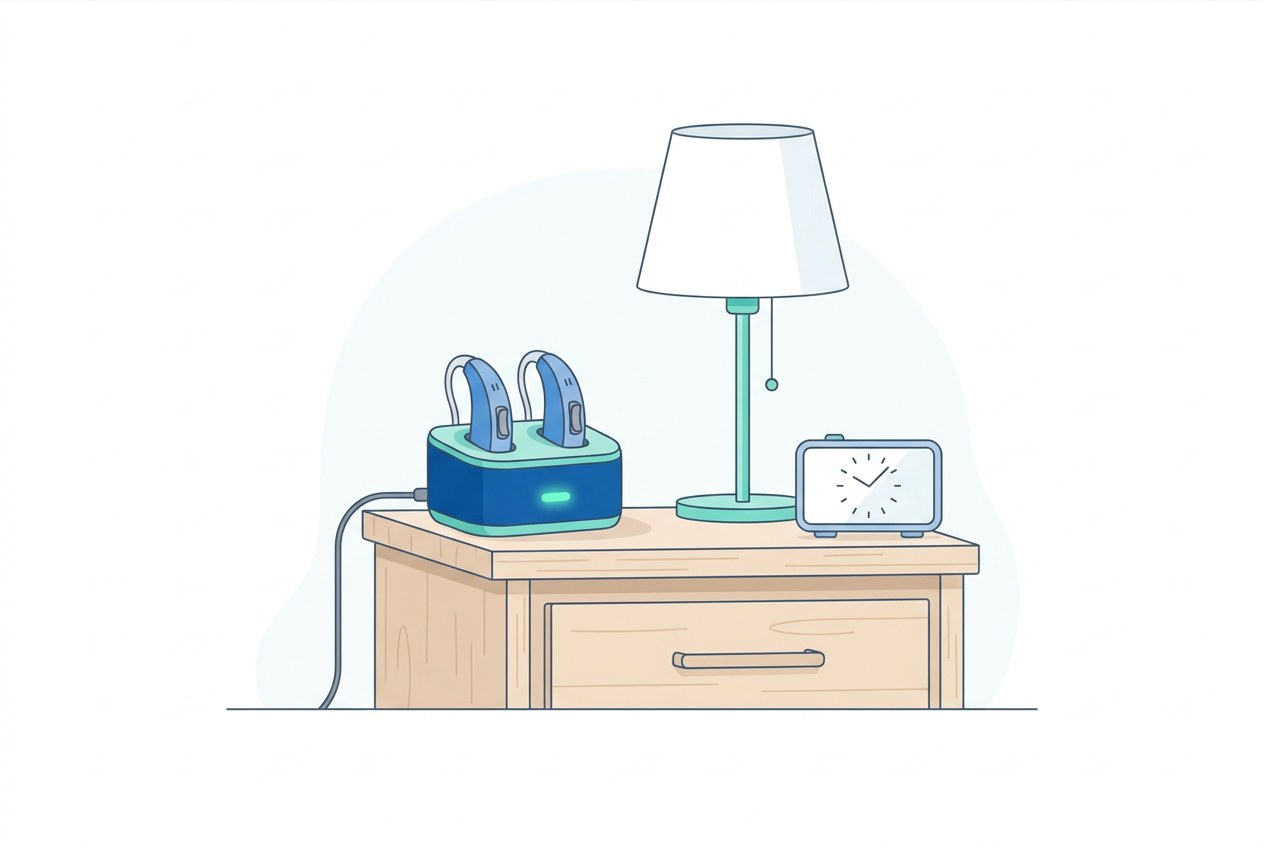
Charging works best as a habit, not a chore. Set the charger on your nightstand and dock your devices when you brush your teeth. By morning you have a full charge and a dry, clean pair, which is a nice two-for-one.
Streaming and Power Draw
Streaming audio is the single biggest drain in modern devices. A day of phone calls and podcasts can cut run time by a third. If you stream a lot, tell your specialist, because the right choice depends on your real habits.
Dexterity and Vision Considerations for Older Adults
Tiny doors and even tinier cells challenge fingers and eyes. Many of our clients with arthritis or low vision find cell changes frustrating, especially the sticky tabs on size 10 packaging. Rechargeables remove that weekly struggle and bring clear relief to tired hands.
If you share your home with family or a caregiver, they can help, but a charger removes the need to ask at all. During your fitting, ask our professional team to watch you change a cell and confirm the setup works for your hands. We do this with every client we fit, and it prevents months of frustration.
Travel and Backup Energy Planning
Travel deserves a little planning. Traditional zinc-air cells fit disposable hearing aid styles and a small case, and those cells run the product with no wall outlet at all. That makes traditional cells dependable for camping trips or long flights with uncertain charging.
Rechargeable wearers should pack the charger, the cord, and a portable bank for backup cells. A full charge takes 3 to 4 hours, so topping up overnight works in most hotels. If a trip takes you far from outlets, ask us about silver-zinc spares you can carry anywhere.
Packing for a Trip
Keep a short checklist in your travel bag. For traditional cells, add: fresh cells, a spare case, and a drying kit. For rechargeable setups, add: charger, cord, and a portable bank. A five-second check saves a silent day away from home.
Environmental Impact of Power Choices
Spent cells add up. A traditional user may go through dozens of small cells every year, and those cells belong in recycling bins rather than household trash. Many pharmacies and some of our clinic locations accept them for recycling.
Rechargeable systems avoid that steady stream of spent cells. A sealed pack is used for years before it is replaced once. Users who care about waste often settle on rechargeables for this reason alone.
Troubleshooting Common Power Problems
Most trouble has a simple cause, and a few quick checks solve it. Start with the list below before you worry about the device itself.
- Confirm the cell is the right size and placed flat side up.
- Check that the sticker is fully removed and the air holes are clear.
- Let a fresh zinc-air cell rest for five minutes before inserting it.
- Clean the contacts with a dry cloth.
- Try a cell from a different package to rule out an old batch.
Signs Your Battery Is Failing
Watch for a sudden change in volume, warbling sounds, or the device cutting out under load. Those are classic signs of battery failure rather than device failure. Swap the cell first, and if problems continue, our hearing aid repair team can inspect it in the clinic.
Extending Battery Life With Proper Care
Care extends the life of both types. For traditional cells, open the door at night so air circulates and moisture escapes. Keep spares at room temperature and away from the fridge, because cold storage causes condensation that can hurt an unused cell. The outdated advice about chilling batteries can do more harm than good.
For rechargeable setups, avoid leaving the devices in a hot car, and store them dry. Both styles benefit from a drying case in humid climates, which our specialists recommend for many Florida clients. Moisture is the quiet enemy of anything you wear on your ears all day.
How to Choose the Right Battery Option for You
The best choice depends on your hands, your habits, and your needs. Both systems are safe and proven in daily use, and there is one clear professional answer for every situation. Use this short list as you weigh the two paths.
- Pick rechargeables if you want nightly simplicity, sealed convenience, or fewer tiny parts to handle.
- Pick traditional cells if you want fresh spares on hand, long trips off the grid, or a style you already love.
Duracell and Other Trusted Brands
Duracell, Energizer, Rayovac, and Power One make the most common cells, and all four are steady performers when stored well. Freshness matters more than brand, so buy from busy stores and check the date code on the pack. Our clinics stock the sizes our clients use most, so you can pick up replacements at any visit.
For rechargeables, the chemistry inside your specific device matters more than the name on the box. Use the cells or charger the manufacturer specifies. Your specialist can order exact replacements for you.
Not Sure Which Battery Type Fits You?
Our licensed specialists will compare rechargeable and disposable options with you, fit the right devices, and back them with a 7-day risk-free trial on private-pay office stock.
Schedule a Free Hearing TestOur clinics never push one system on every client. We fit hearing aids, program both styles, and let your daily life decide. If you are ready to compare in person, schedule an appointment or find a location near you, and our experienced team will walk you through both options with relief for tired ears and a 7-day risk-free trial on private-pay office stock.
Your Hearing Aid Battery Questions Answered
The 5 minute rule says to wait about five minutes after pulling the sticker off a zinc-air cell before you insert it. The wait lets air fully activate the battery so it reaches full strength. Skipping the wait can leave you thinking the cell is weak when it simply is not activated yet.
A few. Sealed lithium-ion packs cannot be swapped by you at home, so a worn pack means a clinic or manufacturer visit after 4 to 6 years. Rechargeables also need the charger and an outlet, which matters on long trips, and heavy streaming can run the charge down faster than some users expect.
Most lithium-ion packs last about 4 to 6 years, which often matches the service life of the device itself. Silver-zinc cells last closer to a year or two, but you can replace those yourself in minutes. Either way, the cells are used hundreds of times before retirement.
Duracell, Energizer, Rayovac, and Power One all make dependable cells. Freshness and proper storage matter more than the logo, so buy from a busy retailer and check the date code. For rechargeables, stay with the cells and charger your device maker specifies.
References
- NIDCD: Hearing Aids - National Institute on Deafness and Other Communication Disorders overview of device styles and care.
- FDA: Hearing Aids and Personal Sound Amplifiers - FDA guidance on device types, cells, and safe use.
- Duracell Hearing Aid Batteries - Manufacturer specifications for zinc-air cell sizes.
- Energizer Hearing Aid Battery Guide - Manufacturer notes on zinc-air activation and storage.
- National Institute on Aging: Hearing Loss - Senior-friendly guidance on devices and daily care.