
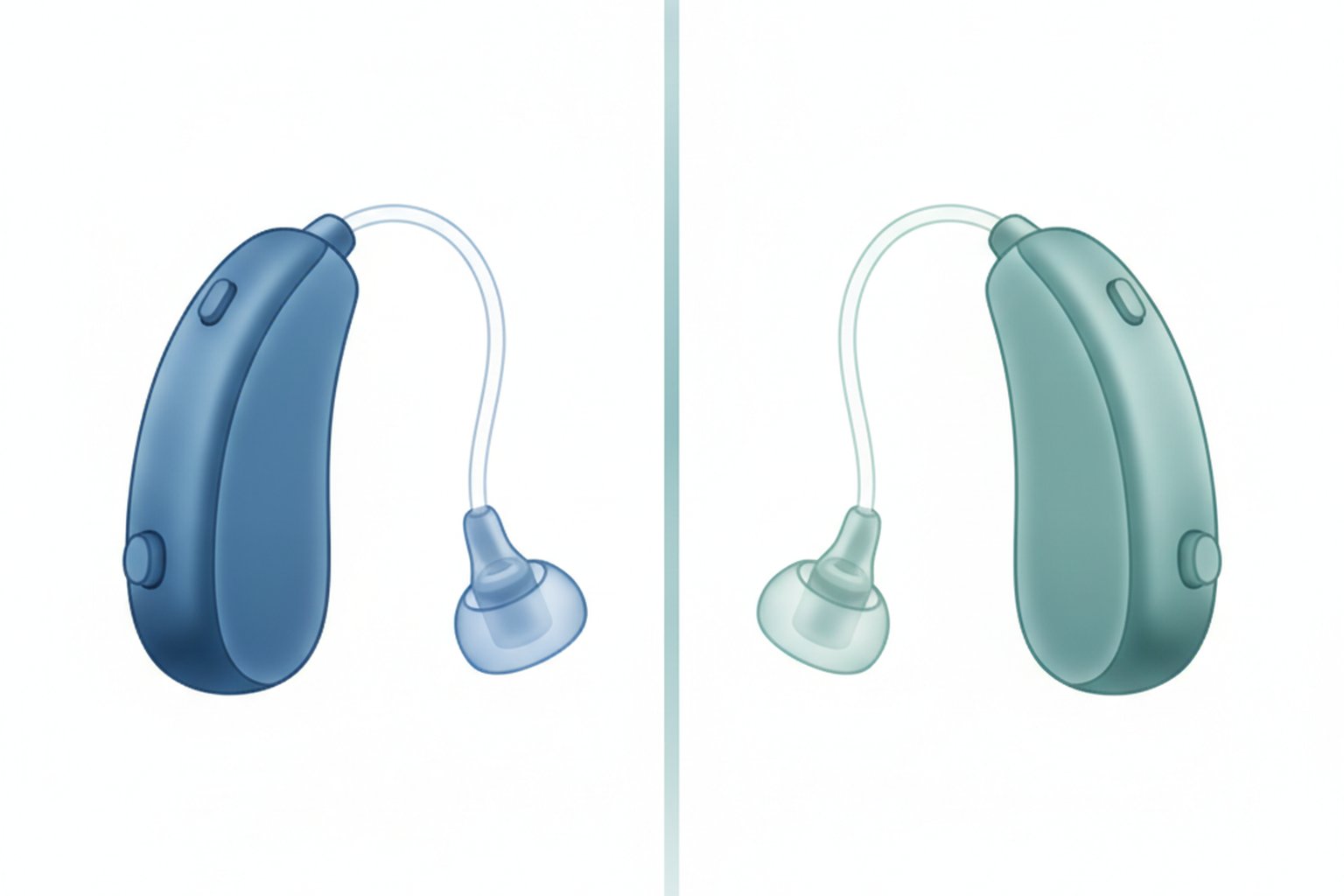
Key Takeaways
- Oticon leads on lab-measured speech clarity in noise and natural, 360-degree sound through its BrainHearing philosophy.
- Signia stands out for own voice processing, style variety, and conversation-focused features built for social settings.
- Oticon's flagship Reveal introduces the world's first Dual AI system, while Signia's MaX platform runs four task-specific neural networks.
- Both brands offer rechargeable models with full-day battery life, Bluetooth streaming, and smartphone app control.
- Signia's flagship models typically cost about $1,600 less per pair than comparable Oticon flagships.
- A free hearing test and professional fitting matter more than the brand name. Call (813) 345-8135 to get started.
Choosing between Oticon and Signia is one of the most common decisions patients make with our team at Ear to Hear. Both brands sit near the top of the hearing aids industry, and both deliver excellent speech clarity in daily life. This detailed comparison breaks down sound quality, technology, battery life, styles, and pricing so you can choose with confidence.
The right answer depends on your hearing profile, your lifestyle, and the listening situations that matter most to you. Our licensed specialists explain where each brand wins, and why a professional fitting matters more than the logo on the device.
Understanding Oticon and Signia as Brands
Oticon is a Danish manufacturer owned by Demant, a hearing health group with more than 115 years of history. The company built its reputation on BrainHearing, a design philosophy that supports how the brain naturally processes sound instead of simply amplifying everything at once. Oticon also produces hearing aids under the Philips HearLink name.
Signia emerged from Siemens' hearing aid division and is now part of WS Audiology, the same group that owns Widex. The brand is engineered in Germany and known for pushing new technology into the market quickly. Signia introduced own voice processing to the industry and continues to compete on style, offering some of the widest ranges of colors and form factors available.
Neither brand is a wrong choice. The differences show up in how each one processes speech, handles your own voice, and fits into your daily routine.
Oticon Hearing Aid Technology Overview
Oticon's hearing aids are built around open sound processing. Older devices focused narrowly on speech directly in front of you. Oticon instead gives the brain access to the full 360-degree sound scene, because real conversations happen all around you: a comment from the side, a question from the back seat, laughter across the table.
The current lineup shows this philosophy clearly. The Oticon Reveal is the world's first hearing aid with a Dual AI system, pairing two AI engines for richer, more natural sound. It is a discreet, rechargeable receiver-in-canal model with Bluetooth Low Energy streaming and tele loop compatibility. The Oticon Zeal and the flagship Oticon Intent round out a lineup that also uses 4D sensor technology to detect how you move and interact, then adjusts automatically.
Oticon was also first to put a deep neural network inside a hearing aid, trained on millions of real sound scenes rather than lab recordings.
Signia Hearing Aid Technology Overview
Signia processes sound differently. Its split processing approach separates speech from background sound, amplifying them independently so conversation stays clear without muting the life around you. Signia's "Live Noisy" philosophy embraces background sound as part of a full life instead of treating it purely as noise to suppress.
The new Signia MaX platform takes this further with the world's first multi-dimensional AI hearing aid platform. It runs four task-specific deep neural networks, for speech detection, own voice detection, scene analysis, and noise processing, working together as what Signia calls Acoustic Intelligence. The system was trained on 40 million real-world sound samples across 11 languages.
The practical result: the Signia Pure Charge&Go MaX adapts continuously whether you are in a restaurant, a grocery store, or a family gathering where everyone talks at once.
Sound Quality and Speech Clarity Comparison
Independent lab testing gives us a rare objective data point in this quality comparison. HearAdvisor testing measured the Oticon Intent at 3.7 out of 5 for speech-in-noise, well above the prescription category average. The Signia Pure Charge&Go IX scored 2.6 out of 5, still above average but clearly behind the Oticon flagship.
Music streaming tells a similar story. Oticon scored 4.0 out of 5 for streamed music quality while the Signia IX came in at 2.7. If you stream music, podcasts, or long phone calls all day, that gap is worth knowing about.
Signia counters with its own strength: sound naturalness and own voice comfort. Many wearers describe Signia's sound as bright and clear, while Oticon users describe a fuller, more spacious soundscape. Your hearing test results and personal preference decide which experience suits you better.
Own Voice Processing: The Signia Difference
Hearing your own voice through hearing aids is one of the strangest parts of adjusting to new devices. Many new wearers say their voice sounds boomy, echoey, or like talking inside a barrel. This single issue causes more early returns than almost any other complaint.
Signia solved this first with Own Voice Processing, or OVP. The system detects your voice separately from everything else and processes it independently, so your own speech sounds natural to you instead of hollow and overly loud. For people who talk a lot at work, on the phone, or in social settings, this feature alone can make Signia the more comfortable choice.
Oticon has narrowed the gap in recent platforms, but own voice comfort remains Signia's signature advantage, and it is the feature our patients mention most.
Bluetooth and Connectivity Features
Both brands now offer direct streaming to smartphones, so phone calls, music, and video audio go straight to your hearing aids without a separate clip-on device. The experience is similar in daily use, with a few differences in the details.
Signia's Pure Charge&Go IX supports hands-free phone calls, meaning you can answer and talk with the phone in your pocket or across the room. Streaming works with both iPhone and Android devices. Oticon's current models stream calls and media through Bluetooth Low Energy, with hands-free calling available on iPhone.
Both brands pair with smartphone apps for volume control, program changes, and remote adjustments. If streaming is your priority, our Bluetooth hearing aids guide covers the full picture across brands, since ReSound and Phonak also compete strongly here.
Battery Life and Rechargeable Options
Battery life is a practical difference you feel every single day. Signia's Pure Charge&Go IX delivers up to 39 hours of use per charge, one of the longest runtimes in the industry. The MaX portable charger stores four additional full charges, and a 30-minute quick charge gives you six hours of wear.
Oticon's rechargeable models, including the Reveal and Intent miniRITE R, deliver a full day of use with typical streaming, generally in the 24 to 30 hour range depending on how much you stream. Both brands still offer disposable battery versions for patients who prefer them.
Our rechargeable hearing aids guide covers charging cases, runtime expectations, and which models work best for heavy streamers. If battery life is your top priority, Signia currently holds the edge.
Hearing Aid Styles and Design Options
Style variety is where Signia makes a strong case. The brand offers behind the ear hearing aids, receiver-in-canal models, completely-in-canal options, and specialty designs like the Signia Silk, which fits instantly with no earmold waiting period, and the Styletto, a slim, fashion-forward model with a pocketable charger. Signia also offers one of the widest color ranges, from neutral skin tones to bold metallics.
Oticon keeps a tighter, more focused lineup centered on the miniRITE receiver-in-canal design, like the Reveal and Intent, plus in-the-ear options for patients who want discretion. If you want maximum choice in how your hearing aid looks and sits, browse the Signia lineup at our Signia hearing aids hub.
Patients who want the smallest possible device often land on Signia Silk or an Oticon custom in-the-ear model.
Performance in Background Noise
Restaurants, family dinners, and busy stores are where hearing aids earn their keep. This is the hardest test for any device, and it is where the lab data favors Oticon most clearly. The Intent's 3.7 out of 5 speech-in-noise score reflects measurably stronger performance when several people talk at once.
Signia's conversation-focused processing still performs above the category average. Its RealTime Conversation Enhancement in the MaX platform is designed specifically for group settings, tracking moving speakers and keeping the conversation front and center while ambient sound stays comfortable.
The honest answer from our fitting rooms: severe-to-profound hearing loss in noisy environments tends to favor Oticon, while mild-to-moderate loss with active social settings is often well served by either brand. Your audiogram, not marketing, should make this call.

Tinnitus Relief Features
Many patients with hearing loss also live with tinnitus, the ringing or buzzing that has no external source. Both brands include built-in tinnitus therapy programs that generate a soothing sound mix to mask or distract from the internal noise.
Signia built tinnitus therapy into its app with adjustable nature sounds and a notch therapy option for some models. Oticon offers a dedicated tinnitus sound generator, adjustable by your specialist, with relief sounds that can blend with your regular hearing program.
If tinnitus is a major part of your hearing picture, read our hearing aids for tinnitus guide, then ask your specialist to demo both systems during your fitting. Relief is highly personal, and hearing the difference yourself beats any spec sheet.
Pricing and Value Comparison
Flagship-to-flagship, Signia typically comes in about $1,600 less per pair than the equivalent Oticon premium model, based on published pricing comparisons of the Intent and Pure Charge&Go IX. Premium Signia models still carry flagship pricing, but the overall range stretches lower.
Value depends on what you use. If lab-measured noise performance and music streaming are worth a premium to you, Oticon's price is justified. If you want strong performance and modern features at a lower price point, Signia's mid-tier models are hard to beat.
At Ear to Hear, we bill hearing aids by performance level, not brand markup, and we verify insurance benefits before you commit. Our hearing care services include transparent pricing across both brands.
Ready to Compare Oticon and Signia?
Our licensed specialists at Ear to Hear fit both brands and can program a demo of each using your hearing test results. Schedule a free hearing test or call (813) 345-8135.
Fitting and Professional Programming
A hearing aid is only as good as its fitting. Oticon gives specialists 24 adjustment bands per frequency region, versus 20 on Signia's flagship platform, which allows finer tuning to an unusual audiogram. Several audiologists on professional forums also note Oticon devices tend to be straightforward to fit and service over time.
Programming matters just as much. Real-ear measurement verifies the sound reaching your eardrum matches your prescription, not just the software's estimates. Studies consistently show verified fittings outperform first-fit programming, regardless of brand.
Both brands support remote adjustments, so your specialist can fine-tune your devices between office visits without you traveling.
Who Should Choose Each Brand
Choose Oticon if you spend significant time in noisy environments, value the strongest measured speech-in-noise performance, stream music frequently, or want 360-degree natural sound that supports how your brain actually listens. Oticon also suits patients with more severe hearing loss who need maximum amplification headroom.
Choose Signia if you dislike how your own voice sounds through hearing aids, want more style and color options, prioritize long battery life, or spend your days in and out of conversations. Signia's instant-fit Silk is also ideal if you cannot wait weeks for custom earmolds.
Already comparing other brands? Our Phonak vs Oticon and Signia vs Phonak comparisons cover the rest of the market leaders, including ReSound and Widex.
How Ear to Hear Can Help You Choose
You do not have to make this call from a blog post. Our licensed specialists fit both Oticon and Signia at our locations across Florida, Illinois, and Missouri. Every recommendation starts with a comprehensive hearing test, followed by real-ear measurement verification, so the programming matches your actual hearing loss.
We also offer a 7-day risk-free trial on hearing aids, which means you can wear your top choice in restaurants, family dinners, and your own living room before you pay. Trying both brands in your real life settles the Oticon vs Signia debate faster than any comparison chart. Schedule a free hearing test through our appointment page or call (813) 345-8135, and we will fit the brand that fits you.

Frequently Asked Questions
Better depends on your hearing loss and lifestyle, not the brand. Oticon's flagships score at the top of independent lab testing for speech in noise, but Signia, Phonak, ReSound, and Widex all make excellent devices. The best hearing aid is the one programmed to your audiogram and worn consistently.
The Signia Pure Charge&Go MaX is the current flagship. It runs the MaX platform with four task-specific neural networks, trained on 40 million sound samples, and ships with a portable charger holding four full charges. Available since August 2026, it represents Signia's most advanced processing.
The Oticon Reveal is the newest flagship, featuring the world's first Dual AI system in a discreet rechargeable receiver-in-canal design. The Oticon Intent, with 4D sensor technology and 24 fitting bands, remains a top choice for patients who spend heavy time in noise.
Yes. Ear to Hear offers a 7-day risk-free trial on hearing aids, and our specialists can program a demo of each brand using your hearing test results. Call (813) 345-8135 to arrange side-by-side demos at any of our locations.
References
- Oticon. (2026). *Oticon Reveal Product Information: The World's First Dual AI System*. Demant A/S.
- Oticon. (2025). *BrainHearing Technology Overview: Supporting Natural Hearing*. Demant A/S.
- Signia. (2026). *Multi-adaptive Xperience (MaX) Platform Technical White Paper*. WS Audiology.
- Signia. (2026). *Pure Charge&Go MaX Product Information*. WS Audiology.
- HearingTracker. (2026). *Oticon Intent vs. Signia Pure Charge&Go IX Comparison: HearAdvisor Lab SoundScores*.
- HearAdvisor. (2026). *Independent Lab Testing Results: Prescription Hearing Aid Category SoundScores*.