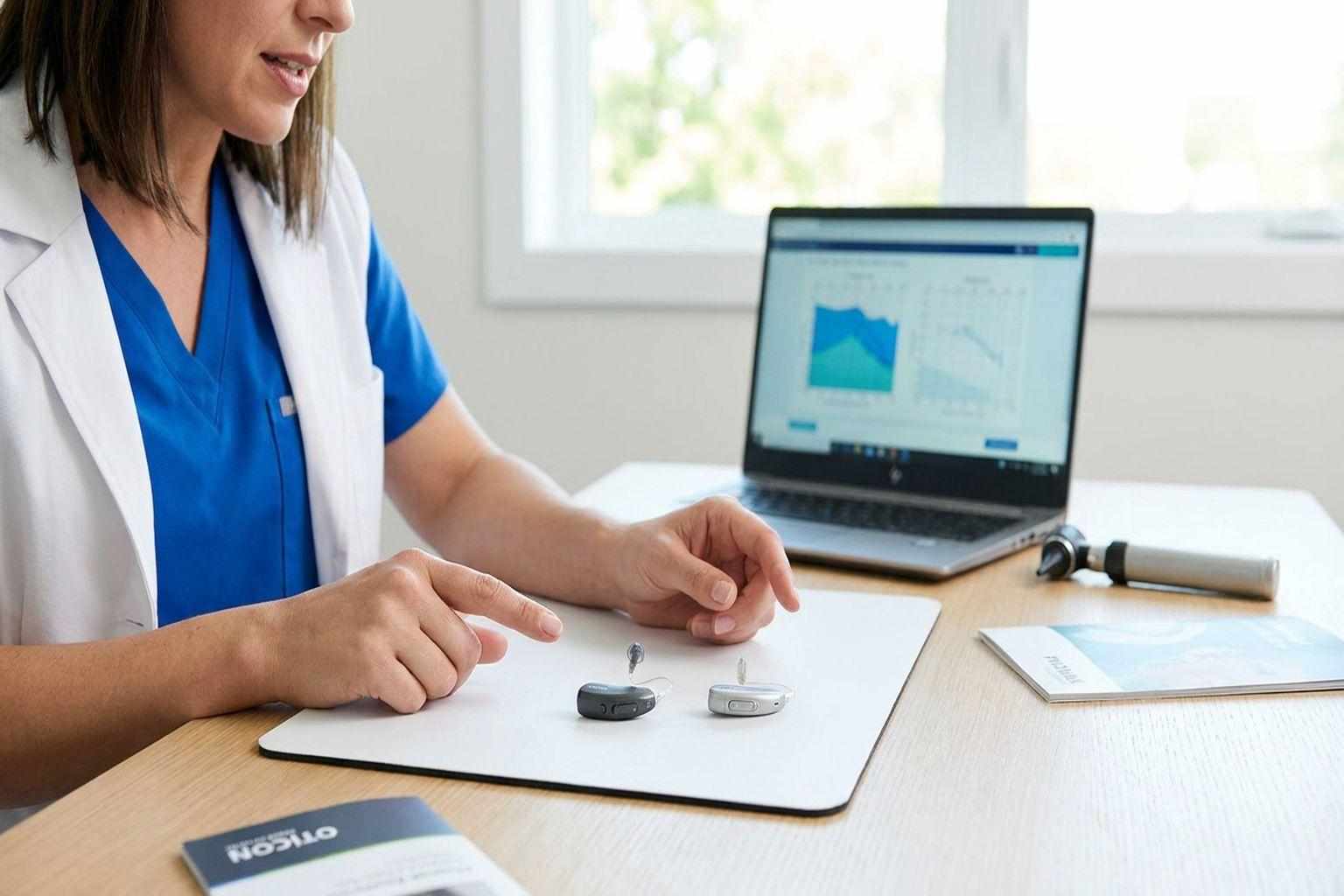
Key Takeaways
- Phonak and Oticon are the two leading premium hearing aid brands, each with distinct sound processing approaches
- Phonak excels in Bluetooth connectivity and severe hearing loss support with dual-chip technology
- Oticon focuses on natural sound processing and brain-friendly hearing with open sound technology
- Both brands offer rechargeable batteries, but Phonak provides longer single-charge battery life
- Professional fitting by a licensed audiologist is essential regardless of which brand you choose
- Ear to Hear carries both brands and can help you compare them side by side at (813) 345-8135
Choosing between Phonak and Oticon means comparing two of the most trusted names in hearing technology. At Ear to Hear, our team fits both brands regularly, and we understand that the right choice depends on your hearing loss, lifestyle, and budget. If you are exploring hearing aids for the first time or upgrading from an older pair, this comparison will help you understand the differences. Call us at (813) 345-8135 to schedule a hearing test and get a personalized recommendation.
Both brands offer premium sound processing, Bluetooth connectivity, and rechargeable options. The differences show up in how each brand handles background noise, connects to your phone, and fits your ear. Our team has fitted thousands of patients with both Phonak and Oticon devices, and we break down the key differences below. We also explain how a professional fitting at our clinic ensures you get the most from whichever brand you choose.
Understanding Phonak and Oticon as Brands
Phonak and Oticon are both European hearing aid manufacturers with decades of experience. Phonak, based in Switzerland, is part of the Sonova Group. Oticon, based in Denmark, is part of the Demant Group. Both companies invest heavily in research and produce some of the most advanced hearing devices available.
Phonak tends to push the boundaries of connectivity and power. Their devices often include features like direct Bluetooth streaming to any phone and dual-chip processing for challenging listening environments. Oticon takes a different approach, focusing on giving your brain access to the full sound scene rather than filtering sounds out.
Our team at Ear to Hear works with both brands because each has strengths that suit different patients. The right choice is rarely about which brand is objectively better. It is about which brand fits your specific hearing profile and daily listening needs. We have seen patients who struggled with one brand thrive after switching to the other, and vice versa. This is why we carry both and recommend trial periods before making a final decision.
Phonak Hearing Aid Technology Overview
Phonak's current flagship platform is the Audéo Infinio line, which includes the Infinio Sphere model with dual-chip technology. This platform represents a significant step forward in handling background noise. The main chip handles everyday hearing while a secondary chip activates in noisy environments to separate speech from noise.
Key Phonak technologies include:
- AutoSense OS 6.0 for automatic environment detection
- Speech Enhancer for clearer conversation in noise
- Bluetooth connectivity that works with both iPhone and Android without an intermediary device
- Roger direct streaming for remote microphones and group listening
Phonak also offers the Naída Lumity line for severe to profound hearing loss. This line provides more power and is available in behind the ear hearing aids styles that accommodate stronger amplification needs. The Naída line includes rechargeable options and Roger direct streaming capability, which is particularly useful in group settings like meetings or classrooms where a remote microphone can be placed on the speaker.
Phonak's approach to connectivity is another distinguishing factor. Their hearing aids can connect directly to any Bluetooth-enabled phone, including both iPhone and Android, without requiring an intermediary device. This universal Bluetooth compatibility has been a Phonak strength for several generations of their technology.
Oticon Hearing Aid Technology Overview
Oticon's current flagship is the Intent platform, which replaced the Real line. The Intent uses a Deep Neural Network trained on 12 million sounds to process speech in noise. Oticon's philosophy centers on giving your brain the full sound picture rather than selectively filtering. This approach is rooted in their BrainHearing concept, which aims to support the cognitive processes involved in hearing rather than simply amplifying sounds.
Key Oticon technologies include:
- MoreSound Intelligence 3.0 for rapid sound scene analysis and adaptation
- BrainHearing technology that preserves spatial cues and natural sound balance
- Bluetooth connectivity with both iPhone and Android devices
- Challenging environment detection that adapts in real time to changing soundscapes
- Intent 2 and Intent 1 models offering different performance tiers within the same platform
Oticon also offers the Xceed line for severe to profound hearing loss. This line provides the power needed for significant hearing loss while maintaining the natural sound quality that defines the Oticon approach. The Xceed is available in BTE styles that can accommodate the strongest amplification requirements.
The platform emphasizes natural sound quality, which many patients describe as less processed compared to other brands. Our patients who prefer Oticon often mention that conversations feel more natural and less fatiguing over long periods. This reduced listening fatigue is particularly important for people who wear their hearing aids for 12 or more hours per day. The brain processes sound more efficiently when it has access to the full acoustic environment, and Oticon designs their devices around this principle.
Sound Quality Comparison
Sound quality is where personal preference matters most. Phonak's sound tends to be described as crisp and clear, with strong speech enhancement in noisy environments. The Infinio Sphere model uses its dual-chip system to create a noticeable difference in restaurants and group settings.
Oticon's sound is often described as natural and open. The BrainHearing approach means you hear more of the environment around you, which helps with spatial awareness. Some patients find this approach less fatiguing because their brain is not working as hard to fill in missing sounds.
| Feature | Phonak | Oticon |
|---|---|---|
| Sound profile | Crisp, speech-focused | Natural, open |
| Noise reduction | Dual-chip (Sphere model) | DNN-based |
| Best for | Noisy environments | All-day comfort |
| Sound fatigue | Moderate | Low |
Our team recommends trying both brands during a trial period. Your ears and brain will tell you which sound profile feels right. Call (813) 345-8135 to set up a demo with both devices.
Bluetooth and Connectivity Features
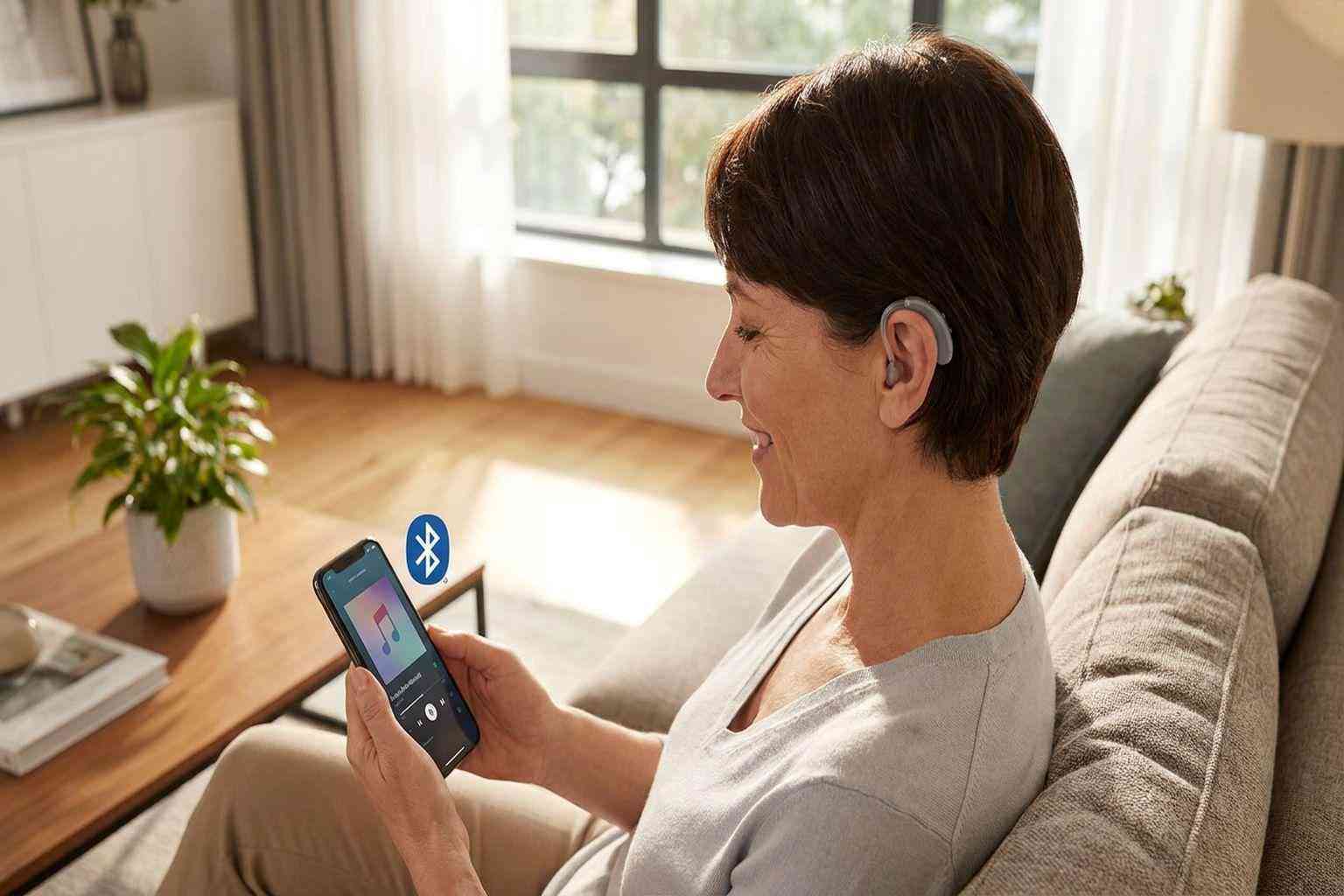
Both Phonak and Oticon support direct Bluetooth streaming to iPhone and Android devices. This means you can take phone calls, listen to music, and stream audio directly to your hearing aids without a separate streamer.
Phonak uses a single app called myPhonak for both iOS and Android. The app provides volume control, program switching, and remote fine-tuning. Phonak's Bluetooth implementation is widely regarded as the most stable in the industry, with fewer dropouts and faster reconnection times.
Oticon uses the Oticon Companion app, which replaced the older Oticon ON app. The app offers similar controls, including volume adjustment and program selection. Oticon's Bluetooth connectivity is reliable, though some Android users report occasional reconnection delays.
For patients who stream frequently, Phonak has a slight edge in connection stability. For patients who primarily use hearing aids for conversation, both brands perform similarly. Our Bluetooth hearing aids page has more details on wireless features.
Battery Life and Rechargeable Options
Both brands offer rechargeable hearing aids that eliminate the need for disposable batteries. This is one of the most popular features among our patients.
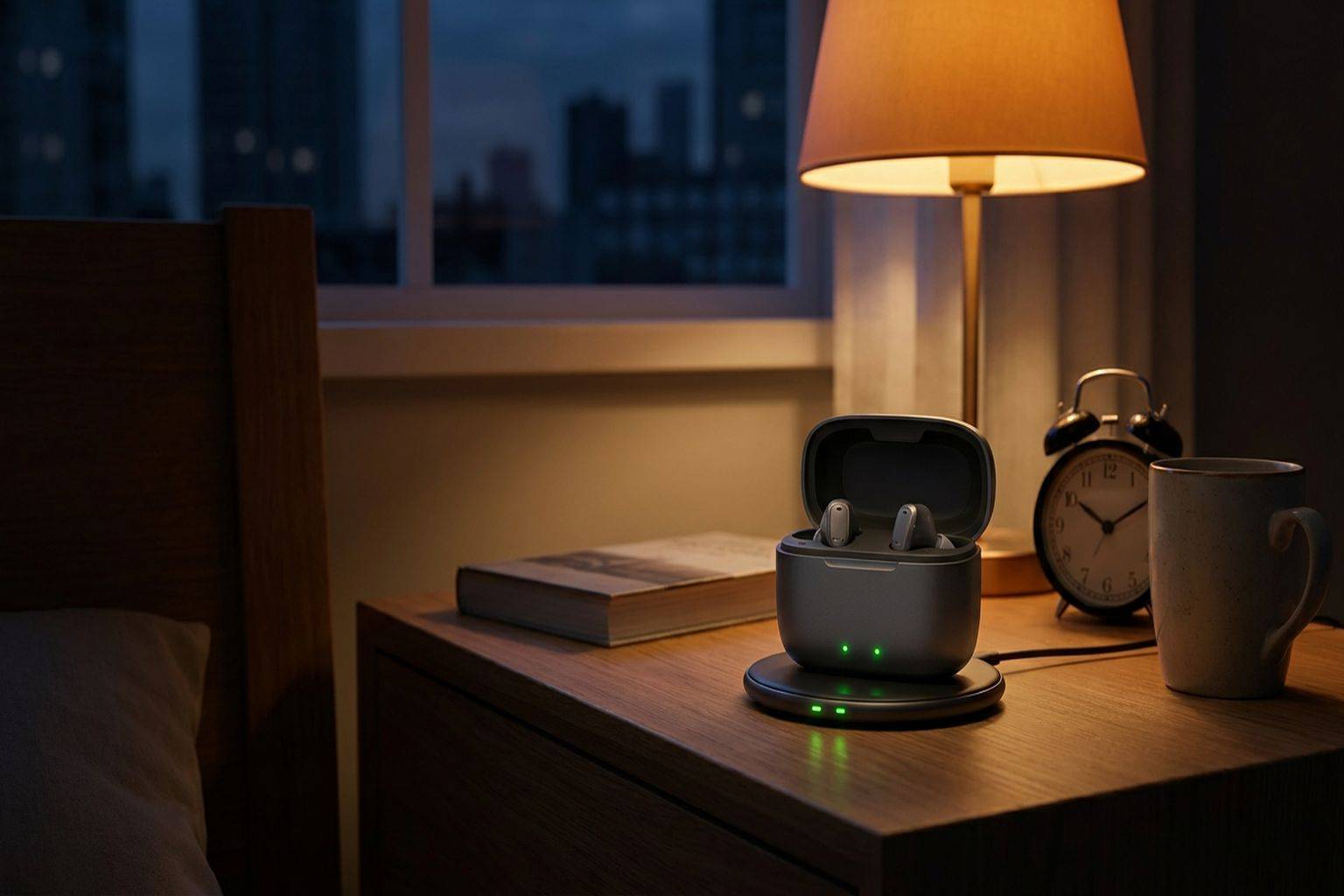
Phonak's rechargeable models provide up to 16 hours of use on a single charge, including 8 hours of Bluetooth streaming. A 30-minute quick charge gives approximately 6 hours of use. The charging case is compact and travel-friendly.
Oticon's rechargeable models provide up to 20 hours of use on a full charge, though this decreases to approximately 15 hours with heavy Bluetooth streaming. The desktop charger includes a drying function, which is convenient for maintenance.
| Feature | Phonak | Oticon |
|---|---|---|
| Full charge battery life | Up to 16 hours | Up to 20 hours |
| With heavy streaming | 10-12 hours | 15 hours |
| Quick charge (30 min) | 6 hours | 5 hours |
| Charging case | Yes (travel) | Desktop with dryer |
Both options work well for most patients. If you stream music or take calls frequently throughout the day, Phonak's quick charge feature may be more convenient. If you want the longest battery life with minimal streaming, Oticon has the edge.
Hearing Aid Styles and Design
Both Phonak and Oticon offer the full range of hearing aid styles. The most common styles include:
- Receiver-in-canal (RIC) - the most popular style for both brands
- Behind-the-ear (BTE) - for severe hearing loss
- In-the-ear (ITE) - custom-molded options
- Invisible-in-canal (IIC) - smallest available option
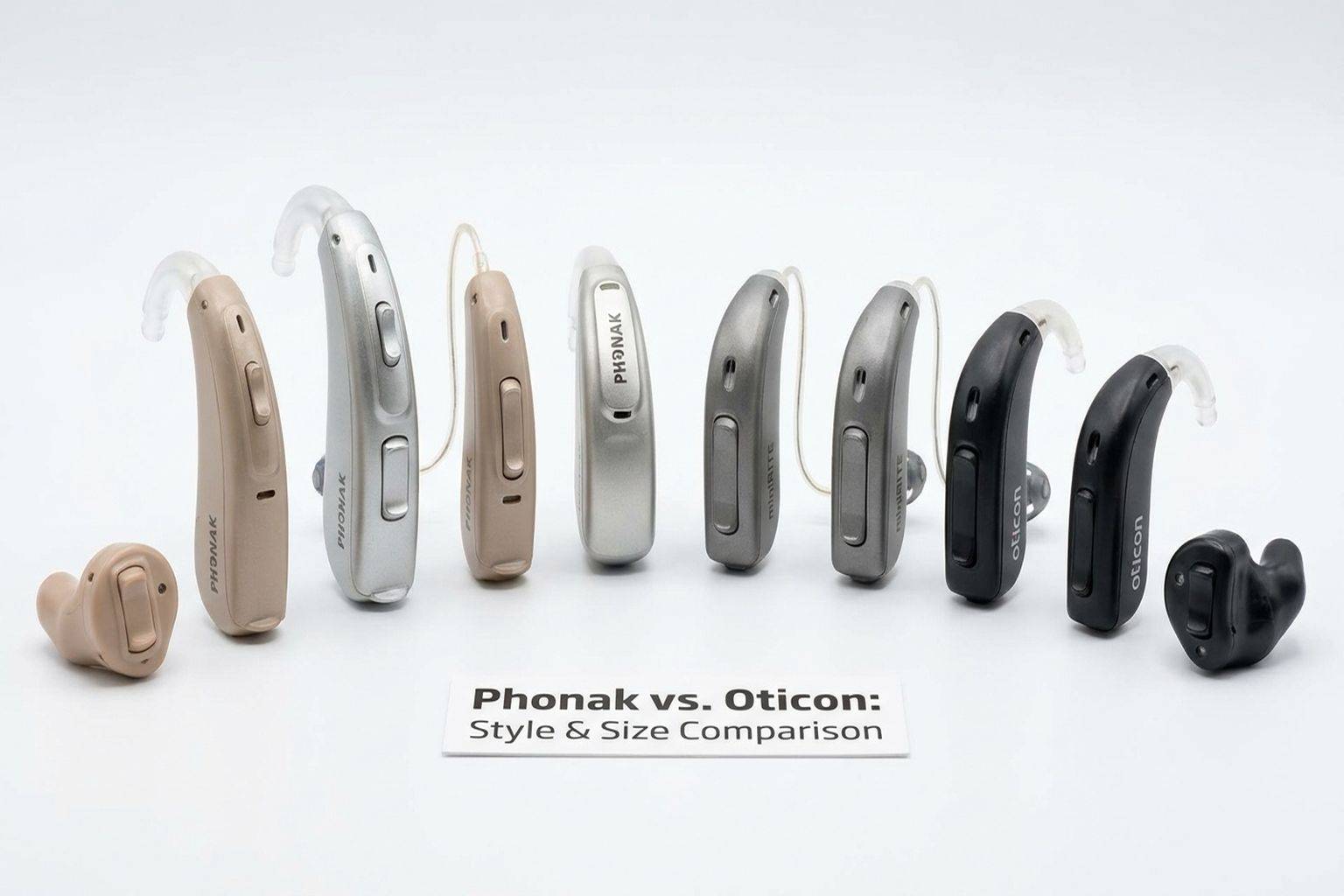
Phonak's RIC models tend to be slightly smaller than Oticon's equivalent models. The Phonak Audéo line is known for its discreet design and comfortable fit. Oticon's Intent miniRITE is similarly compact and available in multiple colors.
For severe to profound hearing loss, both brands offer powerful BTE models. Phonak's Naída line and Oticon's Xceed line provide the amplification needed for significant hearing loss while maintaining sound quality. The choice between these power models depends on the severity of your hearing loss and your comfort preferences. Our team can evaluate your hearing and recommend the appropriate power level from either brand.
Pricing and Value Comparison
Pricing for Phonak and Oticon hearing aids is similar at comparable technology levels. Both brands offer multiple performance tiers, typically labeled from entry-level to premium. The price difference between the two brands at the same tier is usually minimal.
Premium models from both brands typically range from $2,500 to $4,000 per ear. Entry-level models start around $1,500 per ear. The technology level you choose has a bigger impact on price than the brand you select.
At Ear to Hear, we offer both brands at competitive prices and work with you to find the right technology level for your budget. We also help you understand what your insurance covers and explore financing options if needed. Our hearing care services include fitting, programming, and ongoing support at no additional cost during your warranty period. If tinnitus is your primary concern, our best hearing aids for tinnitus guide covers masking features in detail. The value of professional support cannot be overstated when investing in hearing aids that you will wear for years.
Ready to Compare Phonak and Oticon?
Our licensed specialists at Ear to Hear carry both brands and can help you choose the right hearing aid for your needs. Schedule a free hearing test to get a personalized recommendation.
Performance in Background Noise
Background noise performance is where the Phonak Infinio Sphere stands out. The dual-chip technology creates a measurable improvement in signal-to-noise ratio. For patients who struggle in restaurants, family gatherings, or noisy workplaces, the Sphere model can make a meaningful difference.
Oticon's Intent platform uses its Deep Neural Network to handle background noise differently. Rather than aggressively filtering noise, Oticon preserves more of the sound environment. This approach works well for patients who want situational awareness without feeling isolated from their surroundings.
Neither approach is objectively superior. Some patients prefer the aggressive noise reduction of Phonak in challenging environments. Others prefer the more natural sound of Oticon, even if it means hearing more background sound. A trial period with both brands is the best way to determine your preference. Our team can set up side-by-side testing in our clinic using recorded real-world environments, so you can hear the difference before committing to a purchase.
Fitting and Professional Programming
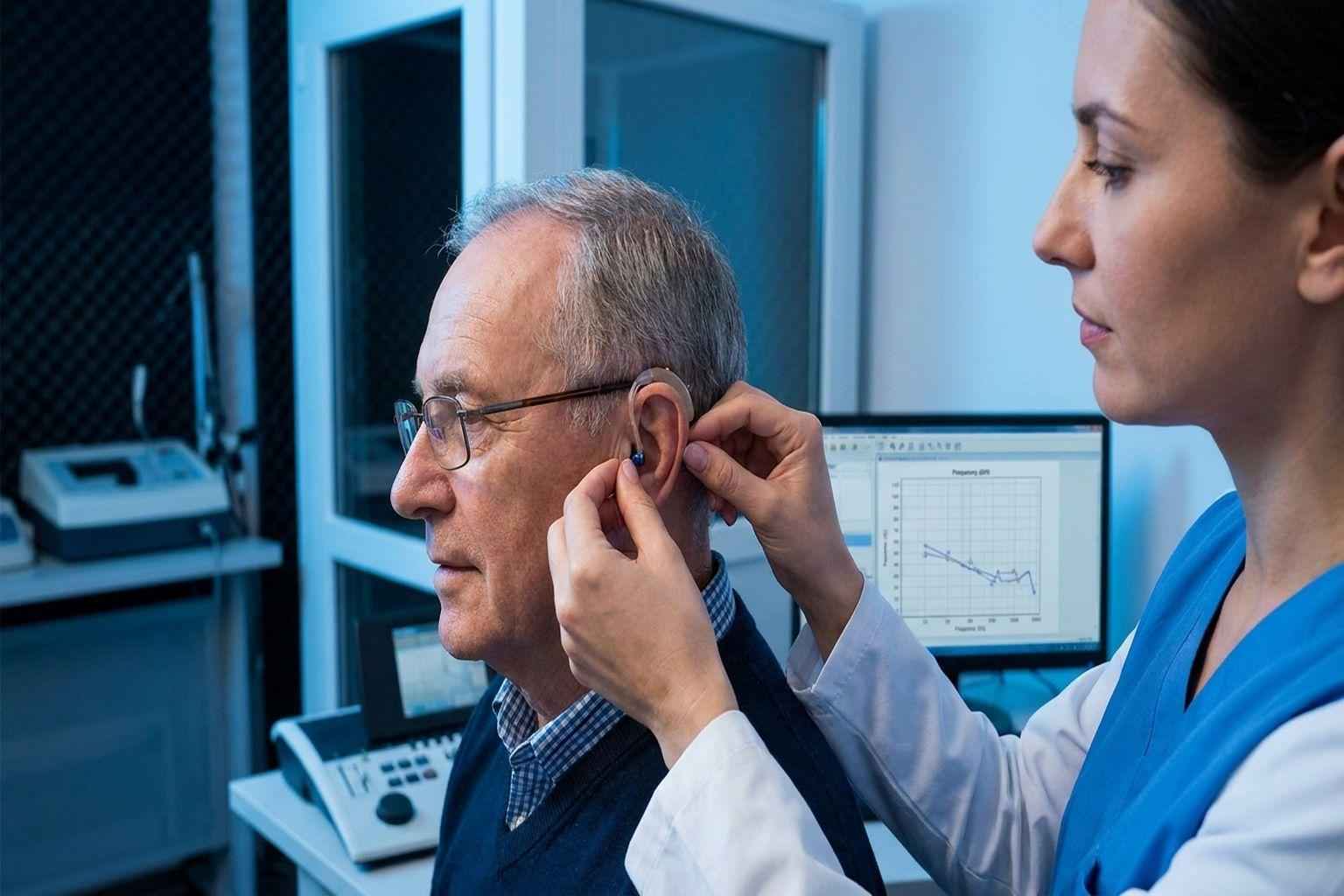
Both Phonak and Oticon require professional fitting by a licensed audiologist. The hearing aids must be programmed based on your audiogram and adjusted to your comfort level. This is not a one-size-fits-all process.
At Ear to Hear, we use real ear measurement to verify that your hearing aids are delivering the correct amplification at each frequency. This process ensures that the programming matches your prescription accurately. We also conduct speech-in-noise testing to confirm that the hearing aids are improving your ability to understand speech in challenging environments.
Proper fitting makes a bigger difference than brand choice. A poorly fitted premium hearing aid will perform worse than a properly fitted mid-level device. Our team has the experience and equipment to ensure your hearing aids work at their full potential. We also provide ongoing adjustments as your hearing changes over time, which is included with every fitting at Ear to Hear. If your device stops working, our hearing aid repair team can diagnose and fix the issue.
Trial Period and Adjustment
Both brands offer trial periods through our clinic. We recommend a 30-day trial for any new hearing aids, regardless of brand. This gives your brain time to adjust to the new sound and allows us to make programming adjustments based on your real-world experience.
During the trial, we encourage you to wear the hearing aids in the environments where you struggle most. Restaurants, family gatherings, phone calls, and television watching are all good test scenarios. Keep notes on what works and what does not so we can fine-tune the programming. Many patients find that the first week is an adjustment period as their brain relearns how to process sounds it has been missing. This is completely normal and not a sign that the hearing aids are wrong for you.
If you are deciding between Phonak and Oticon, we can set up a split trial where you wear one brand for two weeks and the other for two weeks. This is the most effective way to compare them. Schedule a free hearing test to get started.
How Ear to Hear Can Help You Choose
Our team at Ear to Hear has extensive experience with both Phonak and Oticon products. We do not push one brand over the other. Instead, we evaluate your hearing loss, lifestyle, and preferences to recommend the best option for you.
We carry both brands at our clinics and can order any model from either manufacturer. Our fitting process includes real ear measurement, speech testing, and multiple follow-up visits to ensure your hearing aids are performing optimally.
Call us at (813) 345-8135 to schedule a consultation. We will test your hearing, discuss your lifestyle needs, and help you choose the right hearing aids. You can also visit our services page to learn more about what we offer.
Frequently Asked Questions
At comparable technology levels, Phonak and Oticon are priced similarly. Premium models from both brands range from $2,500 to $4,000 per ear. Entry-level models start around $1,500 per ear. The technology tier you choose has a bigger impact on price than the brand. Insurance coverage and financing options can also affect your out-of-pocket cost.
Yes, both Phonak and Oticon support direct Bluetooth streaming to Android and iPhone devices. Phonak's Bluetooth connection is generally considered more stable with fewer dropouts. Oticon's connectivity is reliable but some Android users experience occasional reconnection delays. Both brands offer companion apps for volume control and program switching.
Yes, at Ear to Hear we offer split trials where you can test both brands. We typically recommend wearing one brand for two weeks and the other for two weeks. This gives you enough time to experience each brand in your daily environments. Contact us at (813) 345-8135 to arrange a split trial.
References
- Phonak. "Audéo Infinio Technical Specifications." Phonak.com, 2026.
- Oticon. "Oticon Intent White Paper: BrainHearing Technology." Oticon.com, 2026.
- SeniorLiving.org. "Phonak vs. Oticon: A 2026 Hearing Aid Brand Comparison." 2026.
- Hearing Review. "Deep Neural Networks in Hearing Aid Processing." The Hearing Review, 2025.
- American Academy of Audiology. "Best Practices in Hearing Aid Fitting." AAA Guidelines, 2025.
- Journal of the American Academy of Audiology. "Speech-in-Noise Performance with Premium Hearing Aids." JAAA, 2025.