
An Overview of Bluetooth Hearing Aid Technology
Bluetooth Technology Explained
Bluetooth is a wireless communication platform that allows for the transfer of data between two or more electronic devices. If you’re an armchair historian, then the name is particularly special: Bluetooth, from the Scandinavian Blåtand/Blåtann, was named for the Danish King Harald “Bluetooth,” renowned for bringing various Danish tribes into a unified kingdom.
Bluetooth’s technology was first invented by the Dutch engineer Jaap Haartsen, who worked for Ericsson in 1994. According to tech lore, Jim Kardach of Intel came up with the name Bluetooth for the technology, while reading a history about King Harald. Formally established in 1997, Bluetooth, like its namesake, is a system that connects different electronic devices.
However, it wasn’t until 2001 that Bluetooth began to gain popularity, with the growing popularity of smartphones. According to Android Authority, “The first Bluetooth mobile phone was the Sony Ericsson T36, but it was the revised T39 model which actually made it to store shelves in 2001.”
In its early years, Bluetooth was already an awesome technology, “widely used as a computer serial port, catering to internet modems, printers, mice, data storage, and a host of other peripherals.” Ironically, though Bluetooth is often used these days to stream audio, it was “originally conceived with wireless voice calls in mind…not high-quality stereo music streaming.”
In recent years, alongside the innovations in mobile phone technology, Bluetooth’s technology has grown exponentially and it is now used widely in a variety of different ways, from connecting computer keyboards to laptops, to streaming audio through speakers, and to revolutionizing the way hearing aid users benefit from their devices.

Lifestyle Benefits of using Bluetooth
Bluetooth-enabled hearing aids give hearing aid wearers a significant leg up from traditional hearing aid models. In terms of accessibility and usability, Bluetooth hearing aids allow wearers to customize their listening experience through apps provided by hearing aid manufacturers. These apps give you the option of changing the volume, adjusting program features, and tailoring your listening experience through a user-friendly app. Some hearing aid models now offer remote fine-tuning, allowing your hearing health provider the ability to make adjustments to your listening experience remotely.
Connection to your smartphone means you can stream phone calls directly to your hearing aids. This improves conversations exponentially, giving you seamless access to your conversations. Even more, Bluetooth hearing aids give you the option of streaming music, video audio, audio books, and more directly to your ears.
GPS is another exciting option with Bluetooth. In the past, you might have had to re-adjust your hearing aids when you entered a new environment, especially ones with overbearing background noise or acoustically challenging spaces (such as auditoriums). Now, with Bluetooth, your personal preferences for different locations are saved with GPS, and your hearing aids will seamlessly adjust program features to your preferred settings. This provides a natural relationship to sound in your environment and eliminates the need for wearers to make adjustments. Some Bluetooth hearing aids even offer a locator option, in case you misplace your hearing aids.
There’s even more in this era of “smart” hearing aids. Recently, Starkey Hearing Technologies produced the world’s first artificially-intelligent hearing aid, the Livio AI. (It should be noted that Starkey also produced on the world’s first Made for iPhone hearing aids!) The Livio AI functions almost like a FitBit or AppleWatch, taking your pulse and helping you stay on track with your health goals. It also has an incredibly useful and even potentially life-saving function: Livio AI will notify emergency services if the wearer has fallen!
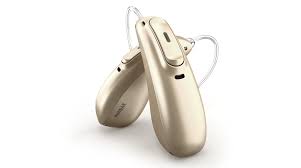
Bluetooth and Hearing Aids
Best Bluetooth Hearing Aids
popular, smart, Bluetooth hearing aids to consider.
ReSound Bluetooth Hearing Aids
Founded in Denmark in 1943, ReSound continues to lead the industry in Bluetooth innovation. ReSound’s current flagship platforms—ReSound Nexia™ and ReSound Omnia™—offer direct Bluetooth streaming from both iPhone® and compatible Android™ devices.
ReSound Bluetooth hearing aids allow users to stream phone calls, music, podcasts, and TV audio directly to their ears. Rechargeable models provide all-day battery life, even with frequent streaming. Using the ReSound Smart 3D™ app, users can adjust volume, sound profiles, and manage streaming preferences. Remote fine-tuning is also available, allowing hearing care professionals to make adjustments without an office visit.
Phonak Bluetooth Hearing Aids
Phonak is widely known for offering universal Bluetooth connectivity, allowing their hearing aids to pair with nearly any Bluetooth-enabled device—smartphones, tablets, laptops, and TVs.
Phonak’s latest platforms, including Lumity™ and Infinio™, deliver improved speech clarity in noisy environments while maintaining stable Bluetooth connections. The popular Audeo™ line supports hands-free calling, direct audio streaming, and rechargeable lithium-ion batteries. Advanced models like Audeo Sphere™ further enhance immersive sound and speech understanding across everyday listening situations.
Widex Bluetooth Hearing Aids
Widex is known for its natural sound quality and low-delay audio processing. Widex’s newest platform, Widex Allure™, features enhanced Bluetooth streaming with smoother sound transitions and improved music performance.
Widex Bluetooth hearing aids connect directly to iPhones and compatible Android devices, allowing users to stream calls and media through the Widex Allure app. The platform also supports AI-based personalization tools and modern wireless accessories for TV and home audio streaming.
If Bluetooth technology sounds like something you want with your hearing aids, Ear to Hear is here to help. Contact us today to learn more about upgrading your hearing technology to Bluetooth hearing aids to get the most out of your hearing instruments.